Indian Express
Indian Express··3 min read
Ram Madhav writes: New FCRA Rules and the Historical Debate on Religious Conversion in India
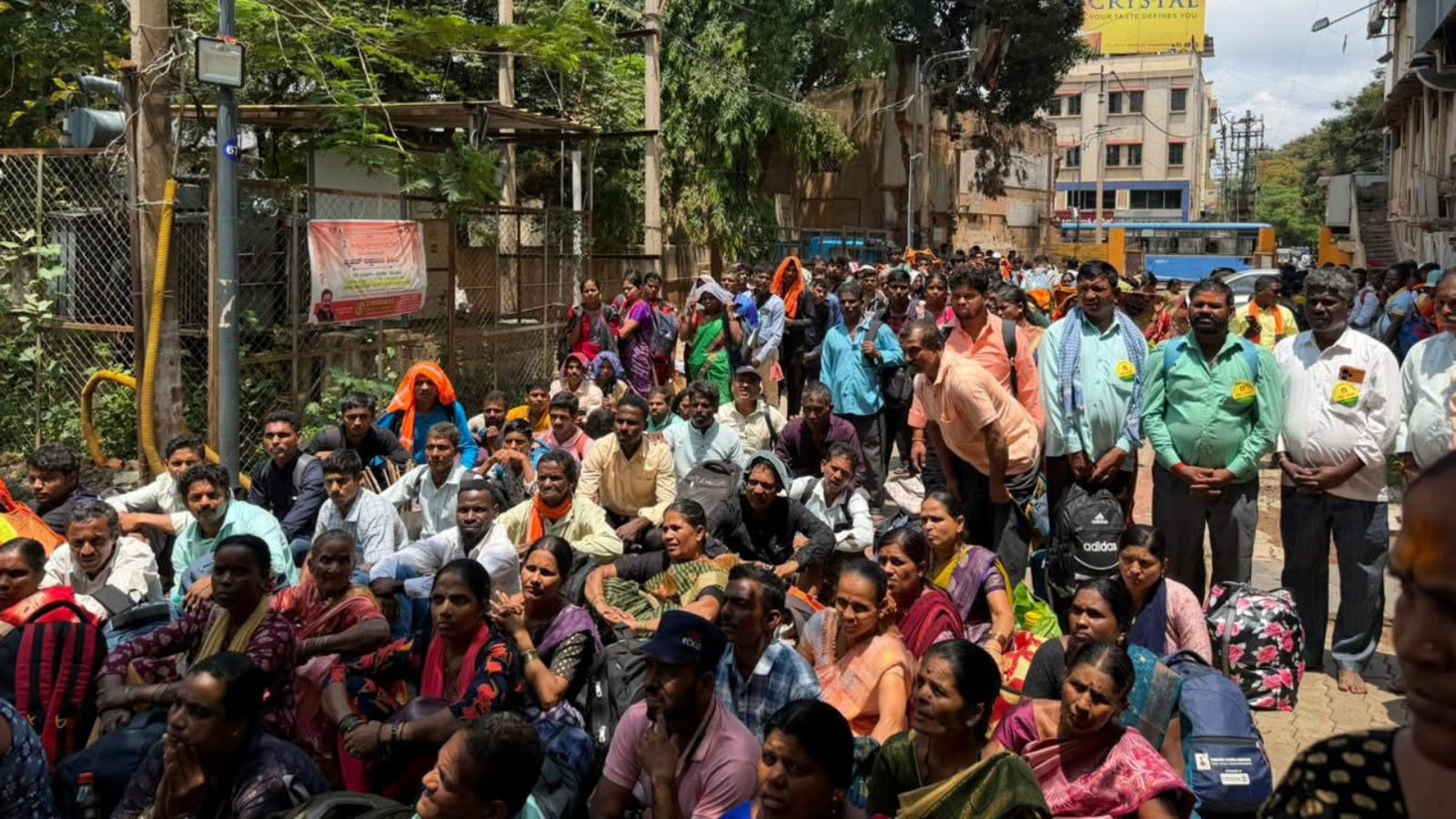
The massive tribal gathering in Delhi, organised by the RSS-linked Janjati Suraksha Manch, is expected to draw over 1.5 lakh participants from more than 500 tribal communities across the country.
4 min readJun 26, 2026 07:55 PM IST
First published on: Jun 26, 2026 at 07:55 PM IST
The Union Home Ministry promulgated new Foreign Contribution (Regulation) Act (FCRA) rules earlier this week, which seek to restrict the activities of NGOs that receive foreign funding. The rules say that the foreign contributions can be used for the construction or maintenance of religious places, printing and digitisation of sacred scriptures, building facilities for pilgrims, running community kitchens and promoting indigenous and tribal faith practices. However, they ban proselytisation activity using foreign money.
Even before the amendments were formally gazetted, they created ripples not only across India but even in the US. The proposed amendments to the FCRA became an electoral issue during the recent assembly elections in Kerala and Tamil Nadu. The ripples reached Capitol Hill in Washington, DC too. James Risch, who heads the Senate Foreign Relations Committee, threatened that the US “will not hesitate to call out countries that violate the internationally recognised human rights of Christians”.
Religious conversions were debated during colonial rule. After Independence, a few states like Orissa (1967), Madhya Pradesh (1968), and Arunachal Pradesh (1978) introduced anti-conversion laws. They were followed by Chhattisgarh (2000), Gujarat (2003), Himachal Pradesh (2006), Jharkhand (2017), Uttarakhand (2018), Uttar Pradesh (2021), Haryana (2022), Rajasthan (2025) and Maharashtra (2026).
Several Christian groups insist that the “right to propagate” includes “right to proselytise”. However, in Rev. Stainislaus vs State of Madhya Pradesh (1977), the SC stated that while Article 25 of the Constitution gives freedom to choose one’s religion, it does not give the right to convert other persons. The government’s move is in line with that verdict.
Before Independence, reformers and leaders like Ram Mohan Roy, Vivekananda and Gandhi raised serious questions over conversions. In an interview in March 1931, when a journalist asked whether he would favour the retention of foreign missionaries in India after Independence, Gandhi’s reply was. “If instead of confining themselves purely to humanitarian work and material service to the poor, they do proselytising by means of medical aid, education, I would certainly ask them to withdraw”. In another interview in Harijan on May 11, 1935, he stated, “If I had power and could legislate, I should certainly stop all proselytising. It is the cause of much avoidable conflict”.
Jawaharlal Nehru, however, reassured missionaries in 1946. “Christians form the third-largest group in the country, and it is absurd for anyone to imagine that their religious or other rights can be suppressed,” he said. In the Constituent Assembly, issues like “propaganda” or “propagation” and “conversions” were debated. Congress had earlier promised freedom to “profess and practise” religion in its election manifesto. But the missionaries demanded the “right to propagate” that included the right to convert. Members like K M Munshi, Alladi Krishnaswami Aiyer and C Rajagopalachari took a contrarian view on the right to conversion. Even Sardar Patel and Maulana Azad insisted that missionaries must abjure mass conversions. But most such suggestions could not muster a majority support in the Assembly. Finally, Article 19, which included the phrase “to propagate religion,” became the law.
Questions continued to be raised over missionary work. The Niyogi Committee, appointed by the Madhya Pradesh Government in 1954 to look into the activities of the missionaries in the state’s tribal areas, came out with a stinging report against missionaries. Its recommendations included: The missionaries whose primary object is proselytisation should be asked to withdraw, and the influx of foreign missionaries should be checked. The Constitution should be amended in order to rule out propagation by foreigners and conversions by illicit means, and legislative measures should be enacted for controlling conversion by illegal means.
The Nehru government rubbished the committee’s claims. Seven decades later, the Modi government is taking steps to implement those recommendations.
The writer, president, India Foundation, is with the BJP
View original source — Indian Express ↗
Related stories

The Punch
NewsJun 26, 2026 · 1 min
$4.5bn fraud: Emefiele challenges EFCC statements, cites torture, detention
The Punch

ESPN
SportsJun 26, 2026 · 1 min
Sources: Pistons to land Joe in trade with OKC
ESPN
The Punch
NewsJun 26, 2026 · 1 min
NSCDC nabs three suspects over illegal ethanol haul in A’Ibom
The Punch
The Punch
NewsJun 26, 2026 · 1 min
Taraba gets permanent police HQ 35 years after creation
The Punch