Indian Express
Indian Express··3 min read
Eventful City | At Humayun’s Tomb Museum, date with a Renaissance master and his iconic depiction of mother & child
4 min readNew DelhiJun 26, 2026 09:16 PM IST
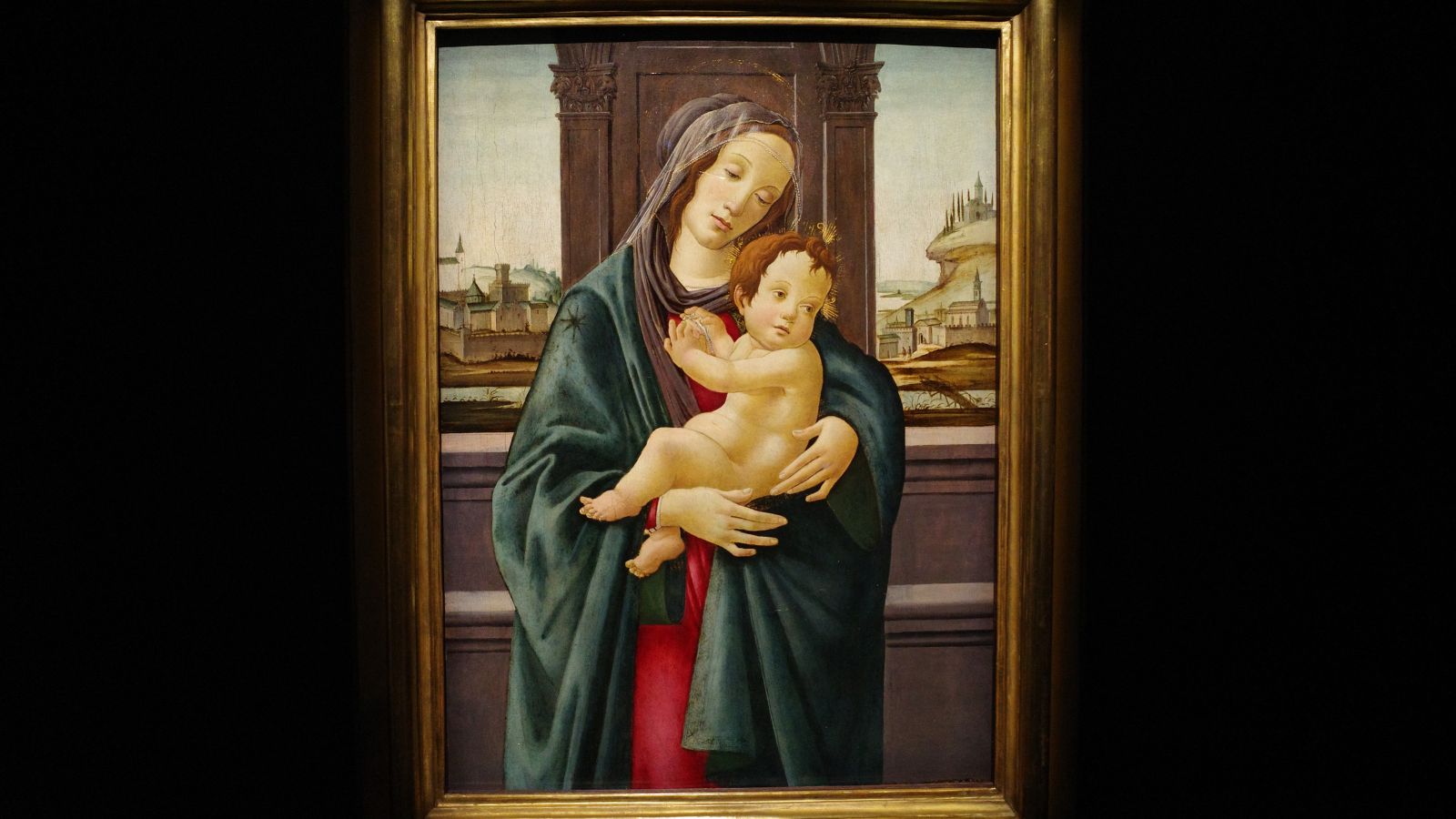
Sandro Botticelli’s Madonna and Child, loaned from the Museo Stibbert in Florence, is part of the exhibition ‘One Mother, Many Mother Tongues’, which is on view at the Havells Gallery, first floor, Museum Courtyard, Humayun Tomb Museum, until August 8. (Credits: Gurdeep Singh, Italian Embassy Cultural Centre)
It was created more than five centuries ago, when Babur was yet to show up in India and Sikander Lodhi, who lies today in Lodhi Garden, was sultan of Delhi. It came to life in a studio in Florence where Sandro Botticelli lived and worked for most of his life, and significant portions of the artwork were likely created by the Early Renaissance master himself.
The home of the painting is Museo Stibbert in Florence – but you can now see it at the Havells Gallery at the Humayun’s Tomb World Heritage Site Museum near Sunder Nursery, Nizamuddin. The luminous tempera of Botticelli’s Madonna and Child, which is dated to the dying years of the 15th century, is the only painting in the exhibition of artworks in stone, bronze, and clay.
The idea of the exhibition, which is ongoing until August 8, came together during a conversation over dinner between Andrea Anastasio, the director of the Italian Cultural Centre in India, and art historian Professor Naman P Ahuja of Jawaharlal Nehru University.
Anastasio had read Ahuja’s essay, ‘One Mother, Many Mother Tongues’, first published by the Getty Foundation and subsequently by the arts magazine Marg in 2019, on the representation of the bond between mother and child in art and literature down the ages.
“I told him, this would be fantastic. It’s a dream if we can blend this variety with the iconography of motherhood in Italy and the Mediterranean, where the mother holding a child has been depicted in very powerful ways much before the Romans came,” Anastasio said.
Ahuja agreed, and a year and a half of collaborative efforts followed to bring the exhibition to fruition. At its heart is the idea that Ahuja articulated in his paper – that the same image of the mother can be read through many mother tongues, regionally, culturally, personally.
“When we work in advertising or media studies, the image has to appeal to multiple communities, religious groups, genders. The same image has to speak to a diverse group of people. I found a fantastic case study for that in Indian antiquity,” Ahuja said. The exhibition, he said, is not an argument for sameness, but a demonstration of productive difference.
Story continues below this ad
Botticelli’s workshop produced a whole series of Madonna and Child, depictions of the Virgin Mary and the infant Jesus, one of the most enduring subjects in the history of art, to feed the demand for paintings on religious themes in the homes of wealthy Florentines.
The Museo Stibbert artwork was completed in 1496-97, and belongs to the final period of Botticelli’s life (1445-1510), by when he had lost his primary benefactor, Lorenzo de’ Medici, the de facto ruler of the Florentine republic and the greatest patron of Renaissance art.
Botticelli had by then all but abandoned the mythological grandeur of his earlier work and sunk into an almost obsessive engagement with Madonna and Child, a theme he would paint some 40 times in the last two decades of his life.
“The [Museo Stibbert] Madonna is completely withdrawn in herself. She looks melancholic… So it’s a beautiful blend of theological statement, philosophical understanding, and the search for formal beauty,” Anastasio said.
Story continues below this ad
The Museo Stibbert was set up by the English-Italian businessman Frederick Stibbert (1838-1906) using the vast fortune amassed in India by his grandfather Giles Stibbert, an officer of the East India Company who fought in the Battle of Plassey in 1757, which led to the British taking over Bengal, and then the Battle of Buxar in 1764 in which the company defeated the combined armies of the Mughal emperor, the Nawabs of Oudh and Bengal, and the Maharaja of Benaras.
According to the Museo Stibbert website, Frederick Stibbert collected artworks for about 50 years to transform his sprawling residence in Montughi, Florence, into a historical museum. He left his collection to the Florence municipality in his will, and the museum was opened to the public in 1909.
© The Indian Express Pvt Ltd
View original source — Indian Express ↗
Related stories

ESPN
SportsJun 26, 2026 · 1 min
CFL won't allow Brendan Sorsby to join league
ESPN

ESPN
SportsJun 26, 2026 · 1 min
Bulls' Wilson expects to win Rookie of the Year
ESPN

ESPN
SportsJun 26, 2026 · 1 min
Sources: Poch in positive talks over USMNT deal
ESPN

The Punch
NewsJun 26, 2026 · 1 min
No hiding place, Edo gov declares zero tolerance for drug traffickers
The Punch