Indian Express
Indian Express··4 min read
How Umar Khalid’s new book rewrites the history of Adivasi politics and agency
5 min readNew DelhiJun 27, 2026 01:21 PM IST
First published on: Jun 27, 2026 at 01:16 PM IST
Writing a history of Adivasi communities is an incredibly challenging methodological task. It requires a creative use of sources to piece together fragmented histories, combined with a sophisticated ethnographic imagination and ecological knowledge. But more challengingly, it requires unusual self-awareness and originality to push against deeply entrenched assumptions that have defined the field. Often, Adivasi historiographies deny that Adivasis have a history, reducing them instead to timeless custom. They deny Adivasis a sense of their own agency and ability to make and remake their world. They ignore the fact that what we think of as Adivasi customs and institutions were themselves shaped through interaction with wider political structures. They often fail to capture the internal politics of Adivasi communities and the ways in which this politics is either co-opted by, or becomes a source of resistance to, the outside world. Above all, they treat Adivasis as so exceptional and different as to make them exotic.
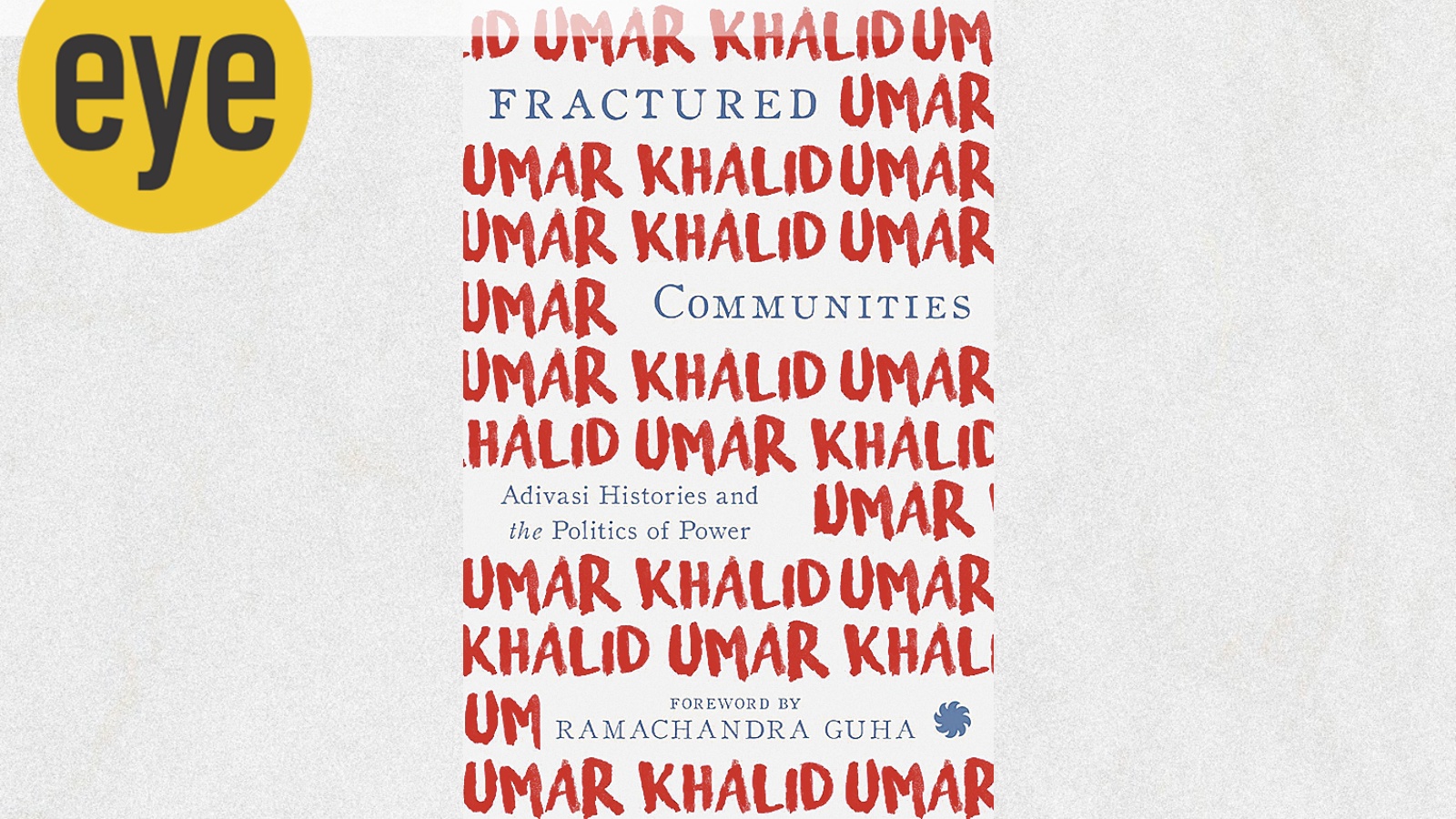
Umar Khalid’s Fractured Communities: Adivasi Histories and Politics of Power is, therefore, a rare achievement, a history written without a trace of condescension or exoticisation. It offers a richly textured and astute history of the Ho community in the Singhbhum region. It begins by showing how the region itself was politically produced through the administrative reorganisation carried out by the British. Khalid demonstrates with great sophistication how Adivasi structures of rule, centred around customary village organisation and the authority of the Munda (village head) and Manki (head of a conglomeration of villages), interacted with British power to produce a distinct modality of rule.
It is often argued, not just in the literature on India but in the study of colonialism more generally, that the British created structures of indirect rule in tribal areas by preferring to govern through local forms of authority. In the process, the colonial state invents new ideas of the “customary” even as it backstops particular forms of political organisation, both of which come to be defined as the essence of Adivasi communities. These communities had distinct identities, but states create the process of “tribalisation.” Mahmood Mamdani gave a powerful theoretical account of this process in his book Citizen and Subject. Khalid adds significantly to this account in the Indian context by showing that this modality of indirect rule, which frequently emerged under colonialism, was not simply a colonial attempt to preserve custom. It arose out of contingent political struggles, in which contradictory strands of politics within Adivasi communities were co-opted by the colonial state.
Adivasi political structures were not stateless or primitive. Rather, institutions like the Manki and Munda became entangled in a complex politics of revenue extraction, creating new hierarchies within Adivasi society. Khalid shows how governing regimes, from the colonial state to the BJP’s spectacular success in making inroads into Adivasi politics, have drawn on these structures. Colonial and postcolonial politics is not simply a tale of suppression; it is equally a story of transformation and political appropriation.
But at the heart of the story is the claim that the central conflict in thinking about Adivasis has not been between the customary and the modern, but between the rights of the community and the extractive demands of the modern state, whether under colonialism or independent India. Framing the argument as one between custom and modernity was, in part, an attempt to disable Adivasi political agency, which has always been expressed in demands for autonomy, control over natural resources and political voice. Constructing Adivasis as exclusive communities did not prevent them from being treated as resource frontiers, whether for expanding agriculture or mining. Exoticisation often served as a ruse for denying Adivasis full partnership in development and meaningful control over their own resources. Nor did it, contrary to stated intentions, protect their autonomy. In a remarkable chapter on land, forest fires and famines, Khalid shows how the colonial imperative to demarcate agricultural land from forest, combined with the rhetoric of environmental protection, produced novel forms of dispossession by depriving Adivasis of access to forests. This denial generated new forms of hardship, including famine. In turn, it produced new forms of political resistance, including the extensive use of forest fires as a means of protesting dispossession.
Khalid is acutely aware that the most appalling burdens of development have fallen on Adivasis. But by restoring to them a politics and a history, Khalid sets out a new historiographical model, an extraordinary achievement for a PhD dissertation. It is a travesty of justice that a gifted young scholar, at the height of his powers, is languishing in jail without a proper trial. There is a monumental cruelty in Umar Khalid’s incarceration. The irony of denying political agency to someone who has thought so deeply about the political agency and dignity of Adivasis indicts the Indian state. But we hope Umar Khalid will soon be able to continue with his brilliant scholarship, which will be an asset in understanding the making of modern India.
The writer is a contributing editor at The Indian Express
View original source — Indian Express ↗
Related stories

ESPN
SportsJun 27, 2026 · 1 min
30 teams, 7 tiers: NBA franchises that will domina...
ESPN

The Punch
NewsJun 27, 2026 · 1 min
NSIA offers $275,000 innovation prize for Nigerian startups
The Punch
The Punch
PoliticsJun 27, 2026 · 1 min
ADC faults court ruling on NDC, warns against one-party state
The Punch

ESPN
SportsJun 27, 2026 · 1 min
NFC West roundtable: Which team is the biggest thr...
ESPN