Indian Express
Indian Express··4 min read
Human rights panel warns Vadodara civic body over Vishwamitri floodplain
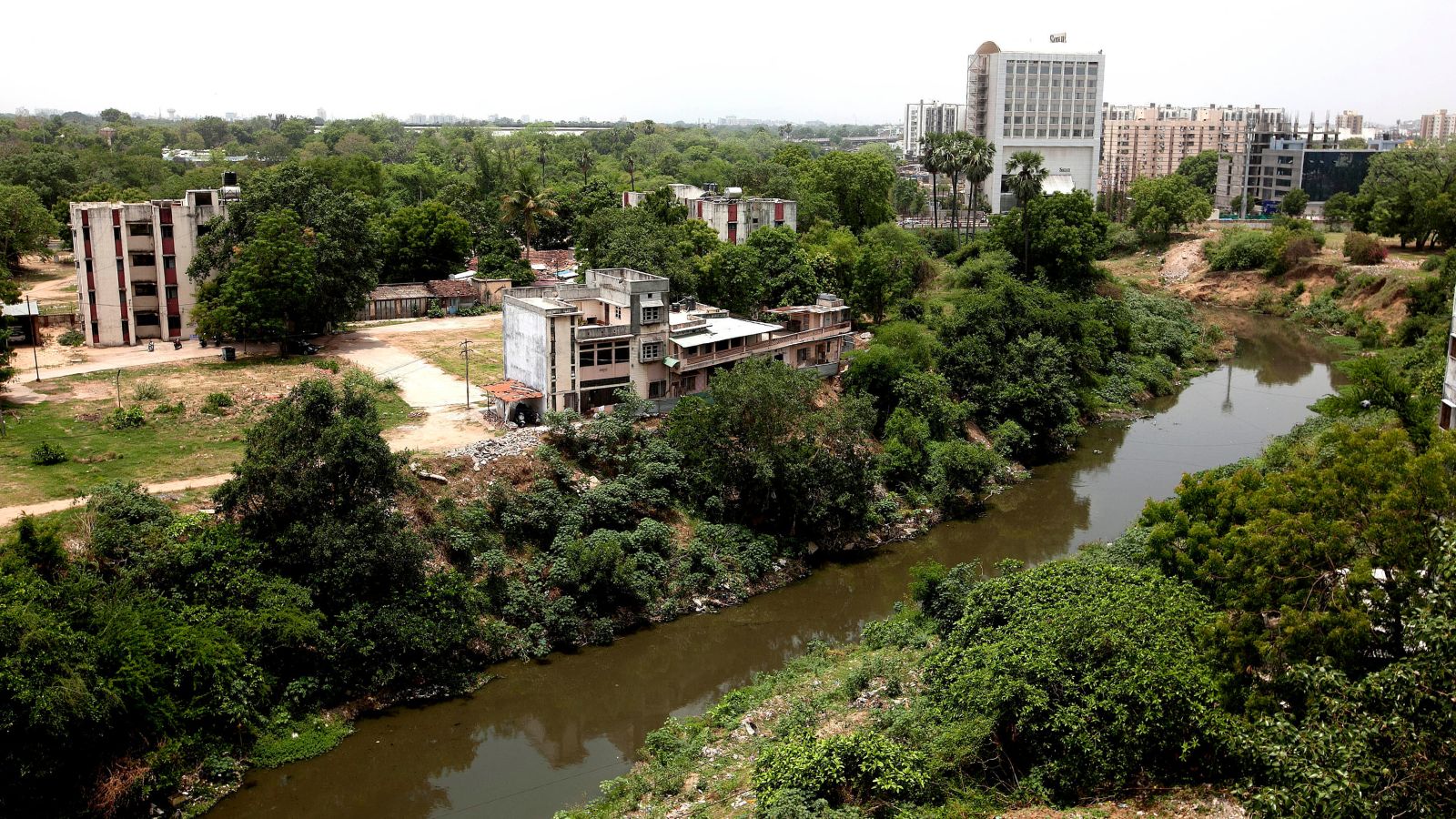
A GUJARAT State Human Rights Commission (GSHRC) committee monitoring the Vishwamitri River has recommended that the Vadodara Municipal Corporation (VMC) initiate structured dialogue with owners and occupants of properties identified within the river’s floodplain.
The panel simultaneously warned that the VMC would be “held accountable” for any flood losses in the coming monsoon, given the “inaction” on debris removal, falsified sewage treatment data across eight plants and persistent encroachments in defiance of an NGT order.
When contacted on Thursday, Vadodara Municipal Commissioner Arun Mahesh Babu told this newspaper that he is yet to read the report. “I am yet to look at the report submitted by the Committee… However, we will invite the stakeholders for a meeting and look into the possibility of the recommendations made by the Committee.”
The Vishwamitri Committee, constituted by the GSHRC to look into the mitigation of floods in Vadodara, submitted its fifth report dated June 22, 2026, after a series of site visits, inspections of sewage treatment plants, and meetings with VMC and Municipal Commissioner officials between March and May this year.
On encroachments, the committee noted the National Green Tribunal (NGT)’s principal bench order of May 25, 2021, which has directed the removal of unauthorised structures to restore the river’s ecosystem and prevent flooding. The committee urged that the removal of encroachments and river rejuvenation be pursued simultaneously, integrated into the Development Plan revision, Local Area Planning and Town Planning Scheme processes under VUDA.
The report states, “Since the VMC has identified the properties that lie within the floodplain areas, there is a need to initiate a dialogue through focused discussions on the vulnerability of the encroachments, impact on the river system and impacts on them too… A mutually agreed legal process should be initiated through public hearings and stakeholder meetings to arrive at mutually agreed upon solutions… The transition process should be transparent with the plan and its environmental benefits be made public to build citizen trust and support. This can help prevent conflicts and garner citizen participation in river rejuvenation.”
It has also called for public hearings, formal legal notices specifying the NGT order as their basis and a rehabilitation and resettlement policy for slum-dwellers – noting that some recent redevelopments were built despite known flood risks. The report also flagged the need to safeguard crocodiles and turtles during demolition work, requiring coordination with the Department of Environment and Forest and wildlife experts.
Story continues below this ad
The committee’s most direct warning concerns the VMC’s alleged failure to remove Construction and Demolition (C&D) waste from the river’s floodplain – a task that has been pending for eight months, as per the committee’s observation. The report says that the VMC has failed to remove long-pending legacy waste and C&D waste despite multiple discussions with solid waste management (SWM) officials and their consultants. The debris dumping has “considerably reduced the storm water carrying capacity of the river” – for which an extensive dredging and desilting exercise was undertaken between March to June 2025. The committee noted that the VMC has not even completed identifying and quantifying all dumping locations across the city, “let alone prepared an action plan for removal.”
“Any sudden, heavy rain events in coming days may invite flood and waterlogging. The VMC and its top officials will be held accountable for losses due to possible water logging and flooding events,” the report states plainly, describing the civic body as “complacent” on the issue. Acknowledging staff shortages and the absence of a fully functional C&D processing plant, the committee recommended the VMC enlist large-scale construction industries to remove debris and repurpose it – similar to the desilting model adopted in 2025.
Among the report’s most serious technical findings is a systemic error or “deliberately” manipulaed data of the Biochemical Oxygen Demand testing protocol across eight of Vadodara’s sewage treatment plants – Chhani (50 MLD), Chhani (21 MLD), Vemali (13 MLD), Rajivnagar (78 MLD), Bhayli (45 MLD), Sayaji Garden (16 MLD), Kapurai (45 MLD), and Kapurai (60 MLD).
The committee found that BOD bottles of 330 ml volume were deliberately filled to only 300 ml, leaving a 30 ml air space, which is directly contrary to Standard Method protocol that requires bottles to be filled to the brim with no air void. The residual oxygen in that air space supplies additional oxygen during incubation, making treated sewage appear far cleaner than it actually is. The report notes that with a 10-times dilution, a sample with an actual BOD of approximately 70 mg/L could show negligible BOD in results.
Story continues below this ad
The committee also found that laboratory data records showed “a number of duplications and followed a typical repetitive trend,” and that the labs were not adequately equipped or staffed to perform required tests. “In-house operating and monitoring mechanism of the STPs and its laboratories are inadequate and inefficient,” the report concludes, while noting the absence of raw data or calculations to support any of the recorded analysis.
On governance, the committee called for a multi-departmental oversight body drawing officials from the VMC, VUDA, District Collectorate, DOEF, and GPCB, alongside technical experts including hydro-geologists, ecologists, and legal counsel. It noted “redundancies, overlaps, and gaps” in the current departmental setup and demanded these be reconfigured before the rejuvenation plan can be operationalised.
The report states that two critical pieces of information requested from the authorities concerned remain outstanding – the location and quantification of C&D waste dumped in the floodplain along with an action plan for removal, and the justification for the retaining wall proposed at the Zoo premises. The committee said it would file subsequent reports covering STP proceedings, the C&D waste action plan and work progression.
The committee comprises environmental and urban planner Neha Sarwate, environment activist and researcher Rohit Prajapati, zoologist Ranjitsinh Devkar, botanist Dr Jitendra Gavali and architect-urban planner Mitesh Panchal.
View original source — Indian Express ↗
Related stories

The Punch
PoliticsJun 27, 2026 · 1 min
ADC faults court ruling on NDC, warns against one-party state
The Punch

ESPN
SportsJun 27, 2026 · 1 min
NFC West roundtable: Which team is the biggest thr...
ESPN
The Punch
NewsJun 27, 2026 · 1 min
DSS frees man cleared of Boko Haram links, pays N3m compensation
The Punch
ESPN
SportsJun 27, 2026 · 1 min
Iran coach on VAR call: 'We're an unlucky team'
ESPN