Indian Express
Indian Express··4 min read
H-1B visa changes not aimed at Indians: US envoy Sergio Gor amid Trump immigration overhaul
Amid uncertainty over changes to the H-1B visa programme under the Trump administration, US Ambassador to India Sergio Gor said the immigration overhaul should not be seen as targeting Indian professionals, stressing that the reforms apply across all visa categories.
Gor’s comments come as thousands of Indian students, technology professionals and H-1B visa holders closely monitor the Trump administration’s immigration policies amid tighter visa scrutiny and broader efforts to reshape legal immigration. Indians account for the overwhelming majority of H-1B visas issued annually, making any policy change particularly significant for the Indian workforce.
He said the H-1B exercise forms part of the Trump administration’s broader effort to overhaul immigration policies across all visa categories after what it considers years of inadequate border enforcement.
“The H-1B exercise forms part of the administration’s broader immigration reforms. It should not be interpreted as something aimed specifically at Indians,” Gor said.
IANS Exclusive
Washington, US: When asked about concerns over the H-1B visa process and the reported increase in hate crimes in the United States, US Ambassador to India Sergio Gor says, “I don’t think the big item to remember on that is, this is not targeted at India. The… pic.twitter.com/SB59n7J4tZ
— IANS (@ians_india) June 27, 2026
Gor, in an interview with IANS, also said negotiations on the first phase of the proposed India-United States bilateral trade agreement have reached an advanced stage. Officials of both countries are now focusing primarily on finalising the legal framework of the pact after narrowing differences on most substantive issues.
Gor indicated that the negotiations have moved beyond most of the difficult policy discussions and into the drafting phase, expressing confidence that the agreement could be concluded within the coming weeks or months if the remaining issues are resolved.
His remarks come at a time when New Delhi and Washington are seeking to strengthen economic engagement as part of their broader strategic partnership. The first phase of the proposed agreement is expected to improve market access, reduce tariff-related barriers and pave the way for a wider trade framework in the future.
Why India, US are holding trade talks
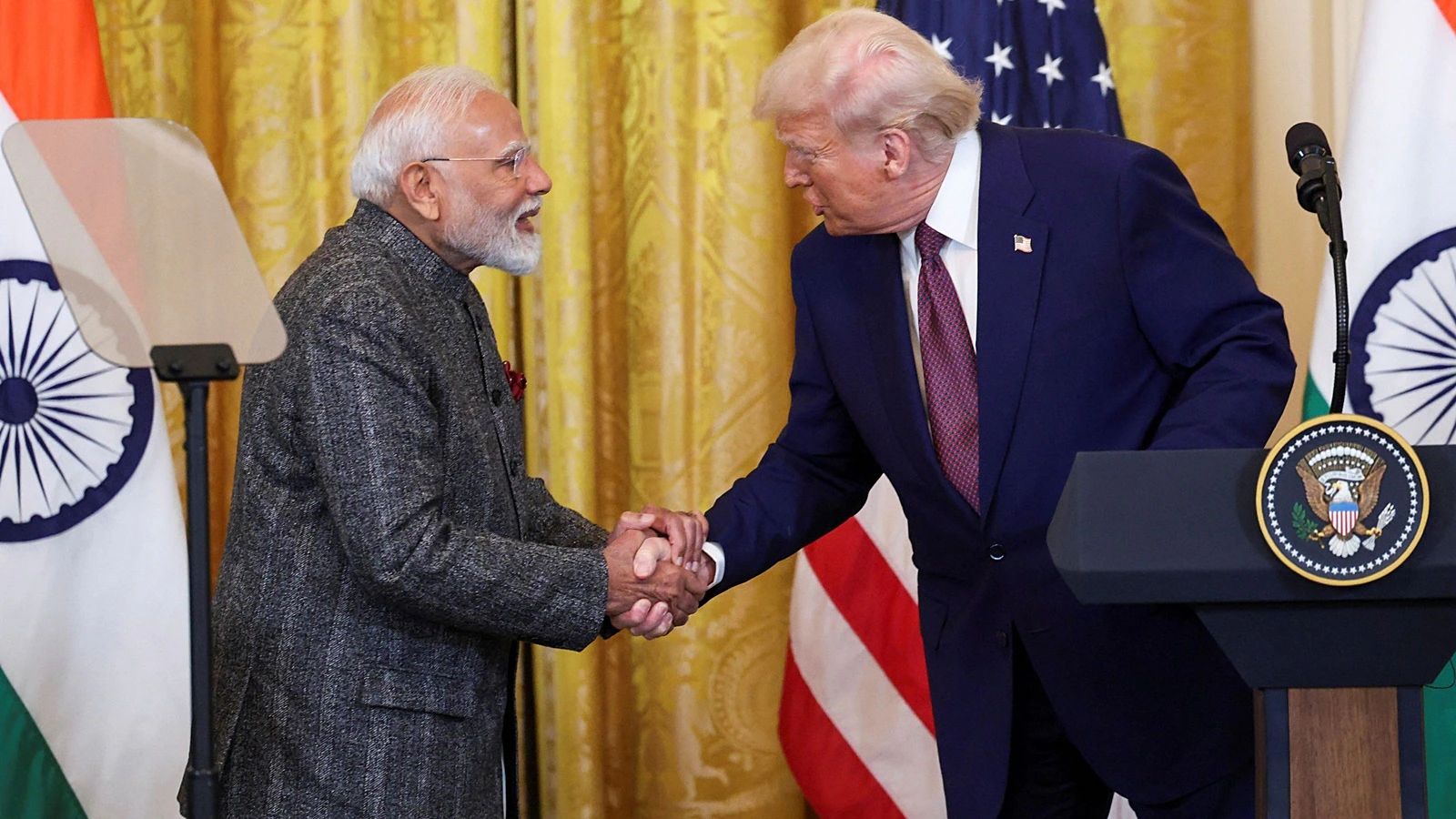
The current round of India-US trade negotiations traces its origins to February 2025, when Prime Minister Narendra Modi and US President Donald Trump agreed during their meeting in Washington to pursue the first phase of a Bilateral Trade Agreement (BTA). Both governments set an ambitious target of expanding bilateral trade to $500 billion by 2030 and committed to addressing long-standing trade irritants, including tariffs, market access, non-tariff barriers and regulatory issues.
Story continues below this ad
The talks gathered urgency after the Trump administration unveiled its “reciprocal tariff” policy in April 2025, imposing a 26 per cent duty on several Indian exports as part of a broader effort to reduce America’s trade deficit and push trading partners to lower barriers for US goods.
Although Washington soon suspended the country-specific portion of those tariffs for 90 days, it retained a 10 per cent baseline duty to allow room for negotiations. Over the following months, trade tensions escalated, with the US later announcing steeper tariffs on Indian imports, citing concerns over trade imbalances and India’s continued purchase of Russian crude oil.
After months of negotiations, both sides reached an interim understanding earlier this year under which the reciprocal tariff on Indian goods was reduced from 25 per cent to 18 per cent, while negotiations continued on a broader bilateral trade agreement aimed at providing greater market access and a more stable long-term trade framework.
Negotiators shift focus from policy to legal text
According to Gor, India and the United States have resolved most of the key issues in the negotiations, with only a few outstanding matters left before the agreement can be finalised.
Story continues below this ad
Speaking to IANS, he said recent meetings in New Delhi involving US Trade Representative Jamieson Greer and Union Commerce Minister Piyush Goyal were productive and reinforced confidence that negotiations remain on track.
Rather than fresh disagreements over trade policy, the remaining work largely concerns preparing language that will be acceptable to both governments when the agreement is signed, he said, adding that both sides are optimistic about reaching the finish line in the near term.
The ambassador, however, did not disclose details of the provisions currently under discussion, saying both governments would reveal the outcome once negotiations are complete.
Envoy compares pace of talks with other global trade negotiations
Gor suggested that expectations surrounding the timeline should be viewed in the context of other international trade agreements, many of which have taken years or even decades to negotiate.
Story continues below this ad
Speaking to IANS, he noted that India and the US have been negotiating for roughly 18 months, describing that pace as relatively swift compared with several other large trade arrangements that remain under negotiation despite much longer timelines. He said the progress is encouraging and added that the trajectory of the talks gives both governments reason for optimism.
Donald Trump remains interested in visiting India
Beyond trade, Gor also indicated that US President Donald Trump remains keen on travelling to India after being invited by Prime Minister Narendra Modi during their recent meeting in France.
According to the ambassador’s conversation with IANS, no specific date has been finalised for Trump’s visit. Gor said domestic political commitments, particularly preparations related to the upcoming US midterm elections, are likely to influence the President’s international travel schedule in the coming months.
Gor also dismissed suggestions that the India-US relationship has lost momentum, telling IANS that the longstanding personal rapport between Trump and Modi continues to provide stability to bilateral engagement.
Story continues below this ad
He said the relationship between the two leaders has remained strong over the years and continues to support cooperation across multiple sectors, including trade, defence, technology and regional security.
View original source — Indian Express ↗
Related stories

ESPN
SportsJun 27, 2026 · 1 min
Djokovic calls Serena's return 'truly inspirationa...
ESPN

The Punch
TechnologyJun 27, 2026 · 1 min
NCC seeks local smartphone factories to reduce phone prices
The Punch
The Punch
NewsJun 27, 2026 · 1 min
Groups demand tougher action against terrorism in Nigeria
The Punch
The Punch
PoliticsJun 27, 2026 · 1 min
Kano committed to Tinubu’s 2027 re-election, says Yusuf
The Punch