CNA
The Singapore homeowner's latest travel obsession? Furniture shopping in Foshan – here's what to know
Travel
China's furniture capital has become a hotspot for design-savvy homeowners seeking customisable, factory-direct pieces at attractive prices.
New: You can now listen to articles.
This audio is generated by an AI tool.
28 Jun 2026 07:14AM
For a growing number of Singaporeans, furnishing a new home has become reason enough to book a holiday.
Not the sort involving beach clubs or Michelin-starred restaurants. Instead, these design-savvy travellers are flying to China armed with camera rolls full of sofa and cabinetry photos, meticulously curated Pinterest boards and floor plans marked with dimensions down to the centimetre, all in pursuit of custom-made furnishings for their homes.
Blame it on our collective obsession with our living spaces. In a city where most of us live in compact apartments, every square metre matters. We want our homes to work harder than ever, serving as offices, gyms, entertainment hubs and sanctuaries from the outside world. Naturally, we want them to look good, too.
And for anyone who has spent even a little time scrolling renovation content on Instagram, TikTok or Xiaohongshu, one destination is likely to have appeared on their feed with increasing frequency: Foshan.
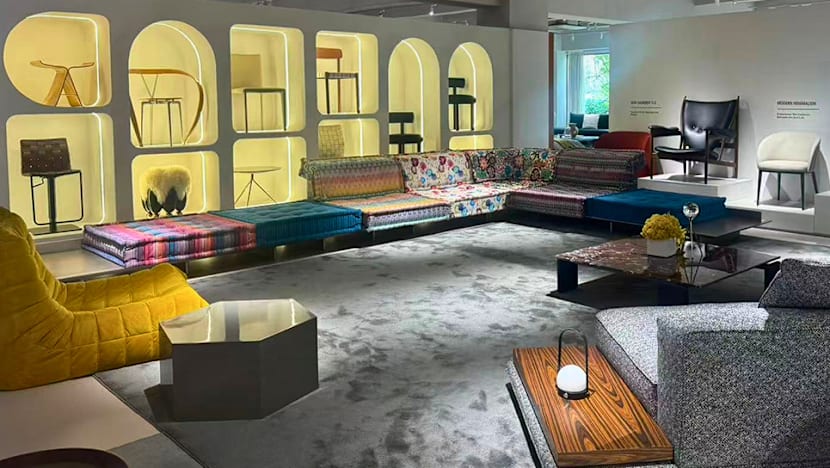
Located in Guangdong province, about an hour from Guangzhou, the industrial city is renowned as China's furniture capital. It is home to sprawling furniture malls, factories and showrooms that were once the domain of interior designers and industry buyers but are now increasingly attracting everyday consumers.
According to Singapore-based sourcing specialist Kelvin Chua, founder of The Kurater, Foshan’s appeal lies in the scale and structure of its manufacturing ecosystem.
“Foshan is the world’s largest furniture manufacturing hub, but what truly makes it unique is the depth of its ecosystem. Entire districts are dedicated to specific furniture categories like sofas, dining sets, lighting, cabinetry, stone, hardware and more, which allows homeowners to access an incredible range of styles, materials and price points in one place,” he said.
Part of the appeal comes down to value. While prices vary depending on materials and specifications, buyers can often find pieces comparable to those sold in Singapore at about 20 to 30 per cent less compared to similar products in retail as there are fewer middlemen involved. The Foshan furnishings also strike a good balance between mass-market online furniture and pricey bespoke pieces commissioned locally.
Access is another draw. Unlike conventional retail environments where customers select from finished collections, Foshan allows customers to gain access to factory-level production. Dimensions, materials, finishes and configurations can all be adjusted in real time, allowing homeowners to shape furniture around their spaces rather than the other way around.
Chua observed: “A homeowner furnishing an entire resale or BTO flat in Singapore can often achieve a much more premium look through factory-direct sourcing. There is also a growing desire for transparency. Buyers want to understand where their furniture comes from, how it is made, and whether the pricing reflects real value. Foshan offers direct visibility into that process.”
Chua launched his business after noticing that many homeowners were already interested in sourcing directly from China but found the process intimidating and fragmented, often complicated by language barriers and inconsistent suppliers. With seven years of experience working with Foshan-based factories through his construction business, he saw an opportunity to bridge that gap.
Clients can either work remotely with his on-the-ground team in Foshan to select furnishings or fly over for a sourcing trip. The latter option of “furniture tourism” is an increasingly popular one, typically spanning three to five days. Guided by a dedicated designer, homeowners are taken through a curated selection of factories and showrooms tailored to their brief, whether that leans towards modern minimalist, wabi-sabi, contemporary luxury or family-friendly functionality.
Behind the scenes, the team handles translation, negotiations, logistics and quality control before overseeing shipping and installation back in Singapore. An unexpected highlight is that most itineraries also include meals in nearby Shunde, a UNESCO City of Gastronomy widely regarded as the birthplace of Cantonese cuisine. Now that’s quite the delectable sidequest.
SO YOU WANT TO DIY FOSHAN? START HERE
Of course, for those who prefer to take a more hands-on approach, it is also possible to navigate Foshan independently, with the right preparation and strategy. Here’s a beginner's guide to getting started.
Firstly, think of Foshan as an entire city dedicated to home interiors, with multiple malls and showrooms to trawl. Most shoppers will spend their time in two key districts: Lecong, which is filled with ginormous furniture malls and showrooms, and Longjiang, known for its furniture manufacturing base and factory-direct suppliers for higher-end custom and bespoke orders.
For first-timers, Lecong is usually the easiest place to start as there are furniture markets stretching for kilometres and a mind-boggling range of options sufficient to overwhelm even the most organised shopper.
1. START WITH THE "BIG FOUR"
There are four major furniture hubs in Lecong: Louvre Furniture Mall, Sunlink Furniture City North, Sunlink Furniture City South and Red Star Macalline.
Louvre is where many homeowners go for inspiration and some call it the “crown jewel” of Foshan. Spread across multiple floors, it showcases everything from sleek Italian-inspired sofas to statement marble dining tables and luxury bedroom sets, so this is a good place to check out if you are after a European designer-inspired aesthetic.
Meanwhile, Sunlink North and South offer contemporary and solid-wood furniture across a range of budgets. Red Star Macalline houses a large number of established mid- to premium-tier brands and is useful for buyers looking to compare different styles and quality levels under one roof.
Chances are you will find most of what you need within these hubs. For more specialised requests or custom manufacturing, however, it may be worth venturing into Longjiang, where many of the region's factories are based.
2. ARRIVE WITH A PLAN, NOT JUST A PINTEREST BOARD
The Pinterest board is essential to narrow down your interior decor preferences but the single biggest mistake first-timers often make is turning up without meticulous measurements.
Bring floor plans, room dimensions and reference photos. Many Foshan vendors can customise sizes, materials and finishes, but that flexibility is only helpful if you know exactly what you are working with back in Singapore. Be as precise as possible and measure even the smallest details like the height of the floor skirting. If you already have renders or material boards from your interior designer back home, bring them along as well so you can better achieve your desired effect.
3. SHOP BY CATEGORY
Trying to furnish an entire home in one go is a recipe for decision fatigue.
Instead, dedicate blocks of time to specific categories. Spend the morning looking at sofas, the afternoon on dining tables, and another day on wardrobes and cabinetry. You might end up having to double back to places you’ve visited before but it will help you make a better assessment of what works best for your home as you compare the encyclopaedic range of options. Many seasoned shoppers set aside at least two to four full days for the process.
Chua’s advice is to be wary of the cheapest option as it may come with compromises in the final product. “Factors like quality, workmanship and end-to-end service like installation and after-sales support should be considered in totality,” he said.
4. REMEMBER: YOU'RE NOT DONE WHEN YOU'VE PAID
Buying the furniture is only half the journey. The next step is getting it home.
Fortunately, most Foshan vendors are accustomed to international buyers and can connect customers with freight forwarders or consolidators who coordinate shipping. These companies can combine purchases from multiple stores, conduct basic inspections, manage customs clearance and arrange delivery in Singapore. Shipping typically takes between three and five weeks, depending on production schedules and freight arrangements.
5. WHEN IN DOUBT, HIRE HELP
If all this sounds slightly exhausting, that's because it is.
An increasing number of homeowners are engaging shopping agents or sourcing consultants who help shortlist suppliers, negotiate prices, coordinate logistics and conduct quality checks.
While it adds to the overall cost, many see it as worthwhile insurance against navigating one of the world's largest furniture markets armed with nothing more than a language translation app and blind optimism.
Do spend some time doing due diligence before engaging an agent. There are many local Foshan-based agents, so check out their portfolios on social media platforms like Xiaohongshu or TikTok where they document factory visits and completed projects. Look for agents who provide a transparent pricing structure, clearly outlined processes and post-purchase support.
Let’s be honest, this is probably not going to be the most relaxing holiday you will ever take, but it could well be the most productive. For those who have always dreamed of designing the living quarters of their dreams, there are few flights back that are quite as satisfying as knowing that your future home is already a work in progress.
Source: CNA/mm
Related stories

Indian Express
EntertainmentJun 28, 2026 · 1 min
Welcome to the Jungle Box Office Collection Day 2 Live Update: Akshay Kumar’s film crosses Rs 50 cr mark worldwide
Indian Express

Deadline
EntertainmentJun 28, 2026 · 1 min
Christopher Nolan Assured Ryan Coogler It “Wasn’t Crazy” To Film ‘Sinners’ On Imax
Deadline

The Hollywood Reporter
EntertainmentJun 28, 2026 · 1 min
Jennifer Lopez Makes Surprise Appearance at Prime Video’s Obsessed Fest to Intro ‘Off Campus’ Panel
The Hollywood Reporter

Philippine Daily Inquirer
EntertainmentJun 28, 2026 · 1 min
Iloilo Pride March celebrates authenticity, calls for equality
Philippine Daily Inquirer