Indian Express
Ceasefire on the edge: How tanker attacks in two days pulled the US and Iran back to war
News
World
Ceasefire on the edge: How tanker attacks in two days pulled the US and Iran back to war
US Central Command launched strikes from Tampa, Florida, saying the operation was carried out at the direction of President Donald Trump.
5 min readJun 28, 2026 06:47 AM IST
First published on: Jun 28, 2026 at 05:12 AM IST
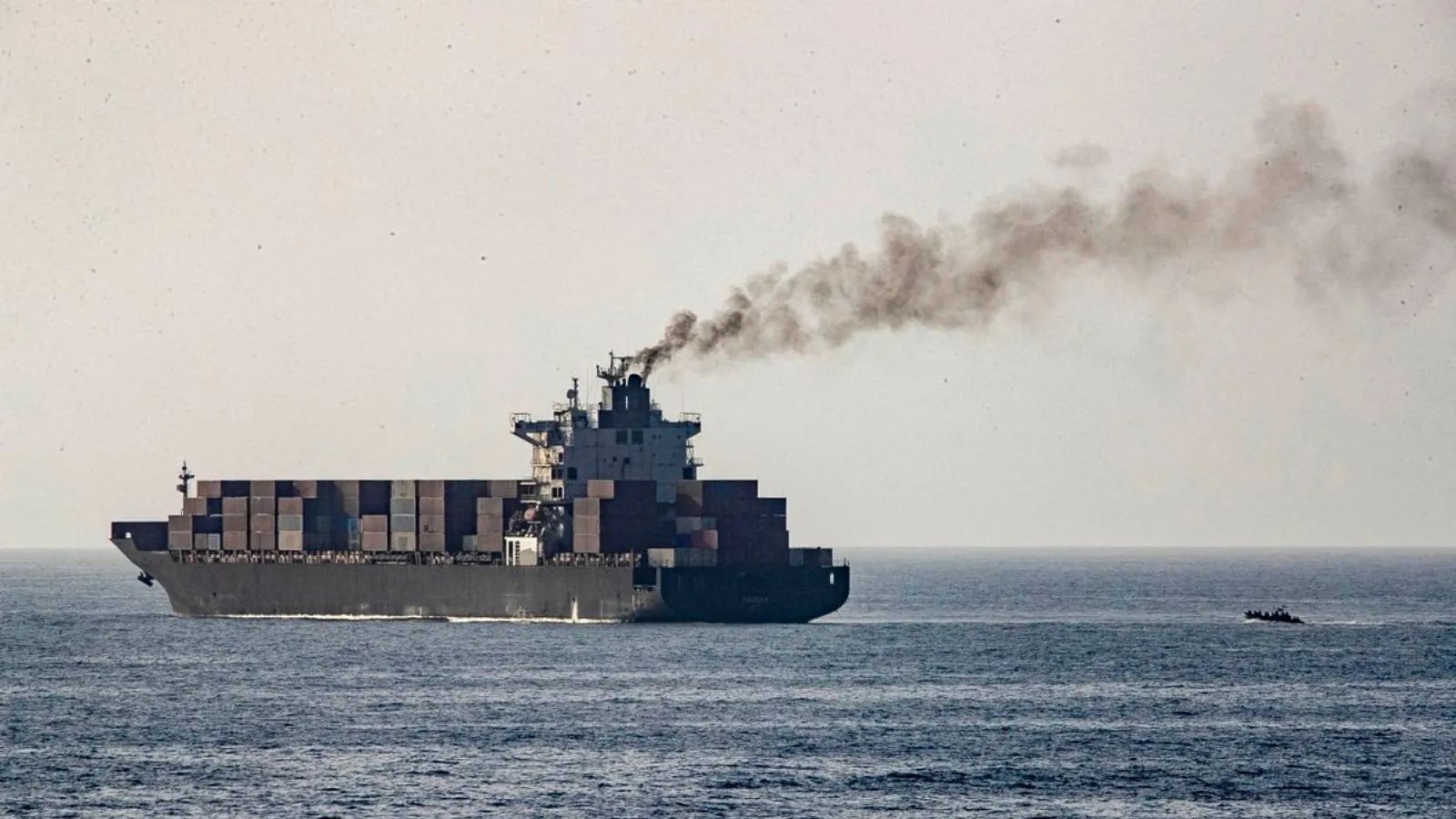
Cargo ships near the Strait of Hormuz. (File Photo)
The United States military struck multiple targets inside Iran for a second consecutive night on Saturday, after Iranian forces attacked another oil tanker passing through the Strait of Hormuz the latest in a cycle of ship attacks and military strikes that is pushing a fragile ceasefire to the edge of collapse.
The Panama-flagged tanker MT Kiku was hit by a one-way attack drone at 4:30am Eastern time while carrying more than two million barrels of crude oil through the strait. The vessel had left a Qatari oil field earlier in the week and was bound for a port in the United Arab Emirates. No crew were hurt and no cargo leaked.
A senior US official told Fox News the response was deliberately scaled up.
BREAKING: The U.S. military launched a new round of airstrikes against Iranian targets Saturday after the Islamic Revolutionary Guard Corps (IGRC) attacked another commercial vessel in the Strait of Hormuz, according to a senior U.S. official who spoke to Fox News.
The official… pic.twitter.com/PNa8vSwkqn
— Fox News (@FoxNews) June 27, 2026
“It’s a larger strike than last night,” the official said. “Iran had a chance to stop shooting and they didn’t take it. Instead, they attacked another ship in Hormuz this morning.”
The US military response
US Central Command said the strikes were carried out at President Donald Trump’s direction, targeting Iranian surveillance infrastructure, communication systems, air defence sites, drone storage facilities and minelaying equipment. Iran’s state television reported explosions in an area just north of the Strait of Hormuz. Blasts were also reported near the port of Sirik in southern Iran and on Qeshm Island.
“CENTCOM forces launched strikes today in direct response to continued Iranian aggression against commercial shipping,” the command said in a statement from Tampa, Florida.
Story continues below this ad
CENTCOM added that Iran had been given an opportunity to return to the ceasefire after Friday’s strikes but chose not to take it.
“After yesterday’s US strikes in response to the Iranian attack on M/V Ever Lovely, Iran was given a chance to honor the ceasefire agreement,” it said. “Iran elected not to.”
https://t.co/9JgYDCZXuB
— U.S. Central Command (@CENTCOM) June 27, 2026
Iran’s Revolutionary Guard said separately that it had struck several locations of what it called the “US terrorist army in the region,” without naming the sites. Bahrain, home to the US Navy’s 5th Fleet, said a number of Iranian drones had targeted the country in what its foreign ministry called “a flagrant threat to the security of citizens and residents.”
How the pattern developed
Saturday’s events followed an almost identical sequence to Friday’s. On Thursday, the Singapore-registered container ship Ever Lovely was struck by a drone while passing through the Strait of Hormuz. No one on board was injured. President Trump called the attack a “foolish violation” of a ceasefire memorandum signed on 17 June. By Friday evening the US had struck targets near Sirik, and Iran hit back against US military installations in the region.
With Iran then striking the MT Kiku on Saturday morning, the tit-for-tat exchange entered a second day. The Associated Press (AP) described the ongoing strikes as showing “the danger of the Iran war again spinning out of control, even after Iran and the US reached an interim deal.”
Story continues below this ad
Why the strait matters
At the heart of the dispute is control of the Strait of Hormuz, a narrow waterway between Iran and Oman through which close to 20 per cent of the world’s oil supply passes, along with large volumes of natural gas and fertiliser.
After the US and Israel launched attacks on Iran in February, Tehran moved to shut the strait to commercial traffic, sending global fuel prices sharply higher. The 17 June memorandum was designed to ease that pressure. It called for an immediate end to military operations and required Iran to allow commercial vessels to transit the strait freely for 60 days.
Iran has since insisted that all ships must seek its approval before passing through including vessels using a route near Oman’s coastline that has emerged as an alternative to Iran’s own sanctioned corridor.
On Saturday, the Joint Maritime Information Centre, overseen by the US Navy, announced it would expand that Omani route to allow both inbound and outbound traffic, a move likely to deepen tensions with Tehran.
Story continues below this ad
Ebrahim Azizi, who heads the Iranian parliament’s national security commission, wrote on Friday: “The Strait of Hormuz is governed by Iran, so: Respect the rules.”
The US and Gulf Arab states have rejected that position, maintaining that the strait is an international waterway.
CENTCOM said commercial vessel traffic through the Strait of Hormuz was continuing with US military backing. “US forces remain vigilant, lethal, and ready,” the command said.
The Express Global Desk at indianexpress.com which delivers authoritative, verified, and context-driven coverage of key international developments shaping global politics, policy, and migration trends. The desk focuses on stories with direct relevance for Indian and global audiences, combining breaking news with in-depth explainers and analysis.
A major focus area of the desk is US immigration and visa policy, including developments related to student visas, work permits, permanent residency pathways, executive actions, and court rulings. The Global Desk also closely tracks Canada’s immigration, visa, and study policies, covering changes to study permits, post-study work options, permanent residence programmes, and regulatory updates affecting migrants and international students.
All reporting from the Global Desk adheres to The Indian Express’ editorial standards, relying on official data, government notifications, court documents, and on-record sources. The desk prioritises clarity, accuracy, and accountability, ensuring readers can navigate complex global systems with confidence.
Core Team
The Express Global Desk is led by a team of experienced journalists and editors with deep expertise in international affairs and migration policy:
Aniruddha Dhar – Senior Assistant Editor with extensive experience in global affairs, international politics, and editorial leadership.
Nischai Vats – Deputy Copy Editor specialising in US politics, US visa and immigration policy, and policy-driven international coverage.
Mashkoora Khan – Sub-editor focusing on global developments, with a strong emphasis on Canada visa, immigration, and study-related policy coverage. ... Read More
© IE Online Media Services Pvt Ltd
# Iran US tension
Loading Recommendations...
01
02
03
04
05
Live Blog
View original source — Indian Express ↗
Related stories

Philippine Daily Inquirer
PoliticsJun 28, 2026 · 1 min
Iran Guards strike Kuwait, Bahrain in retaliation for US attack
Philippine Daily Inquirer

RNZ
PoliticsJun 28, 2026 · 1 min
Election '26: Labour proposes Apprenticeship Boost expansion
RNZ

RNZ
PoliticsJun 28, 2026 · 1 min
Nicole McKee announced as ACT's new deputy
RNZ
ABC News
PoliticsJun 28, 2026 · 1 min
If the UK has become ungovernable, some people say Brexit is to blame
ABC News