Times of India
Desert shield, Indian spear: Why UAE is looking towards BrahMos and Akashteer
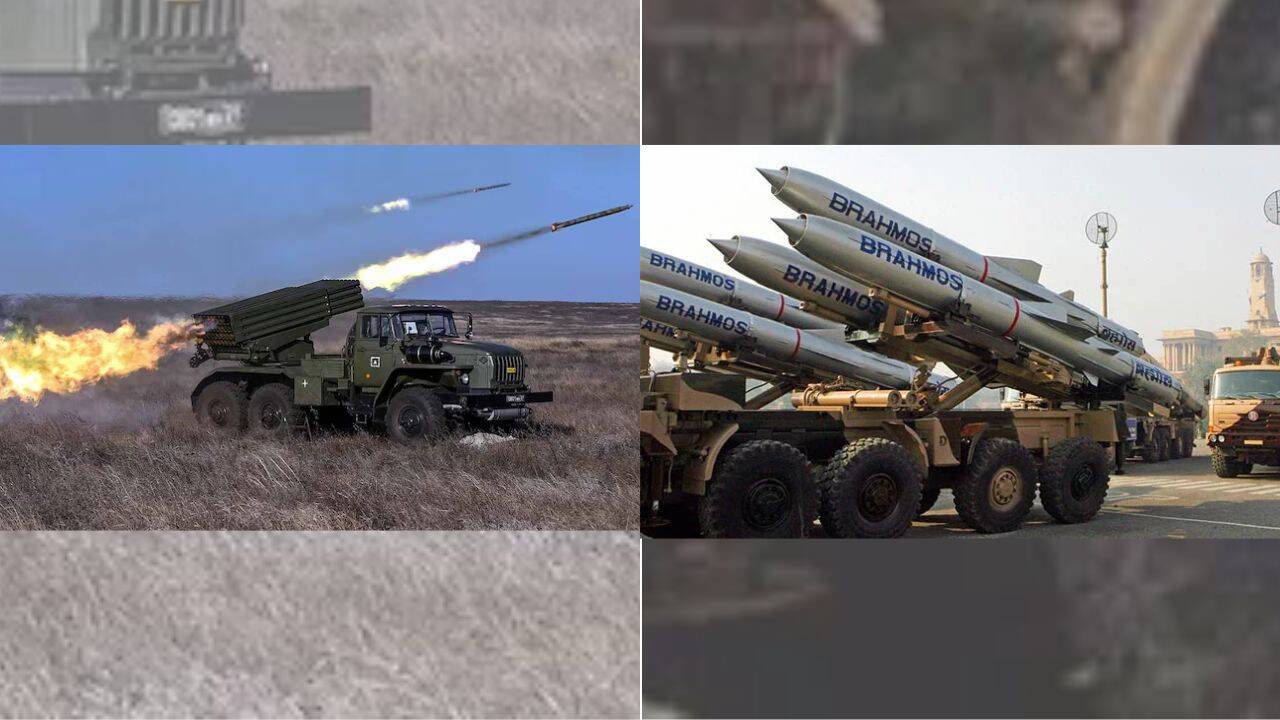
File photo: A BrahMos supersonic cruise missile and the Akashteer integrated air-defence command-and-control system. The UAE is reportedly evaluating the Indian-developed systems as it seeks to strengthen its offensive and defensive capabilities amid evolving security challenges in West Asia.
The reported interest of the United Arab Emirates in acquiring India's BrahMos supersonic cruise missile system and the Akashteer integrated air-defence command-and-control architecture reflects not only the growing confidence in Indian military technology but also the rapidly evolving security environment of West Asia.
Over the past decade, the Gulf region has witnessed a transformation in the character of warfare. Ballistic missiles, cruise missiles, armed drones and proxy warfare have emerged as the primary instruments of coercion. In such an environment, countries can no longer rely solely on conventional military strength. They require a combination of offensive deterrence and defensive resilience. The BrahMos-Akashteer combination offers precisely such a capability, making it particularly attractive to the UAE as it seeks to modernise its security architecture while maintaining strategic autonomy.
The UAE's changing security environment
The UAE occupies one of the most strategically sensitive regions in the world. Located along the southern coast of the Persian Gulf and close to the Strait of Hormuz, it sits astride one of the most critical energy and trade corridors on the planet. Every day, millions of barrels of oil and vast quantities of commercial cargo transit through waters adjacent to the Emirates. This geographicaladvantage has transformed the UAE into a major commercial, financial and logistics hub.
However, geography has also imposed significant security challenges.The emergence of long-range missile and drone capabilities among both state and non-state actors has altered traditional calculations of security. The attacks on Abu Dhabi by Yemen's Houthi movement in 2022 demonstrated that even highly developed urban centres and critical infrastructure remain vulnerable to precision strikes. Oil facilities, airports, desalination plants, military installations and commercial hubs have all become potential targets.
The lessons from recent conflicts in the Middle East, Ukraine and elsewhere have reinforced the reality that future wars may begin not with large-scale troop movements but with missile barrages and coordinated drone attacks.Consequently, the UAE is seeking capabilities that can simultaneously deter adversaries and protect national infrastructure. BrahMos and Akashteer fit neatly into this requirement.BrahMos: A weapon designed for deterrenceAmong contemporary missile systems, BrahMos occupies a unique position.
Developed jointly by India and Russia, the missile is widely regarded as the fastest operational supersonic cruise missile currently available in the international market. Travelling at speeds approaching Mach 3, BrahMos significantly reduces the reaction time available to defenders. Military planners frequently describe speed as a force multiplier because every second removed from an adversary's decision cycle reduces their ability to detect, track and intercept incoming threats.Unlike many cruise missiles that rely primarily on stealth and low-altitude flight profiles, BrahMos combines speed, precision and manoeuvrability. It is capable of striking both land-based and maritime targets with remarkable accuracy. The missile can be launched from ships, mobile land platforms, submarines and aircraft, providing flexibility across multiple operational scenarios.For the UAE, BrahMos offers more than simply an advanced weapon system.
It represents a strategic deterrent. Any adversary contemplating hostile action against Emirati interests would have to account for the possibility of rapid and precise retaliation against critical military assets. The missile's ability to threaten naval vessels is particularly relevant in the Gulf, where maritime security remains central to regional stability.Former President and renowned missile scientist APJ Abdul Kalam often emphasised that "strength respects strength."
BrahMos embodies this philosophy.It is designed not merely to fight wars but to prevent them by convincing potential adversaries that the costs of aggression would be unacceptable.
Why the gulf requires a missile like BrahMos
The strategic utility of BrahMos becomes clearer when viewed through the lens of regional threats. The Gulf region has witnessed extensive investments in missile arsenals by several states. Ballistic missiles, anti-ship missiles and long-range drones have become integral components of military planning.
Maritime choke points, offshore energy infrastructure and critical ports remain particularly vulnerable.For the UAE, maintaining freedom of navigation and protecting commercial shipping routes is a matter of national survival. The country's economy depends heavily upon uninterrupted maritime commerce. BrahMos provides a powerful anti-ship capability capable of deterring hostile naval actions. Its speed and terminal manoeuvres make interception extremely difficult, enhancing its effectiveness against modern warships.Moreover, the missile provides an important stand-off strike capability. Instead of relying exclusively on combat aircraft to deliver precision attacks, the UAE would possess an independent means of engaging high-value targets at considerable distances. This diversification strengthens deterrence while reducing operational vulnerabilities.
Akashteer: The digital shield
If BrahMos represents the sword, Akashteer represents the shield.
Unlike traditional weapon systems, Akashteer is not a missile, gun or radar. It is a sophisticated command-and-control architecture that connects various elements of an air-defence network into a single integrated system. Modern warfare increasingly depends on information superiority. Detecting a threat is no longer sufficient; military forces must also process information rapidly, distribute it across networks and assign the most appropriate response.Akashteer performs precisely this function. It integrates radar feeds, surveillance sensors, communication networks and air-defence weapons into a common operational picture. Commanders receive real-time information regarding incoming threats, enabling faster and more accurate decision-making. The system can identify, track and prioritise multiple targets simultaneously while coordinating responses across different layers of air defence.In contemporary warfare, where dozens of drones, cruise missiles and aircraft may appear simultaneously on radar screens, such integration becomesindispensable. The effectiveness of an air-defence system increasingly depends not on individual missiles but on the efficiency of the network that controls them.
Lessons from Operation Sindoor
Operation Sindoor provided an important demonstration of India's evolving military capabilities.
Although many operational details remain classified, available assessments suggest that India's integrated air-defence architecture performed effectively under demanding conditions. Akashteer reportedly played a critical role in creating a unified operational picture, enabling rapid dissemination of information and facilitating timely engagement decisions.The operation highlighted the growing importance of network-centric warfare.
Rather than relying on isolated weapon systems, military success increasingly depends on the seamless integration of sensors, shooters and command networks. Akashteer's performance reinforced confidence in India's ability to develop sophisticated digital battlefield management systems comparable to those employed by major military powers.At the same time, the deployment of BrahMos underscored India's capacity to maintain credible conventional deterrence.
The missile's presence alone contributed to strategic signalling by demonstrating the ability to conduct precise and rapid strikes against high-value targets if required.For potential buyers such as the UAE, operational validation carries immense significance. Equipment proven under real-world conditions invariably commands greater confidence than systems tested only in controlled environments.
Akashteer and the UAE's air defence architecture
The UAE already operates some of the world's most advanced air-defence systems, including Patriot and THAAD batteries.
These systems provide substantial protection against ballistic missile threats. However, recent conflicts have revealed that interceptors alone cannot guarantee security.Drone swarms, low-flying cruise missiles and mixed attack formations create unprecedented challenges. The key to defeating such threats lies in rapid detection, efficient information processing and coordinated engagement. Akashteer enhances exactly these aspects of air defence.By integrating multiple sensors and weapon platforms into a unified network, the system improves situational awareness and reduces reaction times. It enables commanders to allocate resources more efficiently and respond to threats beforethey can reach critical infrastructure. For a country whose economic prosperity depends on uninterrupted operation of airports, ports, energy facilities and financial centres, such capabilities are of enormous strategic value.
Cost-benefit analysis: Indian systems versus global competitors
One of the most compelling aspects of Indian defence technology is its combination of capability and affordability. Western weapon systems remain highly effective but often involve substantial acquisition, maintenance and lifecycle costs. For many countries, sustaining these systems over decades can become financially burdensome.BrahMos offers a unique balance between performance and cost. While missiles such as the American Tomahawk possess impressive ranges, they remain subsonic and therefore more vulnerable to interception.
European systems such as Storm Shadow provide precision strike capability but lack the speed advantage that defines BrahMos. Chinese alternatives are generally less expensive but frequently face questions regarding reliability, interoperability and long-term political implications.BrahMos occupies a niche largely of its own. It combines high speed, proven operational credibility, competitive pricing and strong industrial support.
This makes it particularly attractive for countries seeking advanced capabilities without the enormous costs associated with certain Western systems.Akashteer presents an equally persuasive value proposition. Developing an indigenous integrated command-and-control network requires years of research, testing and operational validation. Acquiring a proven architecture significantly reduces both financial costs and implementation timelines.
For the UAE, this translates into faster enhancement of defensive capabilities while avoiding the risks associated with developing entirely new systems.
Strategic implications for India and the Gulf
Should a BrahMos-Akashteer deal materialise, the implications would extend well beyond defence trade. It would represent a significant milestone in the growing strategic partnership between India and the Gulf states. Over the past decade, India and the UAE have expanded cooperation across energy, trade, investment, technology and security sectors.
Defence collaboration represents a natural progression of this relationship.For India, such an agreement would reinforce its emergence as a credible exporter of advanced military technology. For decades, India was among the world's largest importers of defence equipment. Today, it is steadily transforming into a producer and exporter capable of competing in international markets. A major sale to the UAE would serve as a powerful endorsement of Indian defence manufacturing and could encourage additional acquisitions by other Gulf Cooperation Council members.For the UAE, the acquisition would diversify defence partnerships while enhancing national security. Rather than depending exclusively on traditional suppliers, Abu Dhabi would gain access to combat-proven technologies from a trusted strategic partner.The security environment of the Gulf is entering a new era characterised by missile proliferation, drone warfare and increasingly sophisticated precision-strike capabilities.
In such an environment, deterrence and defence must operate together as part of an integrated strategy.BrahMos and Akashteer represent two complementary components of that strategy. BrahMos provides the ability to impose costs on potential adversaries through rapid and precise offensive action. Akashteer provides the intelligence, coordination and responsiveness required to defend against complex aerial threats.Their reported consideration by the UAE reflects a broader recognition that future conflicts will be decided not merely by the number of weapons a country possesses but by the speed with which it can detect threats, make decisions and deliver precise effects. In that contest, India's emerging defence technologies are increasingly proving that they belong among the world's leading military systems.
View original source — Times of India ↗
Related stories

Philippine Daily Inquirer
TechnologyJun 28, 2026 · 1 min
The Miss Philippines rallies Filipinos to vote for Katrina Llegado
Philippine Daily Inquirer

SBS News
TechnologyJun 28, 2026 · 1 min
Trump says Iran 'will not exist' as negotiations break down and fire exchanged
SBS News
Dawn
TechnologyJun 28, 2026 · 1 min
Lebanon hit by Israel again despite signing peace deal
Dawn

BBC
TechnologyJun 28, 2026 · 1 min
I hear my son crying beneath the rubble, says Venezuela earthquake survivor
BBC