Indian Express
Ask not what badminton can do for America
Ask not what badminton can give to USA. Ask what USA can do for badminton.
The country that built the backyard, and then blamed the sport for being played in it, owes badminton a reckoning.
For years the American diss on badminton has been that it is too casual, too flimsy to be serious, a game played while munching sandwiches, tossed about for a lark. It is about as far from reality as a sport can get. Badminton on a proper court is a wringer on physicality, endurance, speed, strength and agility, with wildly deceptive intricacies layered underneath. The shuttle travels faster than a smashed tennis ball. The rallies leave players burning more calories per minute than almost any other sport. None of which gets through, because the backyard image stuck.
What makes this particularly absurd is that America once knew better.
In 1949, David Freeman of Pasadena, California, a man who was undefeated in singles competition for fourteen years and trained as a neurosurgeon, won the All-England Championships, then the unofficial world title. The United States won 23 world individual championships between 1949 and 1967. Sports Illustrated put Joe Alston on its cover in March 1955. A country that produced all of that somehow convinced itself the sport was beneath serious attention.
Part of the answer is Hollywood, which in the 1940s and 50s did for badminton what it later did for tennis and golf: made it glamorous by actually playing it. Bette Davis, James Cagney, Boris Karloff, Ginger Rogers, Harold Lloyd, Pat O’Brien, Sonja Henie. Not watching from the sidelines. Playing. Nobody who sweated through a proper game dismissed it as a backyard pastime. The sport’s charm was self-evident to anyone who picked up a racket.
Rumour has it Leonardo DiCaprio plays. He hasn’t confirmed it, which is very on brand for a sport that never asked to be made famous.
Paul Newman understood this better than most. He played intercollegiate badminton in his youth, set it aside, then picked it up again in his late 50s and continued into his late 70s. In 2005, aged 80, he beat Jay Leno in a go-cart race backstage at the Tonight Show and then sat down to talk about his love of badminton. A man who outdrove a television host at 80 was still making the case for a sport America had long since stopped listening to.
Hollywood legend Paul Newman played intercollegiate badminton in his youth, set it aside, then picked it up again in his late 50s and continued into his late 70s. (Reuters Photo)
Tennis found the Open era and mass commercial appeal. Squash found its niche. Pickleball and padel, the genuinely dumbed-down sports, made the idea of athleticism seem accessible to people who had given up on it. Badminton meanwhile remained on the margins, slapped with the backyard label, quietly peaking on the other side of the world.
The administrative moves are happening. USA Badminton moved its nerve centre from Colorado to California, the logic being direct flights across the Pacific from China, Japan and Indonesia, where the actual champions come from. The US Open has shifted from Iowa to California. The 2028 Olympics in Los Angeles offer a window. The way Americans took to football, the real one, suggests their sporting imagination is not entirely closed.
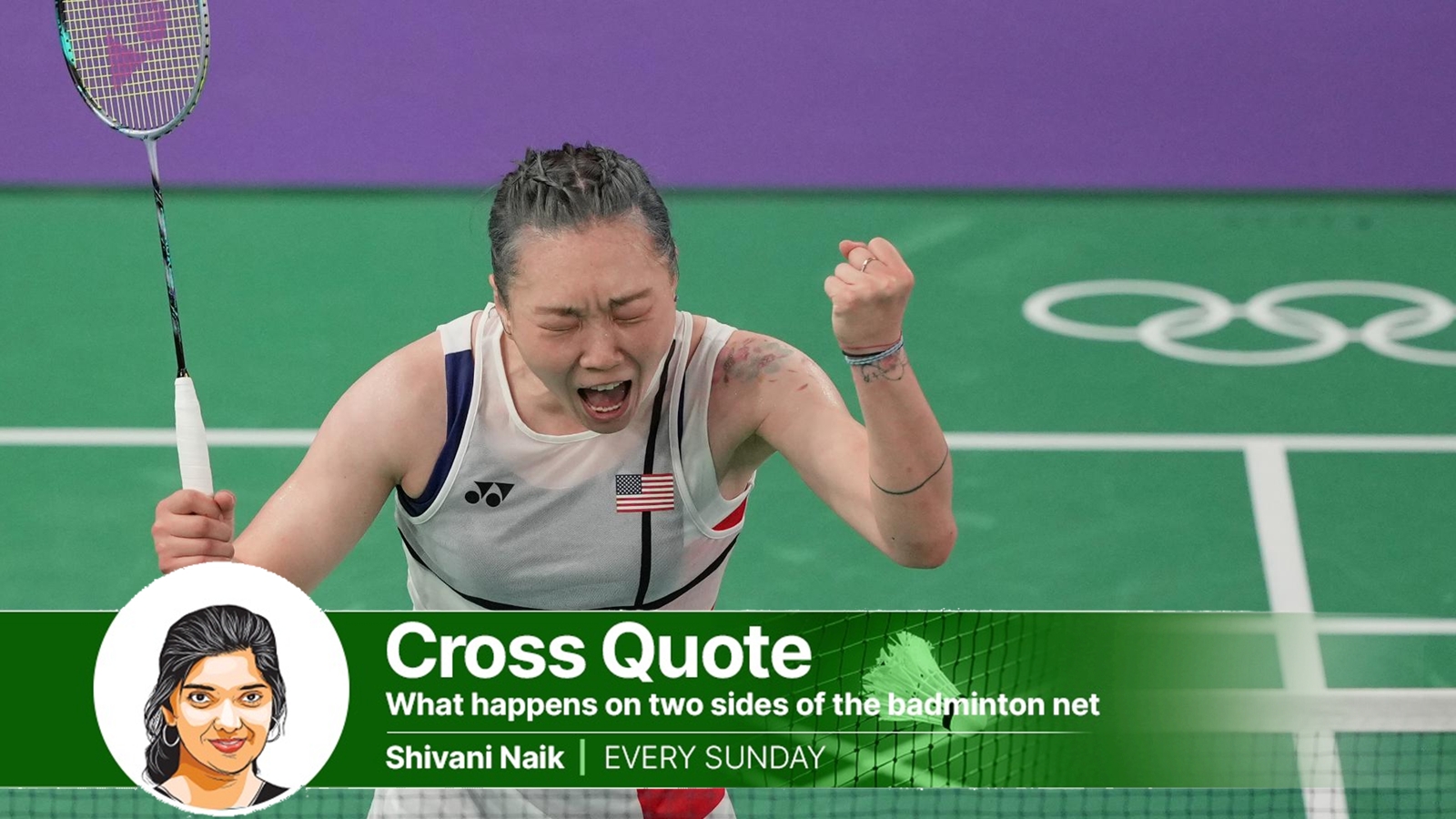
But the gap between effort and reward remains grotesque. Beiwen Zhang held the US number one ranking for eight years, climbed to ninth in the world, and had to go to GoFundMe to pay her way to the 2018 World Championships. She raised $6,700 in six days from badminton fans worldwide, because there was nothing coming from the country she represented. She crowdfunded her way to Tokyo too. A top-ten player in the world, representing the United States, on GoFundMe. The backyard image is not just a perception problem. It has financial consequences for the people who play the sport seriously.
Somewhere between David Freeman’s fourteen unbeaten years and Beiwen Zhang’s GoFundMe page, America lost the thread. The 2028 Games in its own backyard might be the moment to pick it up again.
View original source — Indian Express ↗
Related stories

ESPN
SportsJun 28, 2026 · 1 min
With Zayas out of the way, 'Boots' Ennis looks to ...
ESPN

The Punch
SportsJun 28, 2026 · 1 min
Meet Nigerian woman attempting 144-hour Bible reading Guinness world record
The Punch
The Punch
SportsJun 28, 2026 · 1 min
World Cup 2026 Round of 32: Full fixtures, dates, venues revealed
The Punch
Times of India
SportsJun 28, 2026 · 1 min
DR Congo's 90-minute 'standing superfan' denied US visa
Times of India