Indian Express
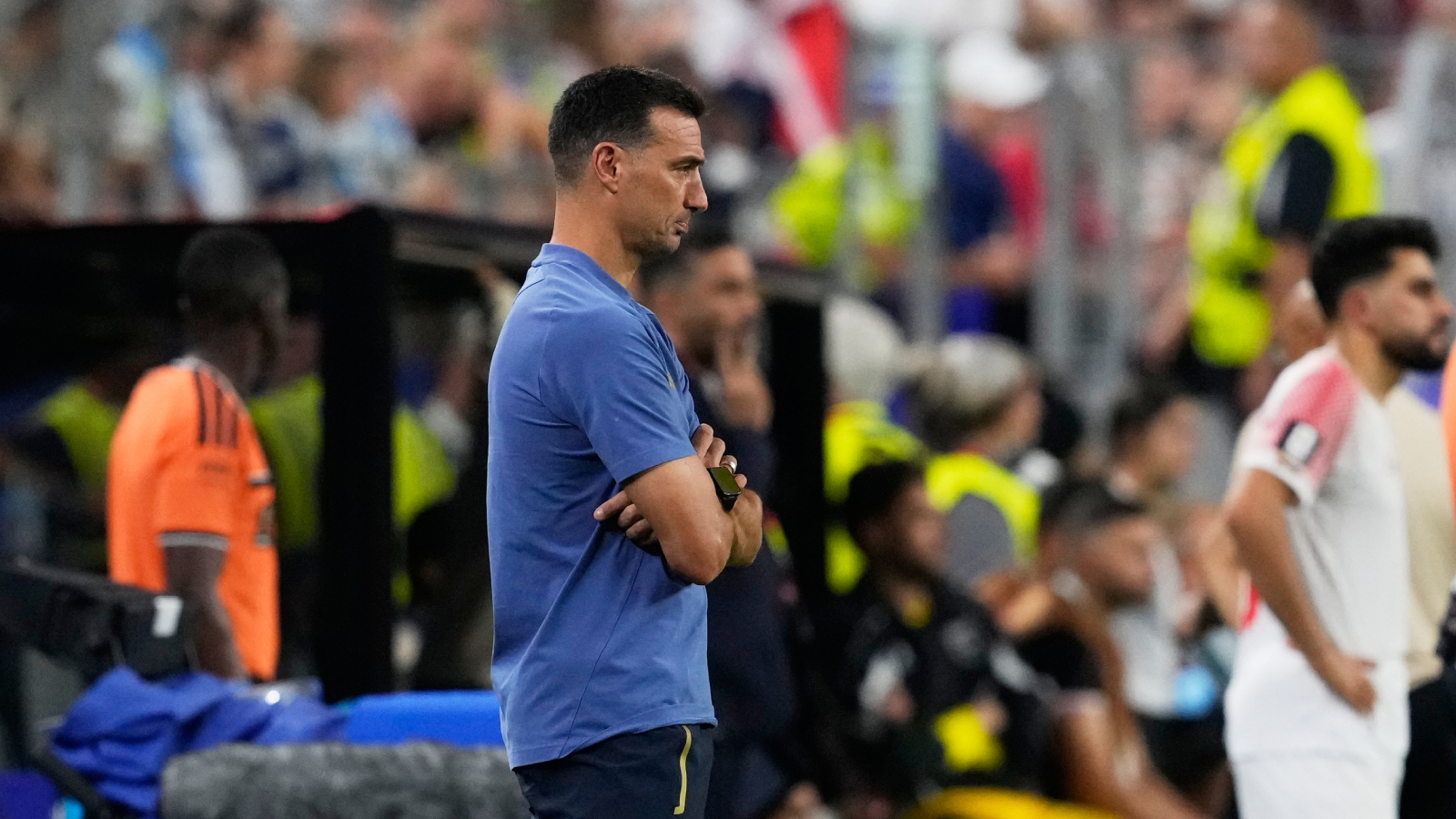
How Lionel Scaloni built an Argentina side that can thrive without Lionel Messi
The perfect 45 minutes. And it came with the best player in the world sitting on the bench.
Argentina unleashed the full scope of their powers against current Asian Cup finalists Jordan – sitting nine of their starting eleven, including an ageless, six-goals-and-counting Lionel Messi – and still provided a distilled Argentine footballing experience championed by Lionel Scaloni.
In ways this team is more like the last Scaloni was a part of as a player and the first Messi entered into. Eerily reminiscent of the Argentina of 2006, he has fashioned a group that acts as an intense cluster of neural networks in the middle of a park, all lighting up at individual moments, each learning and moving at the whims of their peers.
ALSO READ | Messi, Ronaldo, Mbappe, Haaland: A golden boot race unlike any other
Jose Pekerman’s 2006 Argentina had its faults. But a 52-second, 25-pass goal finished by Esteban Cambiasso, to this day, ranks as one of Argentina’s great World Cup moments. That team lost to Germany on penalties in the Round of 16 – a defeat that ended up shaping the pressure a young Lionel Messi would feel to bring success to Argentina. Scaloni was part of that sobering moment as well. Twenty years later, the man who loves to tango, has built up a version of Argentina that complements the brawn to its beauty.
Part of the charm of this iteration is their willingness to scrap.
Argentine identity
Scaloni willfully sets up his team to not play the ball around the edges of a pitch. They play narrow and invite their opponents to match them on that plane. In Ryan Coogler’s Creed 2, there is a training montage where the ageing character of Sylvester Stallone’s Rocky Balboa puts a tire in the middle of the ring and asks Michael B Jordan’s Adonis Creed to put his lead foot in the tire, not move, and box from that vantage – ‘That’s where the fight’s going to be. Toe-to-toe. Get used to it’, he raspily wisps.
Story continues below this ad
Scaloni sets the terms of the fight and where it will take place on the pitch. Once there though, Argentina is unique.
In their first half against Jordan, that neural telepathy was out in full force. It started with Nicolas Otamendi and Leandro Parades, acting like cocky bullfighters, holding onto the ball just that second longer, inviting pressure onto them. They are unfazed by the Jordanian midfield press that is circling in on them – markedly different from the approach of European football players who view an incoming press as a nuisance and not how Argentina envisions it – an opportunity to build.
Passes fly like little bursts of lightning. Balls are released at a high pace and all Argentines almost come with a manual within themselves to trap the bullet that’s the ball and contort it into the best possible position – meanwhile the player about to receive the next pass has already anticipated which side the ball is going to appear.
That collectivistic march towards goal – where the pass moves not just the ball but the team – usually ends with the key of Argentina’s attack, Lionel Messi. The system is built to champion Argentine football heritage but equally render Messi at his most potent – running with the ball at the last line of defence.
Story continues below this ad
In his absence from the start, Giovani lo Celso and Lautaro Martinez displayed that the system may be built for Messi but this is a generation of Albiceleste footballers who can go deep into this World Cup on their own. And it all comes down to Scaloni.
Almost out of football
Steven Gerrard once almost knocked Scaloni out of football.
The story goes that West Ham United were about to win their first title in 26 years and only the fourth in their history at that point. Until Gerrard unleashed a ridiculous goal – one that Scaloni faulted himself for. West Ham chose not to re-sign him and the Argentine, who took more blame on himself than most players, almost made the choice to exit football completely.
But instead he chose to go to Spain, where a spate of clubs came and went. He then ended up meeting his wife, had kids and then had a seamless transition into coaching – where he met Spanish trainer Luis de la Fuente.
Story continues below this ad
The current coach of Spain, one credited with galvanising the latest generation of Spanish footballers, De la Fuente’s path mirrors Scaloni’s. They both were entrusted with the youth of their country and share an affinity to recognising the true profiles of the players under them – a crucial ability when your country isn’t afforded the raw talent of the French.
De la Fuente was Scaloni’s instructor on his path to gaining the UEFA Pro License. The compliments between the two to each other over the years have been warm and respectful. But the teacher and his student could not be any different over their ideas on the pitch. De la Fuente’s pragmatism runs Spain’s football. Scaloni’s version lifts Argentines above their individual self.
Scaloni has fought the view that South American football, with its own pockets of uniqueness, must adhere to the might of Europe. Time and again, Brazil are admonished over the death of Joga Bonito, and that their current crop of players aren’t of the same ilk as that of the past.
Scaloni, with Argentina, has shown that systems outlast talent. That a group of Argentines that play in Europe, can shed that weight and seamlessly transfer to an Argentine team in spirit. And that Messi is the cherry on top, not the sundae itself.
View original source — Indian Express ↗
Related stories

The Punch
SportsJun 28, 2026 · 1 min
World Cup: Meet nine African teams in the knockout stage
The Punch

Philippine Daily Inquirer
SportsJun 28, 2026 · 1 min
What's offside? And all your other World Cup questions, answered
Philippine Daily Inquirer
BBC Sport
SportsJun 28, 2026 · 1 min
Crystal Palace and Sunderland top Premier League World Cup goals chart
BBC Sport

Philippine Daily Inquirer
SportsJun 28, 2026 · 1 min
Gilas Pilipinas bucks travel woes, routs Kiwi club in tune-up
Philippine Daily Inquirer