Philippine Daily Inquirer
Philippine Daily Inquirer··4 min read
Beyond games, socmed, Legarda urges deeper look into youth violence
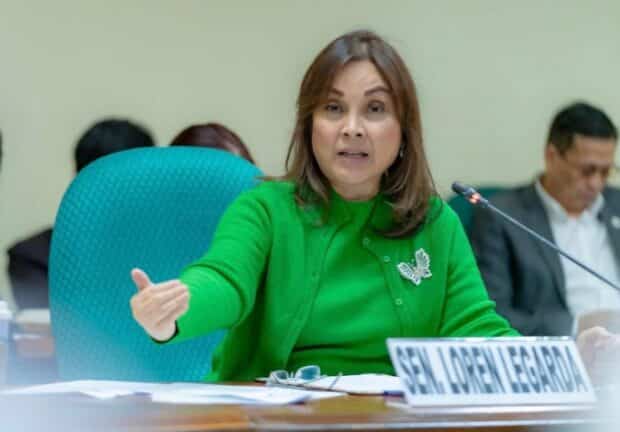
MANILA, Philippines — Referencing the tragic shooting at San Jose National High School in Tacloban City, Sen. Loren Legarda urges the public to look beyond simple explanations and treat the tragedy as a warning about deeper and interconnected challenges facing Filipino youth today.
“Social media and online games may be part of the story, but they are not the whole story. They must be examined seriously because they can shape behavior, normalize violence, or expose children to harmful communities. But they cannot be the only explanation,” Legarda said in a recent statement
“The harder question is: What else was happening in this child’s life, what warning signs went unnoticed, and how do we make sure the next child in crisis is met with support before tragedy strikes?” she added.
Article continues after this advertisement
READ: Press pause: Experts, gamers caution vs blaming video games
FEATURED STORIES
NEWSINFO
NEWSINFO
NEWSINFO
Deeper struggles, failures
According to Legarda, violence among young people is often linked to deeper struggles and failures in the support systems meant to protect children.
Citing a study in the Journal of Pediatric Health Care, she noted that perpetrators often show serious underlying concerns, including trauma, profound depression, severe anxiety, and suicidal ideation.
“When a child reaches a point where violence becomes imaginable, we must ask what happened long before that moment. Children do not wake up one day disconnected from their peers, overwhelmed by anger, or unable to see alternatives to violence. Those conditions develop over time,” she said.
“If bullying is proven to have played a role, then this tragedy should remind us that bullying is never harmless. What some dismiss as teasing can leave deep wounds that affect a child’s sense of belonging, safety, and self-worth,” she added.
Article continues after this advertisement
Troubling access to firearms
Minors involved in crimes must still be held accountable under the law, subject to due process, child protection standards, and the country’s juvenile justice framework, Legarda stressed.
But regardless of motive, she pointed out that one fact remains deeply troubling: The minor suspects in the Tacloban shooting gained access to firearms.
Article continues after this advertisement
“No matter what influenced these young people, this tragedy became deadly because guns found their way into the hands of children. We must determine exactly how that happened and ensure accountability where negligence is found,” Legarda said.
“If, as reports indicate, one of the firearms used was government-issued, then this is no longer just a matter of individual responsibility. It becomes an institutional issue that demands a thorough review of firearm custody, safekeeping protocols, and accountability mechanisms within the agencies concerned,” she added.
READ: Docs’ prescription: Keep kids off social media
Child safety in social media
Legarda called on families, schools, communities, technology companies, and government institutions to work together to protect children, particularly from the effects of social media.
“Our children are growing up in a world that is more connected than ever, but many also feel more isolated than ever. They face pressures from school, social media, family expectations, economic uncertainty, and online environments that previous generations never had to navigate,” Legarda said.
Mindful of the harmful effects of social media, Legarda previously filed Senate Bill No. 1955, or the proposed “Children’s Safety in Social Media Act,” which requires platforms to enforce a minimum user age of 16 while protecting children online and respecting free speech.
In view of the Tacloban tragedy, Legarda is also considering a complementary measure requiring age verification for violent and mature-rated video and online games, using safeguards similar to fintech systems, such as government-issued identification and photo recognition, to help prevent minors from accessing age-inappropriate content.
Legarda emphasized, however, that digital safeguards alone are not enough, saying: “Digital platforms have responsibilities that extend beyond profit. Child safety must be built into the design, operation, and governance of online spaces. But protection must also respect privacy. Children should not be forced to surrender unnecessary personal data just to be kept safe from harm.”
Shared responsibility
Protecting children must be a shared responsibility of families, schools, communities, digital platforms, and the government, Legarda said.
For schools, she recommends the following steps:
Detect warning signs early
Enforce anti-bullying measures
Provide real guidance and counseling support
Refer children in crisis to proper help
Parents and communities, she said, could also do the following:
Be more engaged
Urge that online and gaming spaces must be made safer
Call for campuses to have practical security protocols
Keep firearms, especially those issued by the government, strictly out of children’s reach
“We cannot wait for the next tragedy before we act. The lesson of Tacloban is that when warning signs are missed, when children fall through the cracks, and when support systems fail, the consequences can be heartbreaking,” she said.
Your subscription could not be saved. Please try again.
Your subscription has been successful.
“It takes a whole village to protect a child, and we owe it to every Filipino child to build safer, more caring schools, homes, online spaces, and communities,” she added. /atm
View original source — Philippine Daily Inquirer ↗
Related stories

The Punch
PoliticsJun 28, 2026 · 1 min
US lawmaker proposes bill to ban immigration from three African countries
The Punch
The Punch
NewsJun 28, 2026 · 1 min
Foundation moves to boost maize farming in Kano
The Punch
The Punch
NewsJun 28, 2026 · 1 min
Police probe death of Kogi teacher assaulted for disciplining pupil
The Punch
The Punch
BusinessJun 28, 2026 · 1 min
PRP presidential aspirant rejects chairman’s call for Tinubu’s resignation
The Punch