
Hacker Noon
Troitsk Nu-Mass Hardware: WGTS, MAC-E Filter, and Multi-Pixel SDD Architecture
Table of links Abstract 1 Introduction 2 Troitsk nu-mass 3 Rear wall simulation 4 Results and References 2 Troitsk nu-mass The experiment consists of two main components, figure 1, which are a Windowless Gaseous Tritium Source and an Electrostatic Spectrometer with Magnetic Adiabatic Collimation (MAC-E filter), reference [1]. The spectrometer entrance pitch magnet is at 7.2 T. The magnetic field in the detector location is 1.8 T. A gaseous source with freely circulating radioactive gas allows one to avoid solid state effects associated with a "substrate" or "window". The magnetic field in the WGTS has the shape of a magnetic bottle formed by the superconducting solenoids with a field value of 0.2 T in the main central part with a diameter of 50 mm and 1.2 T magnets at the edges with an inner diameter of 20 mm. To describe the motion of electrons in a magnetic field it is necessary to use a simple formula for transformation of the particle azimuthal angle 𝜃 relative to the field direction with the field strength, 𝐵 \ We can estimate the maximum angle of electrons produced in the WGTS at which they will escape from the bottle. In this case 𝑠𝑖𝑛(𝜃1) = 1 and 𝜃2 = 𝑎𝑟𝑐𝑠𝑖𝑛( √︁ 𝐵2/𝐵1). With 𝐵1=1.2 T and 𝐵2=0.2 we get 23 degrees relative to the field axis. All electrons at a larger produced angle will be trapped. Electrons from the WGTS are transported to the spectrometer by a system of superconducting solenoids. A pitch solenoid at 7.2 T at the spectrometer entrance sets an additional angular cut of about 9 degrees for the 𝛽-electrons produced in the WGTS in the direction of the spectrometer. The MAC-E filter acts as an electrostatic rejector of all electrons with energy less than a given spectrometer potential. Measurement at different values of the retarding potential gives an integrated energy spectrum. A 7 pixel silicon drift detector (SDD), figure 1, with a total diameter of about 6 mm is used as an electron detector. This SDD similar to the one used in reference. :::info Authors: V.G. Chernov V.S. Pantuev ::: :::info This paper is available on arxiv under CC by 4.0 Deed (Attribution 4.0 International) license. ::: \
View original source — Hacker Noon ↗
Related stories

Engadget
TechnologyJun 28, 2026 · 1 min
5 easy ways to get more range out of your EV
Engadget

TechRadar
TechnologyJun 28, 2026 · 1 min
Megapod is the modular AI data center kit that Elon Musk's Tesla wants to sell
TechRadar

Times of Israel
TechnologyJun 28, 2026 · 1 min
Knesset panel to advance measure freezing arrests of Haredi draft evaders for 90 days
Times of Israel
South China Morning Post
TechnologyJun 28, 2026 · 1 min
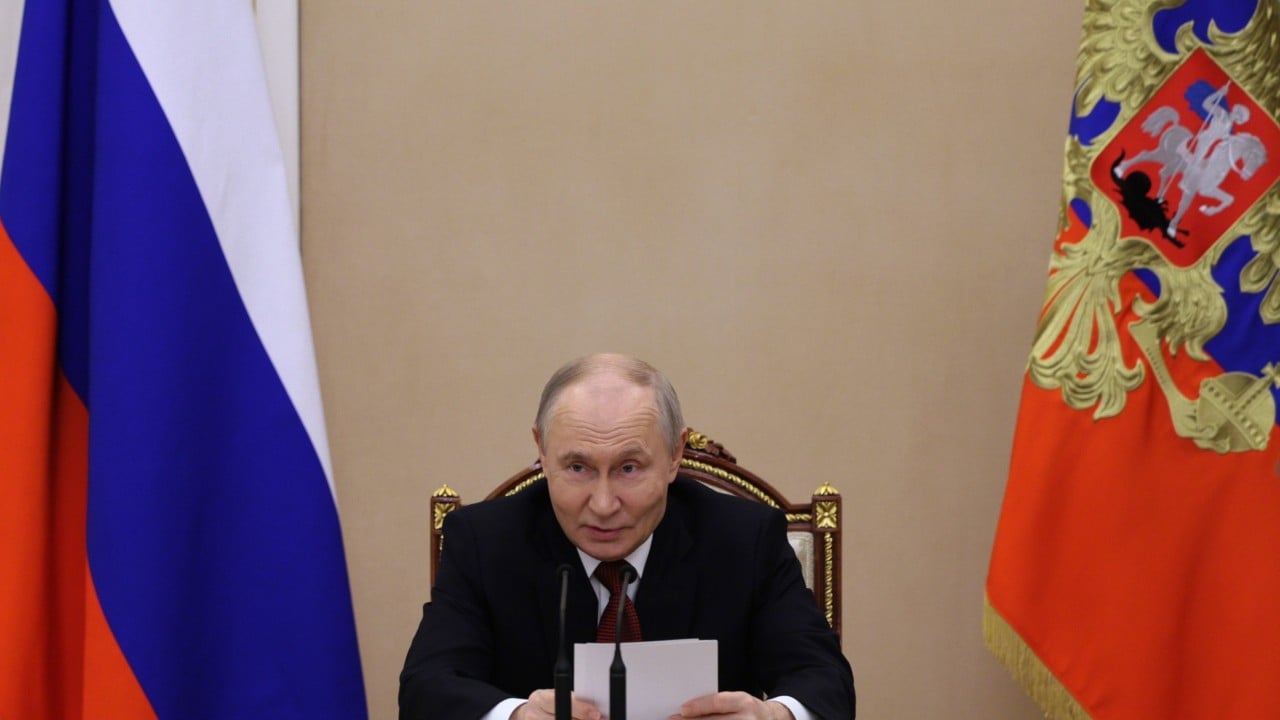
Ukraine drone assault ignites Russian oil refinery as Putin recognises ‘difficult period’
South China Morning Post