Indian Express
Indian Express··5 min read
Lessons from fighting Maoists for 14 years from Bastar’s top cop
5 min readJun 29, 2026 08:17 AM IST
After 14 years in Bastar, outgoing Inspector General of Police Sundarraj Pattilingam says the anti-Maoist campaign taught him resilience, emotional balance and leadership as he prepares to join the National Investigation Agency.
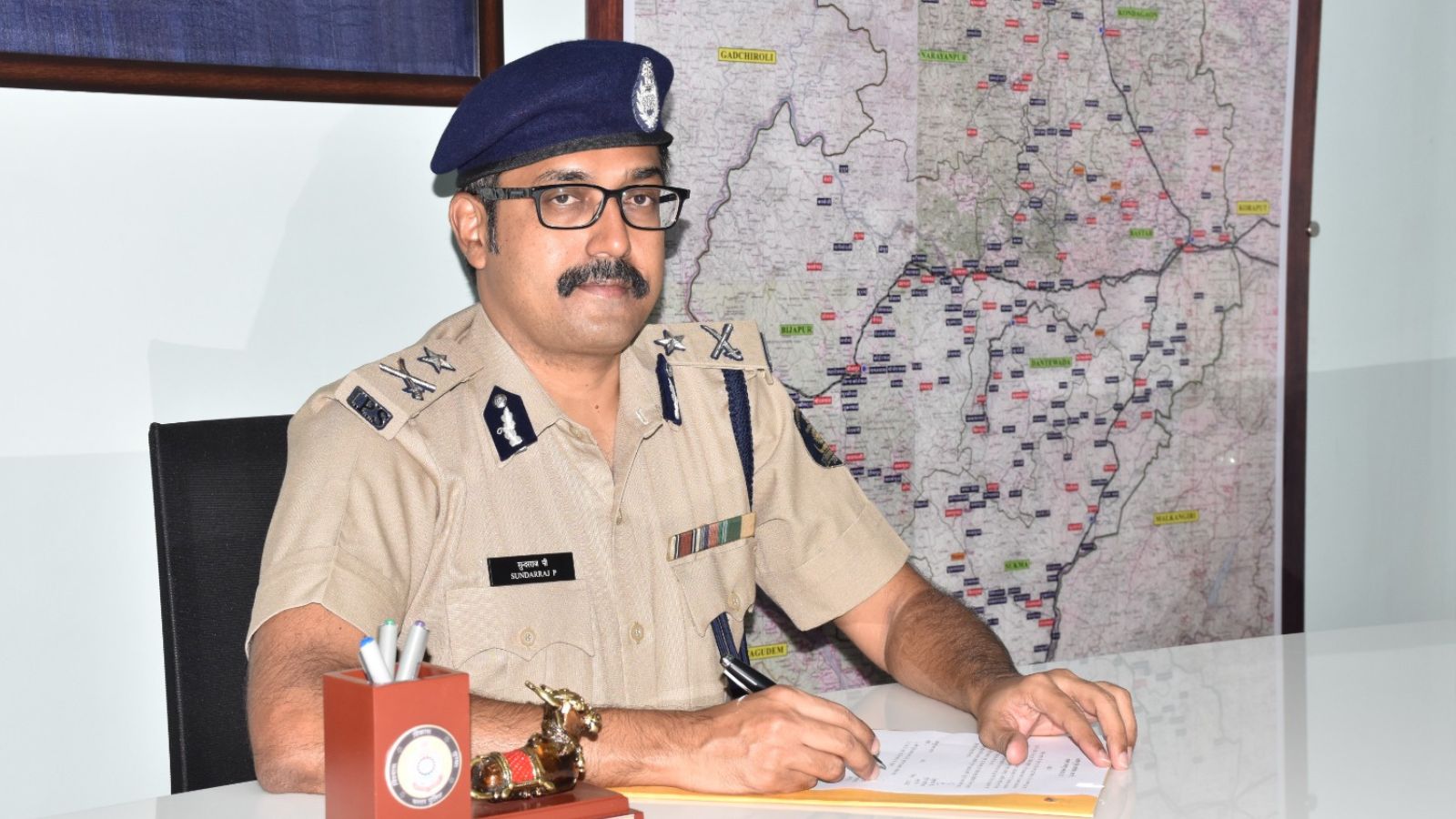
After serving 14 years in Bastar and leading it through the final phase of the state’s anti-Maoist campaign, Inspector General of Police (IGP) Sundarraj Pattilingam, 46, is moving to the National Investigation Agency (NIA), leaving behind a region that is now largely free of Left Wing Extremism (LWE).
Sundarraj, the longest-serving IGP of Chhattisgarh’s Bastar range, became the face of counter-insurgency operations in what was once India’s worst LWE-affected region and home to the country’s top Maoist leadership. Looking back at his years in Bastar, he says the experience fundamentally changed him.
“I learnt how to hide my emotions and accept the uncertainty of Bastar,” he says.
Sundarraj was first posted to Bastar in 2005 as a young officer, when the Salwa Judum movement had just begun, with local tribals being armed to fight Maoists who were often from their own communities.
Across four stints spanning 14 years, he witnessed the deaths of hundreds of security personnel, many of whom he had never met personally.
“Bastar changed me in many ways. I have attended numerous final rites of our martyrs over the years, and each one remains deeply painful. There is no formula for dealing with such moments. Perhaps the most significant change was learning to regulate my emotions. Whether it was the loss of a colleague or a difficult operational setback, I learned to remain composed because hundreds of officers and jawans looked to their leadership for confidence and direction. I also developed a deeper appreciation for the sacrifices made by police personnel and their families,” he recalls.
Another lesson, he says, was learning to live with uncertainty.
Story continues below this ad
“The greatest learning was accepting uncertainty. In Bastar, no day was predictable. The phone could ring at any hour of the day or night with information about an encounter, an IED blast, a surrender, or a civilian incident. Sometimes, it brought encouraging news, and sometimes heartbreaking news. I learned that leadership demands emotional balance irrespective of circumstances. One has to remain calm, take objective decisions, and continue moving forward despite the emotional highs and lows that come with such responsibility.”
Even holidays, he says, were never truly holidays: “I, as well as personnel from our forces, spent our holidays fulfilling family commitments before returning to duty.”
Sundarraj’s tenure as Bastar IGP from 2019 until the Union government’s March 26 deadline to eradicate LWE witnessed some of the biggest anti-Maoist operations in the region. By 2019, Bastar had entered a decisive phase, with an expanded security presence and a growing network of camps steadily shrinking Maoist influence.
Though reluctant to count his victories, Sundarraj says the killing of CPI (Maoist) general secretary Nambala Keshava Rao alias Basavaraju in May 2025 marked a significant turning point, along with the neutralisation of several members of the Maoists’ Central Committee.
Story continues below this ad
He says he ensured that security forces did not celebrate such operations. “We consciously discouraged celebrations after successful operations because our objective was never revenge,” he says.
‘Greatest pain’
Asked about his biggest regret, Sundarraj says it is the loss of security personnel over the years.
“The greatest pain remains the lives we lost during operations and thinking about their grieving families. While we continuously learned from every setback and refined our methods, the loss of even a single jawan remains something that weighs heavily on the conscience of every commander,” he says.
On how he coped with the emotional toll of losing personnel, Sundarraj says his upbringing helped shape his outlook.
Story continues below this ad
“I come from a farming family where life itself was demanding and challenging. There are years of abundant harvest and years of loss, despite putting in the same hard work. Farming teaches humility, resilience, and the ability to accept outcomes that are beyond one’s control. Those lessons stayed with me throughout my service,” he says.
As he prepares to leave Bastar, Sundarraj says preserving the gains made over the years will require collective effort.
“Lasting peace and sustainable development can only be achieved if we all work together to protect this hard-earned stability,” he says.
He also has a message for surrendered Maoists: “Choosing peace requires courage. Surrender is not the end of a journey but the beginning of a new one.”
© The Indian Express Pvt Ltd
Jayprakash S Naidu is a Principal Correspondent for The Indian Express, currently serving as the state correspondent for Chhattisgarh. With an extensive career in frontline journalism, he reports on the political, security, and humanitarian landscape of Central India.
Expertise and Experience
Specialized Conflict Reporting: Jayprakash is a leading voice on the Maoist/Naxalite conflict in the Bastar region. His reporting provides a critical, ground-level view of:
Internal Security: Tracking high-stakes encounters, surrender programs for senior Maoist leaders, and the establishment of security camps in formerly inaccessible "heartland" villages.
Tribal Rights & Displacement: Investigative reporting on the identity and land struggles of thousands of displaced tribals fleeing conflict zones for neighboring states.
Governance & Bureaucratic Analysis: He consistently monitors the evolution of Chhattisgarh as it marks 25 years of statehood, covering:
Electoral Politics: Analyzing the shift in power between the BJP and Congress and the impact of regional tribal movements.
Public Policy: Reporting on landmark infrastructure projects (e.g., mobile connectivity in remote zones) and judicial interventions, such as High Court rulings on civil and family law.
Diverse Investigative Background: Prior to his current focus on Chhattisgarh, Jayprakash held reported from Maharashtra, where he specialized in:
Crisis & Disaster Management: Notable for his extensive coverage of the Cyclone Tauktae barge tragedy (P-305) and the COVID-19 pandemic’s impact on frontline personnel.
Legal & Human Rights: Investigative pieces for platforms like Article-14, focusing on police accountability and custodial deaths across India.
Environmental & Social Justice: Authoritative reporting on the Hasdeo Aranya forest protests and the approval of major tiger reserves, highlighting the tension between industrial mining and environmental preservation. ... Read More
Tags:
Bastar
Chhatisgarh Maoist attack
Chhattisgarh maoist
View original source — Indian Express ↗
Related stories

ESPN
SportsJun 29, 2026 · 1 min
Gray no-hitter ends in 8th, Red Sox sweep Yankees
ESPN

South China Morning Post
EntertainmentJun 29, 2026 · 1 min
China’s aircon scarce in Europe, Wu Chun’s luggage ordeal: 5 weekend reads you missed
South China Morning Post

Antara News
NewsJun 29, 2026 · 1 min
IP Go-Global Business Matching Session held in Guangzhou
Antara News

Antara News
BusinessJun 29, 2026 · 1 min
Indonesian minister urges culture-based economy to drive growth
Antara News