Indian Express
Indian Express··4 min read
Court refuses to cancel dowry case, says previous complaint omissions don’t erase new cruelty
4 min readNew DelhiJun 29, 2026 12:00 PM IST
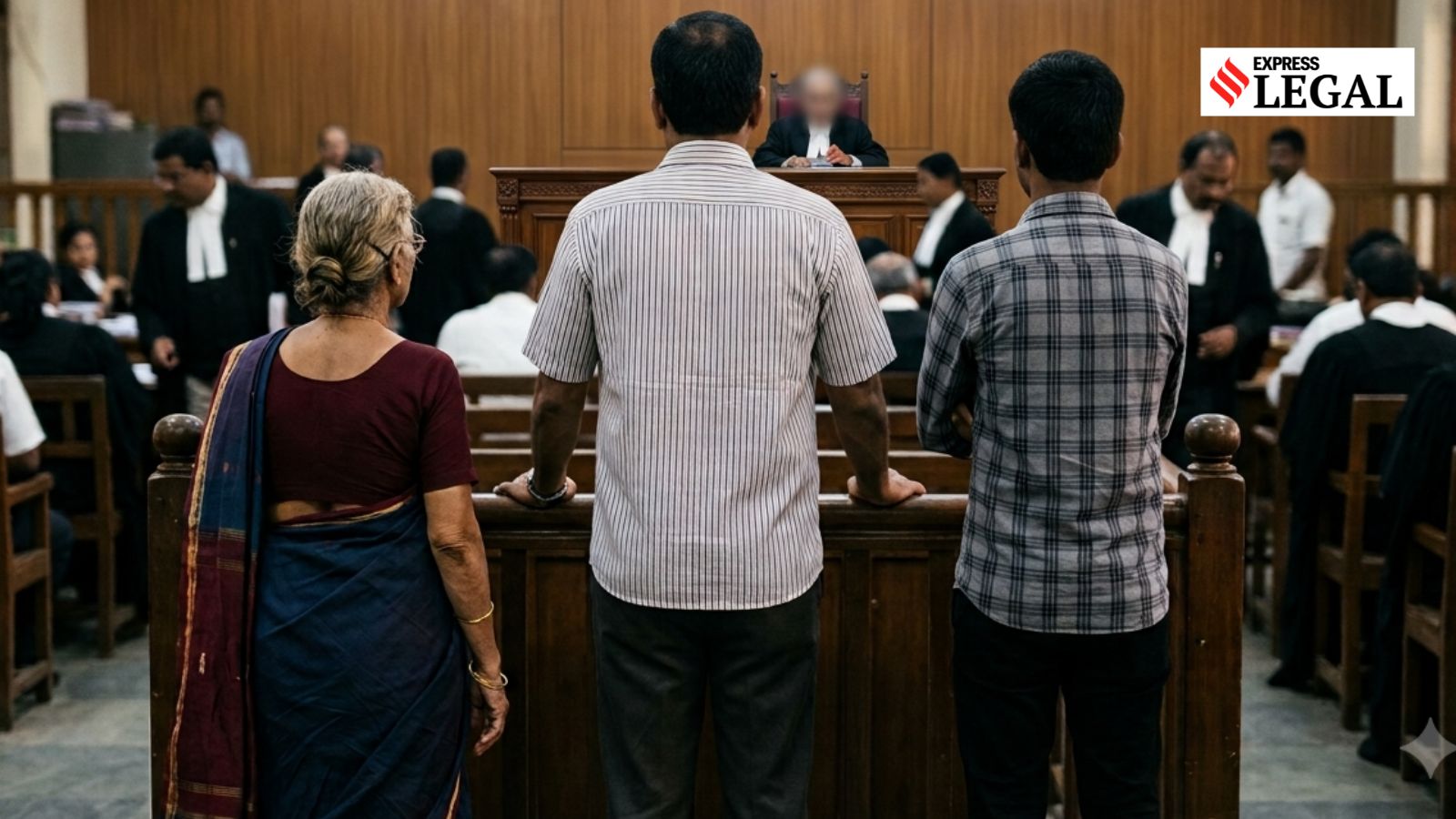
The husband and his family members sought to set aside all the criminal proceedings against them in the case alleging dowry harassment and outraging of modesty. (AI-generated image)
The Jharkhand High Court has refused to set aside criminal proceedings in a dowry harassment case, holding that the complainant’s failure to disclose an earlier complaint in the FIR cannot invalidate proceedings when the FIR only pertains to subsequent acts of cruelty and a separate offence of molestation by a relative of the husband.
Justice Anil Kumar Choudhary was dealing with a plea of the husband and his family members seeking to quash all the criminal proceedings against them in a case alleging dowry harassment and outraging of modesty.
“In view of the fact that the FIR contains subsequent occurrences of perpetrating cruelty upon the informant as also the commission of the separate offence punishable under section 354 (assault/criminal force with intent to outrage woman’s modesty) of the IPC by a separate accused person; which were found to be true during the investigation by the police, the sole ground of the petitioners that the filing of earlier complaint case was not mentioned in the FIR, is not a sufficient ground to quash the entire criminal proceedings,” the court said on June 16.
The complainant alleged that her husband, mother-in-law and brother-in-law treated her with cruelty in connection with a dowry demand of Rs 2 lakh, besides taking dowry at the time of the wedding. There was a further separate allegation against a relative pertaining to outraging her modesty.
Based on the written report submitted by the complainant, the police registered a case for offences including sections 498 A (husband or his relative subjecting woman to cruelty), 323 (voluntarily causing hurt), 354 (assault or criminal force used against a woman with the intent to outrage her modesty), 504 (intentional insult to provoke breach of peace), 506 (criminal intimidation), and 34 (common intention) of the Indian Penal Code (IPC), and under sections the Dowry Prohibition Act.
Justice Anil Kumar Choudhary noted that the petitioners did not participate in the probe by responding to the notice issued to them.
During the investigation, notice was issued to the petitioners, but they did not respond to it, but instead they absconded. A non-bailable warrant of arrest was issued against the petitioners, besides a proclamation that they were absconding, and an order was passed directing the attachment of their property. The petitioners were arrested and later released on bail.
The probe found the husband, mother-in-law, brother-in-law and relative guilty of the respective offences, and a trial court took cognisance of it.
Story continues below this ad
Court notes non-cooperation
The FIR pertains to subsequent occurrences said to be committed after the earlier alleged offence in connection with dowry demand. It also mentions a separate offence by the husband’s relative, which was also found to be true by the police during the investigation.
The order added that even if an earlier complaint and police investigation concerning the same allegations were pending, the petitioners did not participate in the probe by responding to the notice issued to them under Section 41A (notice of appearance before police officer) of the Criminal Procedure Code.
Instead, the petitioners preferred to abscond.
Fresh claims upheld
Since the FIR alleged subsequent cruelty and a separate molestation offence that were supported by the police investigation, the court held that the omission of an earlier complaint from the FIR was not a sufficient ground to quash the proceedings.
Jagriti Rai works with The Indian Express, where she writes from the vital intersection of law, gender, and society. Working on a dedicated legal desk, she focuses on translating complex legal frameworks into relatable narratives, exploring how the judiciary and legislative shifts empower and shape the consciousness of citizens in their daily lives.
Expertise
Socio-Legal Specialization: Jagriti brings a critical, human-centric perspective to modern social debates. Her work focuses on how legal developments impact gender rights, marginalized communities, and individual liberties.
Diverse Editorial Background: With over 4 years of experience in digital and mainstream media, she has developed a versatile reporting style. Her previous tenures at high-traffic platforms like The Lallantop and Dainik Bhaskar provided her with deep insights into the information needs of a diverse Indian audience.
Academic Foundations:
Post-Graduate in Journalism from the Indian Institute of Mass Communication (IIMC), India’s premier media training institute.
Master of Arts in Ancient History from Banaras Hindu University (BHU), providing her with the historical and cultural context necessary to analyze long-standing social structures and legal evolutions. ... Read More
Tags:
dowry case
Jharkhand High Court
molestation
View original source — Indian Express ↗
Related stories

The Punch
NewsJun 29, 2026 · 1 min
FG bans motorcycles, tricycles on Lagos-Calabar Coastal Highway
The Punch
The Punch
NewsJun 29, 2026 · 1 min
NELFUND cracks down on institutions withholding student loan refunds
The Punch
The Punch
NewsJun 29, 2026 · 1 min
South Korea to invest nearly $1.2tn in chips, AI data centres
The Punch
The Punch
NewsJun 29, 2026 · 1 min
APC committed to expanding opportunities for women – Secretary
The Punch