Indian Express
Indian Express··5 min read
Denied insurance for child’s Typhoid treatment, father wins over Rs 60,000 payout
A Haryana consumer commission directed Star Health Insurance to reimburse Rs 54,286 spent on a child’s hospitalisation for typhoid fever, observing that health insurance policies are obtained by consumers with the legitimate expectation that genuine hospitalisation expenses would be indemnified in accordance with the policy terms.
Noting that the complainant has been harassed by the opposite parties unnecessarily for a long time, a bench of president Charanjit Singh, members Nidhi Verma and V P S Saini also awarded Rs 7,500 as compensation and Rs 5,500 as litigation expenses.
“It is also noteworthy that health insurance policies are obtained by consumers with the legitimate expectation that genuine hospitalisation expenses would be indemnified in accordance with the policy terms. When a claim arising from an admitted hospitalisation is repudiated on conjectures and surmises rather than on concrete evidence, it amounts to a deficiency in service and causes unnecessary mental agony and financial hardship to the insured,” the commission said on June 24.
The order noted that the opposite parties have failed to establish which particular document was not supplied by the complainant, nor have they placed on record any correspondence calling upon the complainant to furnish any specific information which remained uncompiled. It added that once the complainant submitted the discharge summary, treatment record, bills and claim form, the burden shifted to the insurer to prove violation of the policy condition.
Underscoring that a claim cannot be rejected on vague and indefinite grounds, the bench said that the repudiation must be supported by cogent material and valid reasons, but in the present case, the insurance company have failed to demonstrate any deliberate suppression of facts, fraud, misrepresentation or violation of any exclusion clause under the policy.
Denied reimbursement of treatment amount
The complainant was approached by an agent of the opposite parties, who assured that the insurance services provided by the insurance company are the best in their field. Thereafter, as per the assurance, the complainant had availed one Family Health Optima Insurance plan in the year 2018, and the complainant renewed the policy for a sum of Rs 5 Lakh, and a bonus was also given to the policyholders. In respect of that, the requisite premium was paid by the complainant to the opposite parties.
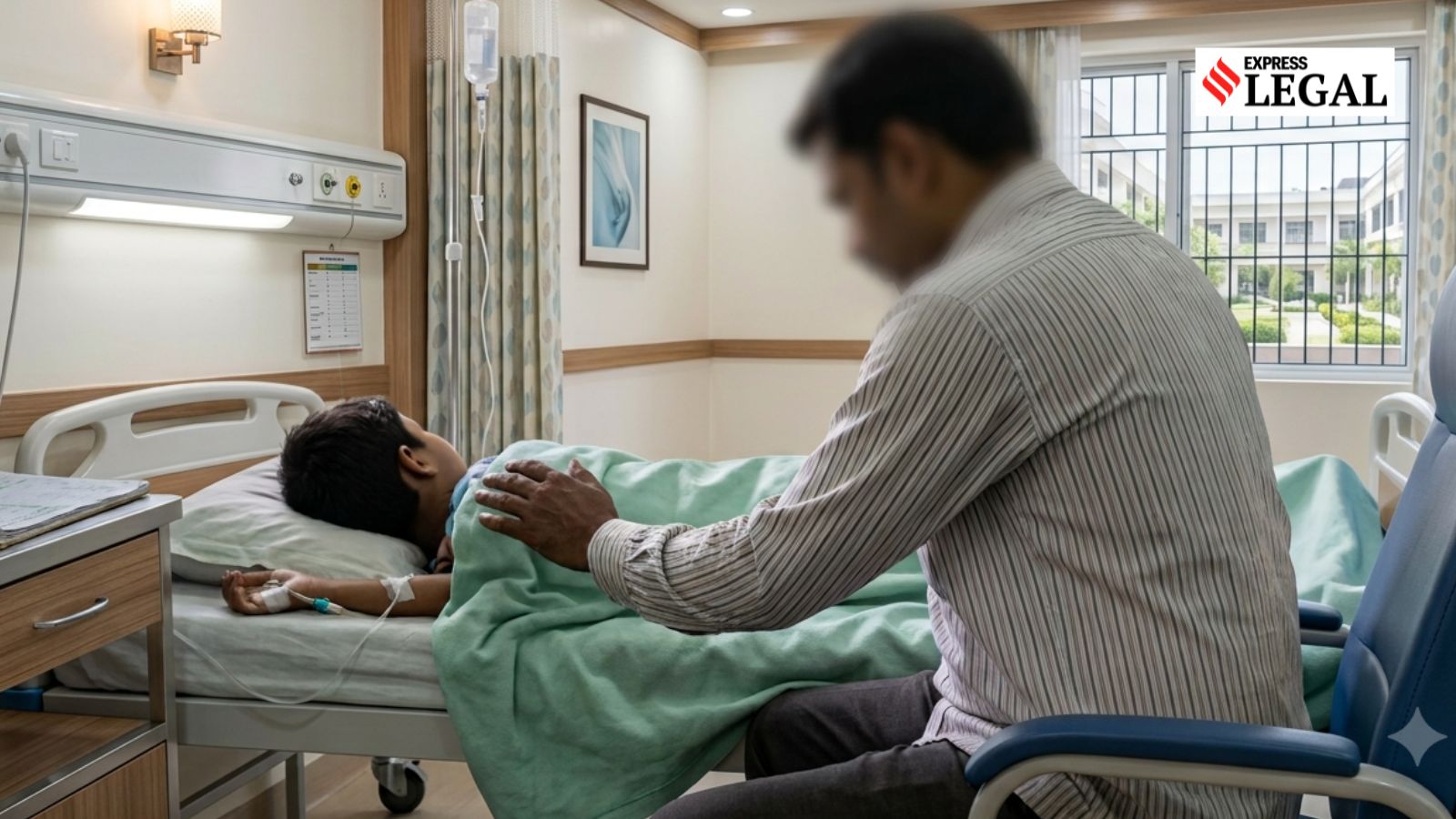
On August 22, 2023, the complainant’s minor son felt ill with high grade fever, as such the complainant immediately visited Cherish Children Hospital Tarn Taran, for the treatment of his minor son and as per the advice given by the doctor, the minor was got admitted on the same day and he was diagnosed with Enteric Fever C Sepsis and he remained under the observation of the doctors for about three days and he got discharged on August 25, 2023.
Story continues below this ad
The complainant, before getting his son admitted to the Hospital, approached the representatives of the opposite parties as the minor son of the complainant was medically insured by them, and on the instruction of the opposite parties, the complainant provided all the particulars as well as details regarding his health policy.
Despite the due intimation given to the opposite parties, no approval was granted to continue the treatment of the complainant cashless. As it was a matter of grave emergency, the complainant’s son needed medical treatment immediately to save his life, and thereafter, he himself paid all the medical expenses from his own pocket. The complainant had paid a sum of Rs 54,286 for the treatment of his son, which includes hospital expenses, medical expenses, consultation fee, etc.
After the attempt to reimburse the amount, the complainant was assured by the insurance company that the reimbursement regarding the claim would be made in a couple of weeks. After a couple of months, instead of reimbursing the amount, the opposite party required the documents of the treatment record, etc. However, the complainant received a letter in August 2023, which declined the claim, according to the complainant, by giving vague reasons that various discrepancies in the submission of the documents.
Complaint is vague, improper: Insurer
The insurance company submitted a written statement, arguing that the complaint is vague, improper, and illegal, and against the facts, hence the same is not maintainable in the eyes of law and the same deserves to be dismissed.
Story continues below this ad
It was further submitted that the policy was contractual in nature and the claims arising therein are subject to the terms and conditions forming part of the policy.
It was argued that the opposite party had rendered all possible services to the complainant, and there was/is no deficiency in services on the part of the insurance company; as such, the complaint deserves to be dismissed.
Can’t substitute opinion of treating doctor: Order
It is further not disputed that the minor son of the complainant was covered under the said policy.
The controversy between the parties revolves around the question of whether the opposite parties were justified in repudiating the claim of the complainant.
The complainant has categorically deposed that his son suffered from high-grade fever and was admitted to the hospital on medical advice, where he remained under treatment for about three days, and thereafter, all treatment records and bills were supplied to the opposite parties for reimbursement of the claim.
The insurer has nowhere alleged that the hospitalisation was fictitious or that the treatment was never undertaken.
The medical record has been issued by a recognised hospital, and no material has been produced by the opposite parties to show that the documents submitted by the complainant were forged, fabricated or manipulated.
Specific condition no 18 of the policy merely casts an obligation upon the insured to furnish bills, receipts and supporting documents and to provide such additional information as may be required by the insurer.
This commission cannot substitute the opinion of the treating doctor with the assumptions of the insurance company, particularly when no expert evidence has been led by the insurer.
The contention of the opposite parties that the complainant sought to obtain unlawful enrichment is wholly unsupported by evidence. No material whatsoever has been produced to establish that the complainant made any false claim.
View original source — Indian Express ↗
Related stories

The Punch
NewsJun 29, 2026 · 1 min
Soludo awards scholarship to Anambra UTME top scorer
The Punch
The Punch
PoliticsJun 29, 2026 · 1 min
Protest peacefully, lawfully, Ramaphosa tells South Africans ahead of Tuesday rally
The Punch
The Punch
NewsJun 29, 2026 · 1 min
FG to unveil digital system to track every Nigerian school, learner
The Punch
The Punch
BusinessJun 29, 2026 · 1 min
UK cigarette giant BAT to cut 5,500 jobs globally
The Punch