Indian Express
Can Iran charge navigation fees for transit through the Strait of Hormuz? An Expert Explains
With the signing of the framework agreement between the US and Iran on June 15, the Strait of Hormuz has been reopened for the ships of the world and the US blockade on Iranian ships lifted. Still, there are fundamental legal concerns relating to the Strait that require answers.
After the US and Israel imposed war on Iran on February 28, 2026, Iran has used the Strait as both chokepoint and bargaining chip to put pressure on the US and its allies to end hostility against it in all forms. Owing to this imposed war, Iran was collecting toll per transit against the users of the Strait, which it can use to compensate for all damages caused by the war.
Now, Iran has agreed to reopen the Strait without toll charge but it will still charge a navigation fee and the charge with respect to protection of the environment. This situation prompts a larger question: whether Iran’s action qualifies the litmus test of international law relating to a “right of transit passage” codified in the 1982 United Nations Convention in the Law of the Sea (UNCLOS) and the customary international law.
Freedom of navigation
Articles 37 to 44 of the UNCLOS that govern “Straits used for International Navigation” hold that all ships and aircraft have a “right of transit passage”: the freedom of continuous, swift navigation and overflight through and over international straits. They “shall not be impeded”, and “there shall be no suspension of transit passage” through a strait. The reasoning behind this framing is that when a considerable portion of global trade depends on a narrow corridor, bordering states are not allowed to use that corridor as leverage.
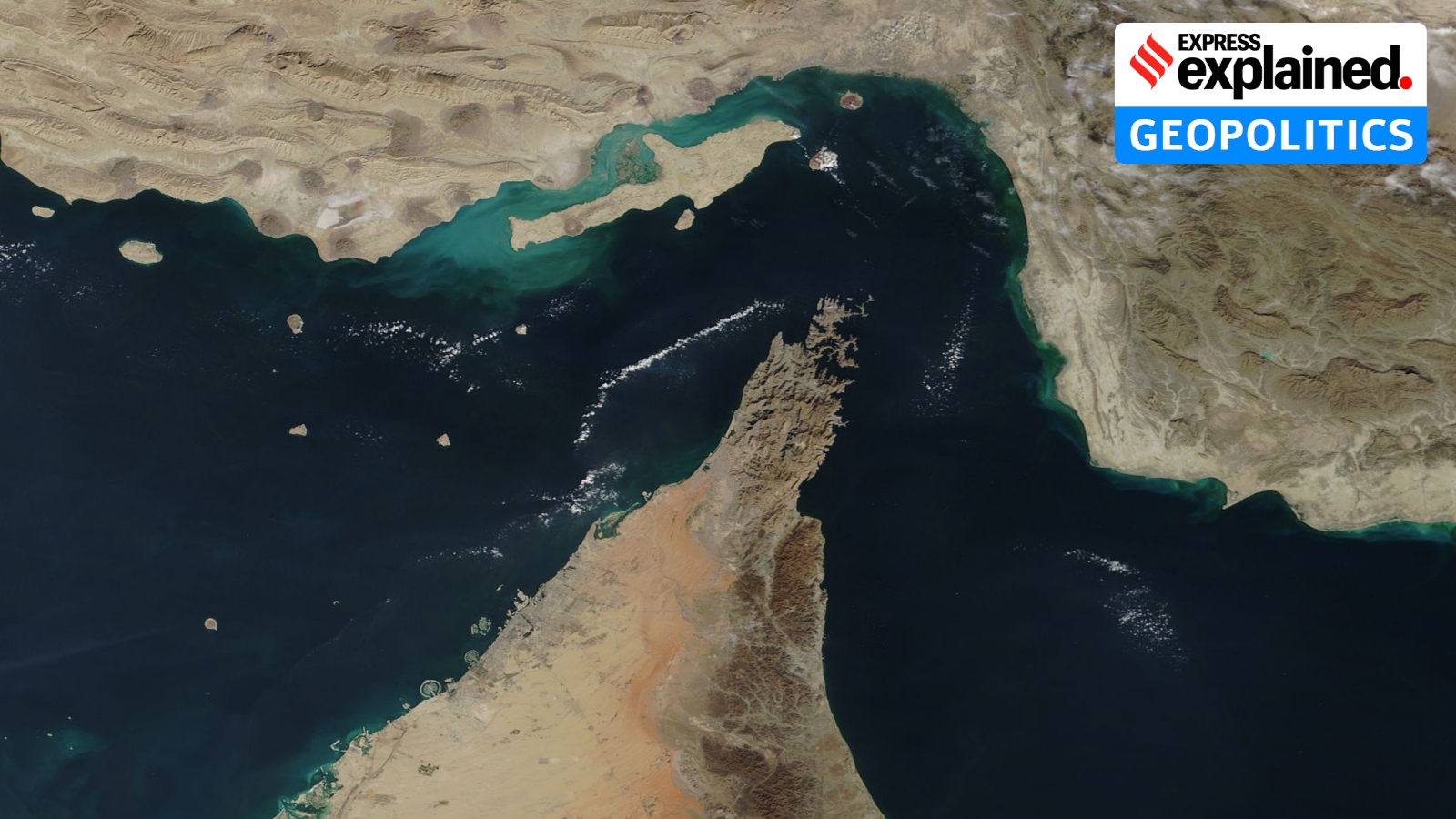
The Strait of Hormuz is generally considered as one such “international strait”, a narrow waterway connecting to the rest of the world. Even before the UNCLOS, the International Court of Justice laid down in the Corfu Channel (United Kingdom v. Albania) case of 1949 that “when a strait between two parts of the high seas is used for international navigation, ships enjoy unrestricted passage during peacetime, so long as the transit does not threaten a coastal state’s security”.
The agreement, which still includes a navigation charge and the environment protection charge, can be treated as an attempt on Iran’s part to consolidate its attempt to convert a natural prolongation of strait into a managed and revenue generating-entry point administered by it with Oman’s support and assistance.
International law’s silence
Story continues below this ad
As the Strait is within the combined territorial waters of Iran and Oman, freedom of navigation as enjoyed on the high seas is not available in the territorial sea. Still, the ships of all states are entitled to the “right of innocent passage”: a principle under UNCLOS that allows foreign vessels to navigate through another coastal state’s territorial sea, thus balancing national sovereignty over coastal waters with the global necessity of free maritime transit.
But this is subject to the satisfaction of the coastal state that it is not going to prejudice its peace, good order, or security (Article 19 of the UNCLOS). The grounds enumerated in the article are broad enough, which Iran or a coastal state can use to deny the right of innocent passage in the face of a tense standoff.
The Suez Canal. The canal, unlike Hormuz, is an artificially engineered waterway constructed, maintained, and administered through sovereign territory. Photo: Wikimedia Commons
Iran can use the analogy from the Suez and Panama canals as both of them charge transit fees. The analogy does not support Iran’s case as these canals — unlike Hormuz, which is a natural prolongation — are artificially engineered waterways constructed, maintained, and administered through sovereign territory. Also, their functioning is governed by specific treaty regimes, not by the strait’s provisions of the UNCLOS.
Iran signed the UNCLOS but never ratified it. While signing the UNCLOS, the Iranian government declared that it does not treat codification of the regime relating to transit passage as customary international law — rather, they were quid pro quo bargains for treaty parties. Iran can use the “persistent objector” argument, which states that a sovereign nation is exempt from a newly emerging norm of customary international law if it has clearly, consistently, and persistently objected to the rule while it was still in the process of formation.
Story continues below this ad
This obligation is considered valid amongst the comity of nations — a politico-legal doctrine wherein sovereign countries voluntarily recognise, respect, and enforce each other’s laws, judicial decisions, and customs — owing to the fact that Iran passed its own legislation in 1993 called “Law of Marine Areas of the Islamic Republic of Iran in the Persian Gulf and Oman Sea”. This law allows Iran to suspend the passage of foreign ships, and it also requires prior authorisation for warships and vessels carrying harmful substances with respect to the protection of the environment. The latter category can encompass commercial oil tankers, which carry the bulk of petroleum and are widely treated in maritime law as posing environmental and navigational risks. The inclusion of navigation fee and a charge to cover environmental risks in the agreement strengthens Iran’s “persistent objector” argument.
Israeli moves in Lebanon
The distinctive feature of the Iran war has been its oscillation between a military confrontation and an economic war at a fast pace, which made the distinction between the two categories beyond recognition. Iran might have been stretched economically and militarily in conventional terms, but it made the world realise that it can impose global costs by making ordinary commerce uncertain.
Iran might not have thought of causing collateral damage to those who played no role in harming it. But as it has long suffered sanctions, threats, sabotage, assassinations, and military encirclement, it responded to direct attack by using the Strait of Hormuz as a bargaining chip.
The viability of smooth transit in the Strait depends a lot on Israel’s military moves in Lebanon aimed at creating security zones and continuance of targeted killings. Tehran has made clear on more than one occasion that it views war in Lebanon as part of the same strategic campaign that targets Iranian territory, and that the Strait gives it leverage to demand limits on Israeli attacks on both countries.
Story continues below this ad
The author is an associate professor in international law at the Indian Society of International Law, New Delhi.
View original source — Indian Express ↗
Related stories

Portugal Resident
TechnologyJun 29, 2026 · 1 min
Twin sisters living in Portugal ‘go missing in Dubai’
Portugal Resident

AllAfrica
TechnologyJun 29, 2026 · 1 min
Liberia: Cari Scientist Accuses DG Karnuah of Defying Ombudsman Order, Illegal Dismissal - Management Rejects Claim
AllAfrica

AllAfrica
TechnologyJun 29, 2026 · 1 min
Liberia: 'U.S. Marshall', a Ghost & the Ties Linking U.S.$19m Airport Drugs Syndicate
AllAfrica

TechPana
TechnologyJun 29, 2026 · 1 min
Vibe Coding Is Transforming Software Development, but Cybersecurity Risks Are Growing
TechPana