Indian Express
Indian Express··3 min read
Haryana to supply 580 million cubic metres of water to Rajasthan every year
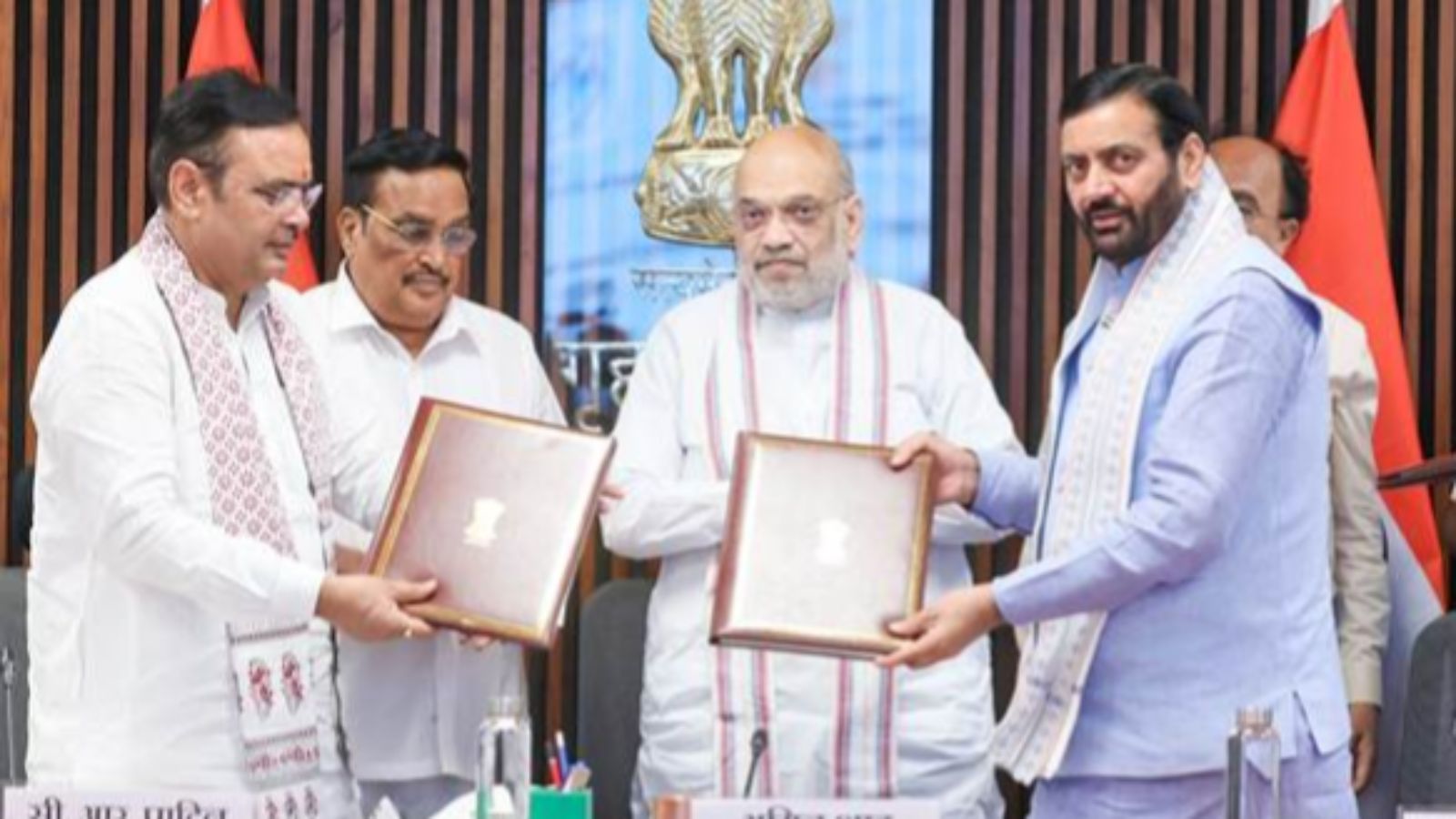
Haryana and Rajasthan signed a memorandum of understanding (MoU) on Monday to operationalise water-sharing as per the long-delayed 1994 Upper Yamuna River Board Agreement. Under the MoU, Haryana will supply 580 million cubic metres of water from the Yamuna canal to Rajasthan through three underground pipelines from July to October every year, officials said.
Haryana Chief Minister Nayab Singh Saini and his Rajasthan counterpart, Bhajan Lal Sharma, signed the MoU in the presence of Union Home Minister Amit Shah and Union Jal Shakti Minister C R Patil.
Shah said drinking water would now be supplied to the districts of Sikar, Churu, and Jhunjhunu in Rajasthan, as well as the Bhiwani and Fatehabad areas in Haryana. “The water that was earlier going to waste will now quench people’s thirst and be stored in large ponds to recharge groundwater,” he added.
Union government officials said the MoU would accelerate the construction of the Renuka, Kishau, and Lakhwar dams, envisaged by the 1994 agreement. “These projects will enhance water storage capacity in the Yamuna basin, improve drinking water supply, and increase the availability of water for irrigation,” an official said in a statement.
The 1994 agreement allocated Yamuna waters as follows: Haryana: 40.6 per cent, Uttar Pradesh: 35.1 per cent, Rajasthan: 10.4 per cent, Delhi: 6.3 per cent, and Himachal Pradesh: 1.7 per cent.
Rs 3,900-crore pipeline project
Officials said the two states would construct approximately 300 km of underground pipelines from Hathinikund to Rajasthan to facilitate the transfer of water. “The project is estimated to cost around Rs 3,900 crore. The agreement provides that both states will jointly determine responsibilities related to land acquisition, pipeline construction, monitoring, operation, and maintenance,” an official said.
In a post on X, Patil said a consensus was reached to provide Rajasthan with its share of Yamuna water in accordance with the 1994 agreement and to establish the necessary arrangements.
Story continues below this ad
Saini said that ensuring water supply to those in need is a shared responsibility. “It is a matter of great satisfaction… Haryana will fully cooperate, and no obstacle will be allowed to hinder the project’s implementation,” he said.
Shah said the framework of the MoU, prepared by Haryana, Rajasthan, and especially the Central Water Commission (CWC), would stand as a dispute-free agreement for many decades to come.
‘Groundwater recharge in six districts to be affected’
However, retired irrigation department officials and experts associated with the Yamuna campaign have warned that diverting surplus water from the river to Rajasthan could reduce groundwater recharge in six Haryana districts—Yamunanagar, Karnal, Panipat, Sonipat, Faridabad, and Palwal.
Excess river water that previously percolated into the ground in these areas during the monsoon is now expected to be diverted. They argue that Haryana is already facing water scarcity and that the surplus water could instead have been utilised in the state’s southern districts.
Story continues below this ad
‘Haryana should secure full share of water from Punjab first’
The MoU has also drawn criticism from sections of the Opposition, which contend that Haryana should first secure its full share of river water from Punjab before transferring water to Rajasthan.
Indian National Lok Dal (INLD) national patron and former finance minister Sampat Singh said, “Haryana should first secure its rightful share of water, including through the long-pending Sutlej-Yamuna Link (SYL) canal project. Haryana’s share of Yamuna water had been reduced under the 1994 interstate agreement from nearly 67 per cent to 46 per cent, while permanent allocations were made to Rajasthan and Delhi.”
“All 17 INLD MLAs resigned in 1994 under the leadership of the late Om Prakash Chautala in protest against the agreement. The party would continue its struggle through democratic and constitutional means and would soon hold a meeting under Abhay Singh Chautala to decide its future course of action,” he added.
Story continues below this ad
Singh accused both the BJP and the Congress of failing to safeguard the state’s interests.
Singh said that while the 1994 agreement had envisaged the construction of the Renuka, Kishau and Lakhwar-Vyasi dams, these remain incomplete more than three decades later.
View original source — Indian Express ↗
Related stories

The Punch
NewsJun 29, 2026 · 1 min
Anambra to begin environmental sanitation crackdown from July 4
The Punch
The Punch
PoliticsJun 29, 2026 · 1 min
Ekiti elders council hails Oyebanji over re-election, performance
The Punch
The Punch
BusinessJun 29, 2026 · 1 min
2027: LP would win Abia if INEC conducts election today — Chairman
The Punch

ESPN
SportsJun 29, 2026 · 1 min
Sources: Harden nixes option, eyes new Cavs deal
ESPN