Indian Express
Deepak Parekh bats for consolidation among PSU banks, higher FDI cap
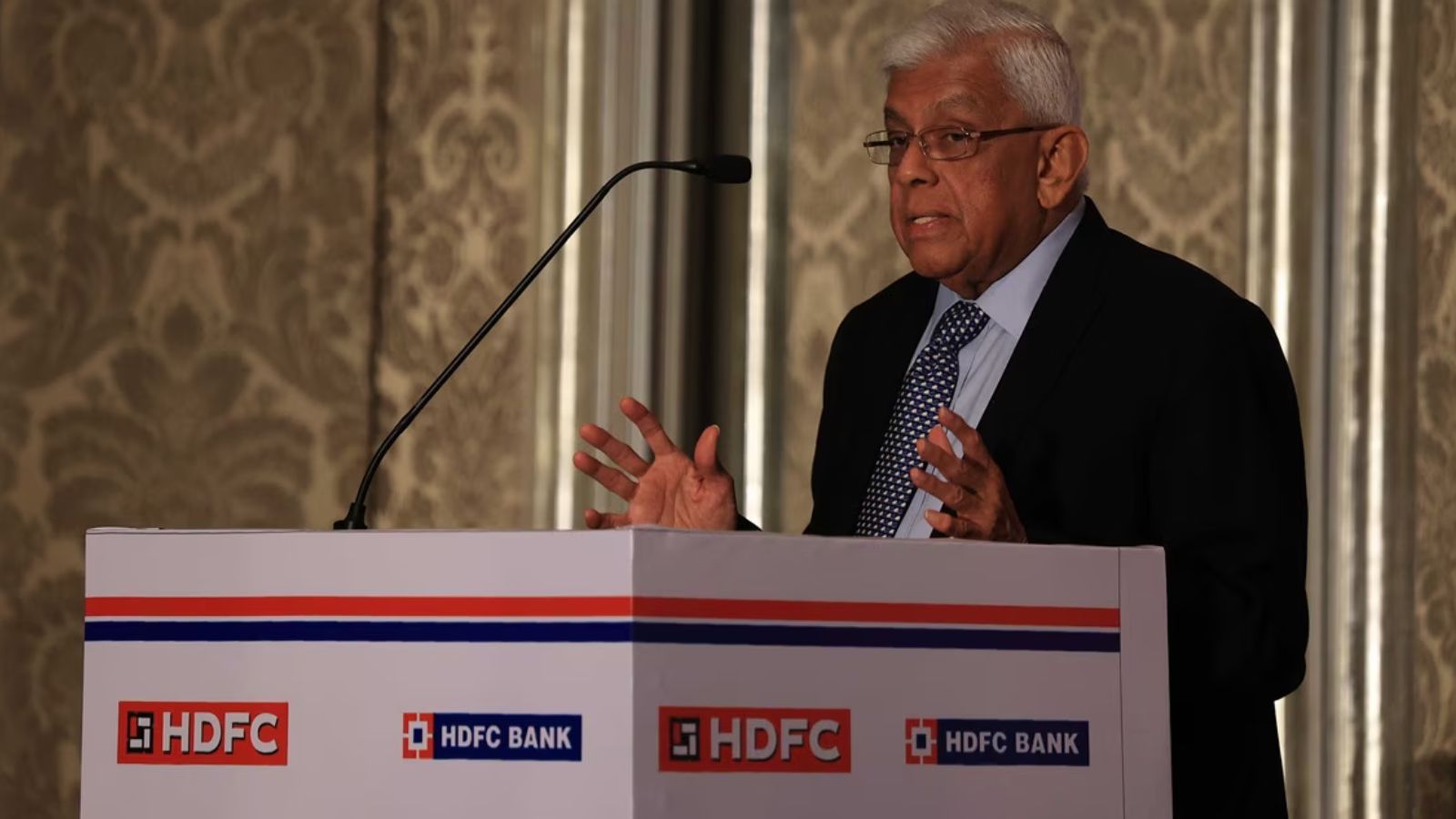
Former HDFC Chairman Deepak Parekh on Monday called for further reforms and consolidation among public sector (PSU) banks and an increase in foreign direct investment limits in both public and private sector banks.
“The public sector banks have already consolidated, but there is a case for further consolidation. Raising foreign direct investment limits in public and private sector banks too will be beneficial and help bring in the much-needed additional funding,” Parekh said while addressing the annual general meeting of the Indian Merchants’ Chamber (IMC).
“India’s banking sector needs new reforms, and the time to do this is when the sun is shining, or when the banks are at their strongest,” he said.
“We have all been advocating that India needs a few large banks rather than many small banks. The government has announced that it is working towards this,” he added.
Parekh said there is the need to deepen debt markets. “The government has done well to recently exempt interest and capital gains tax on government securities held by foreign investors. Yet, India needs to move out of its legacy policy frameworks – we need to be bold like adopting cross border securitisation transactions, having deeper credit default swap markets, more credit enhancement mechanisms, a thriving municipal bonds market and of course, the need for a more diversified investor base,” he said.
India’s corporate bond markets, currently equivalent to about 18% of GDP, need to double in size to meet the country’s investment requirements, he added.
Equity markets, AI and housing
On equity markets, Parekh said there is a global reallocation of capital happening currently, triggered by the AI boom and geo-political considerations. “Foreign portfolio investors have been relentless sellers over the past one and half years of nearly $50 billion. This I believe is a temporary phase,” he said.
Story continues below this ad
“We know that India’s equity markets have been resilient due to domestic institutional investors – particularly the SIP inflows of mutual funds of around Rs 30,000 crore each month. What holds India in good stead is that its market capitalisation is well diversified, rather than being dependent on two to three key stocks, as we have seen in some emerging markets like Taiwan and South Korea,” Parekh said.
Further, the IPO pipeline is strong and India has demonstrated easy entry and exit for investors with attractive returns. “This builds long term confidence. We just have to ride out this current phase,” he said.
On job creation, he said meeting India’s growth needs requires job creation at a much faster pace than seen before. “I second the view of Indian IT leaders that the pivot to AI is not a doomsday scenario for Indian IT services. The phase of adoption and integration of AI into businesses will need IT services,” he said.
He said the jobs of the future will be “very different from what we know today”. “On a lighter note, I understand designations like CEO, CFO, Head of Strategy are now passé. The new ones are like Elon Musk formally calling himself Techno King. Google has a Captain of Moonshots, Berkshire Hathaway has a Director of Chaos, another has Creator of Opportunity,” Parekh said.
Story continues below this ad
“These are mere fashions of our time, but they reflect new ambitions. Yet for India what is critical is creating 10 million jobs annually — be it white or blue collar jobs or entrepreneurship opportunities,” he said.
On the housing sector, he said housing has one of the strongest multiplier effects given its strong backward and forward linkages to several industries and remains one of the largest employment generators in the country. “Yet, India faces a housing shortage estimated at 30 million units just over the next five years while the annual supply of homes is around 6,00,000 units. There is nothing more beneficial than building a property-owning democracy,” Parekh said.
According to him, a recent UN report on urbanisation aptly said, “India does not have a housing shortage, it has a priorities shortage. India is building more than ever — but less and less of it is for the people who need it most.” “The message is clear — we need more aspirational homes and homes for India’s rising middle class. What we have today is a huge skewness towards luxury housing,” Parekh said.
View original source — Indian Express ↗
Related stories
Bloomberg
BusinessJun 29, 2026 · 1 min
Dual Perspectives on AI Investment Costs
Bloomberg

CNBC
BusinessJun 29, 2026 · 1 min
Alphabet stock pops 4% on Dow debut, but the tech giant faces major AI questions
CNBC

CNA
BusinessJun 29, 2026 · 1 min
Peacock launches Premium Plus streaming tier on YouTube
CNA

The New York Times
BusinessJun 29, 2026 · 1 min
In San Francisco’s A.I. Era, Even $180,000 Tech Salaries Are No Longer Enough
The New York Times