The Guardian
Burnham brings emotional connection and optimism in vibe shift from Starmer
When Keir Starmer welcomed Mark Rutte, the Nato secretary general, outside No 10 on Monday, the attire fitted the moment: dark formal suits, polished leather shoes. Almost 200 miles to the north, when Andy Burnham strode into the engine hall of the People’s History Museum in Manchester, the vibe could not have been more different.
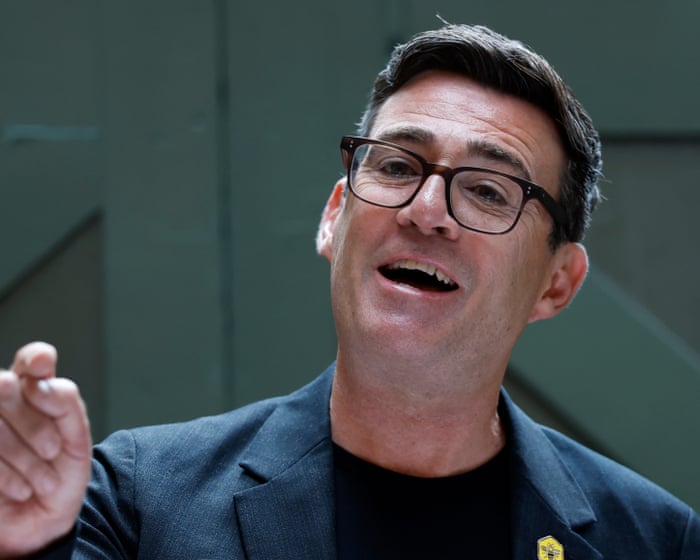
Dressed in his trademark dark T-shirt and jacket, Burnham could just as easily have been walking down the street outside. He even began with a joke about his thigh-skimming running shorts, after he was pictured going for a jog the morning after announcing his return to parliament, telling the assembled audience he had bought a new pair as it was “either do that or change the decency laws”.
But the differences between Starmer and the man who intends to succeed him are not just superficial. As far as Labour MPs are concerned, there are three key distinctions: the power to communicate, the power to make an argument and the power to give people hope. In all three, they have concluded, Starmer has been lacking.
While Burnham’s speech was heavy on policy mechanics, his team will hope it is the emotional connection he sought to strike with voters that really registers. “‘What hope can we have that it will be different this time?’ That is the question I would be asking if I was a voter right now,” he said. “Westminster has not been working for people and it has not been working for a very long time. In fact, it is broken. And as a result, the country isn’t where it should be. It is stuck in a rut, and clearly we can’t go on like this.”
Burnham crafted an argument about what had gone wrong with the British political system – one that Starmer, for all his attempts, has struggled to land – and how he would fix it with a massive devolution of power and resources.
And he attempted to inject a note of optimism, after criticism that Starmer had not offered enough during his two years in office, focusing too heavily on hard truths and defining Labour by what it was against as much as what it was for.
“I hope people can begin to feel – hopefully you can – the excitement that comes with the change that I am setting out today,” Burnham told his audience. “It promises a new era of possibility for Britain. Possibility for places that haven’t felt it for a very long time … Let’s give them that feeling, that ability to hope, to aspire for better.”
Of course, one speech cannot in itself change a country, and Labour MPs know that replacing Starmer with a more “vibesy” successor gives them a final roll of the dice. But they also know that will not, on its own, be enough to transform their party’s electoral fortunes.
Labour does, however, appear to have had a small positive bump since it became clear that Burnham would take over. When More In Common asked how people would vote with him as hypothetical leader, the party went from seven points behind Nigel Farage’s Reform UK to one point ahead.
But there is a long way to go. Burnham’s warmth as a communicator, his ability to articulate his vision and to inject some hope are why Labour MPs have decided they would prefer him in Downing Street.
Where he remains untested – and will not be until he makes it into office – is in another crucial area where many MPs felt that Starmer had failed: his political judgment when faced with decisions that only a prime minister can make.
Some are also concerned about whether Burnham has what it takes to drive his radical project through Whitehall and his party, to deliver the change he has promised. If he fails, Labour’s last roll of the dice won’t have been worth it.
Nor has he, since winning the byelection, subjected himself to the sort of scrutiny expected of a putative prime minister, refusing to take any questions from the media after his speech, and not expected to take over the country until after the Commons has risen for summer recess.
All that said, the man from Makerfield’s reputation for fighting for ordinary people – who for so long have felt that the UK’s political system is not working for them – is a big plus on the ledger as he enters No 10.
Alongside other historical artefacts, on display in a glass cabinet at the People’s History Museum is the navy workwear utility jacket that Burnham wore while making a defiant speech against lockdown funding in October 2020.
It went viral, burnishing his reputation as the “king of the north” and fuelling speculation he could become a future Labour leader. He will be expected to take that fighting spirit into No 10 with him.
View original source — The Guardian ↗
Related stories

The Punch
PoliticsJun 29, 2026 · 1 min
INEC begins ad hoc staff recruitment for Osun governorship poll
The Punch

Straits Times
PoliticsJun 29, 2026 · 1 min
EU, China bet on talks to avoid trade war
Straits Times
The Punch
PoliticsJun 29, 2026 · 1 min
2027: Obi, Kwankwaso will be on ballot, Obidients assure supporters
The Punch
Times of India
PoliticsJun 29, 2026 · 1 min
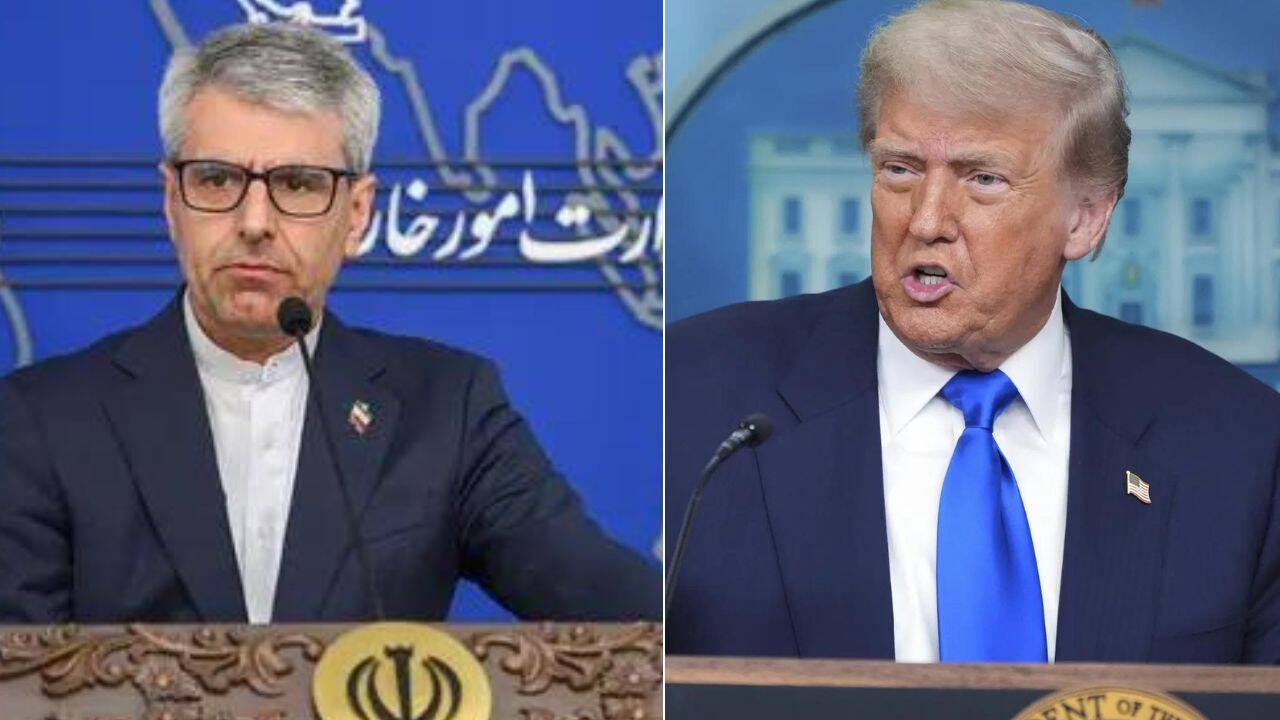
'No negotiation at any level': Iran refutes Donald Trump's claim of planned US talks in Doha
Times of India