Buenos Aires Times
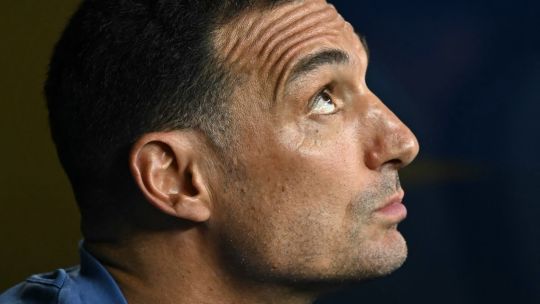
Lionel Scaloni reaches century of games with Argentina as AFA eyes new deal
A perfect winning record, Lionel Messi further enhancing his legend and a promising route through the knockout stages – Argentina are riding a wave of optimism at the 2026 World Cup and are already looking to secure the future of head coach Lionel Scaloni, who will take charge of his 100th match against Cape Verde.
The 48-year-old head coach has become the unlikely architect of one of the greatest eras in Argentina's football history.
Appointed on an interim basis in September 2018 despite having no managerial experience, Scaloni has since guided Argentina to two Copa América titles (in 2021 and 2024), the 2022 Finalissima title and, above all, the 2022 World Cup in Qatar.
When Messi lifted the trophy into the night sky at Lusail Stadium in Doha, Argentina finally ended the long wait for a world title since Diego Maradona led the team to glory at the 1986 World Cup in Mexico, exactly 40 years ago on Monday.
Ironically, Maradona himself voiced the scepticism surrounding Scaloni's appointment back in 2018. The former Deportivo La Coruña and Lazio full-back was widely seen as an inexperienced choice.
"Scaloni is a great lad, but he couldn't even manage the traffic," Maradona famously said at the time, adding that he would have preferred Gerardo Martino to return as gaffer.
Scaloni, who won seven caps for Argentina and even played alongside a teenage Messi at the 2006 World Cup in Germany, had served as assistant to Jorge Sampaoli at the 2018 World Cup in Russia – where Argentina were knocked out in the last 16, the earliest World Cup exit of Messi's career.
What was meant to be a six-month caretaker spell evolved into 'La Scaloneta' – the most successful national team in world football this decade.
Across his first 99 matches in charge of the Albiceleste, Scaloni has recorded 72 wins, 18 draws and just nine defeats, including a remarkable 36-match unbeaten run between July 2019 and November 2022.
'I never imagined it'
Scaloni will reach his century on Friday in Miami when Argentina face Cape Verde in the last 16 of the 2026 World Cup.
Last week, the coach admitted he never expected to reach the milestone but, with his focus firmly on defending Argentina's world title, said he has not given much thought to how his tenure will ultimately be remembered.
"I haven't really thought about it," he said. "I'm not particularly concerned about what people will say. What matters to me is that people identified with what this team stood for, that they felt we were a national team that represented its people. If that's the case, then that's enough for me."
"The truth is, I never imagined reaching 100 matches in my life," he added. "It's a huge number, especially with this shirt. It'll be a very special moment when it comes."
United squad
Humble, composed and deeply respectful of Argentina's footballing identity, Scaloni has built an exceptionally united squad around Messi, the team's undisputed leader.
The tactical and emotional balance established by the coach has allowed the eight-time Ballon d'Or winner to achieve the international success that had long eluded him.
Now 39, Messi leads the scoring charts at this World Cup with six goals. Under Scaloni he has scored 58 goals in 74 appearances, averaging 0.78 per match, compared with 65 goals in 128 games before Scaloni's appointment, an average of 0.51.
The Argentine Football Association (AFA) is so pleased with Scaloni's work that, according to local media, it has already begun negotiations over a new five-year contract to replace his current deal, which expires on December 31.
The coach, who briefly hinted at stepping aside after Argentina's World Cup qualifying win over Brazil at the Maracanã in November 2023, said last month he is open to extending his stay.
Contract talks, however, are not the immediate priority.
"Right now the important thing is to focus on the World Cup," he told Radio La Red. "It's not an urgent issue for me, and I don't think it is for the AFA either. But if we're all in agreement and everything comes together, I don't think there will be any problems."
related news
by Guillermo Barros, AFP
View original source — Buenos Aires Times ↗
Related stories

ESPN
SportsJun 30, 2026 · 1 min
Paraguay were more than just 'uncomfortable' for s...
ESPN

ESPN
SportsJun 30, 2026 · 1 min
Sources: RFA Duren to meet with Lakers, Kings
ESPN

The Punch
SportsJun 30, 2026 · 1 min
Ekong credits Bafana defender Mbokazi despite exit
The Punch
The Punch
SportsJun 30, 2026 · 1 min
Fortune FA wins seventh JOF U-13 Cup
The Punch