South China Morning Post
How Philippine ube farming can cash in on ‘purple gold rush’
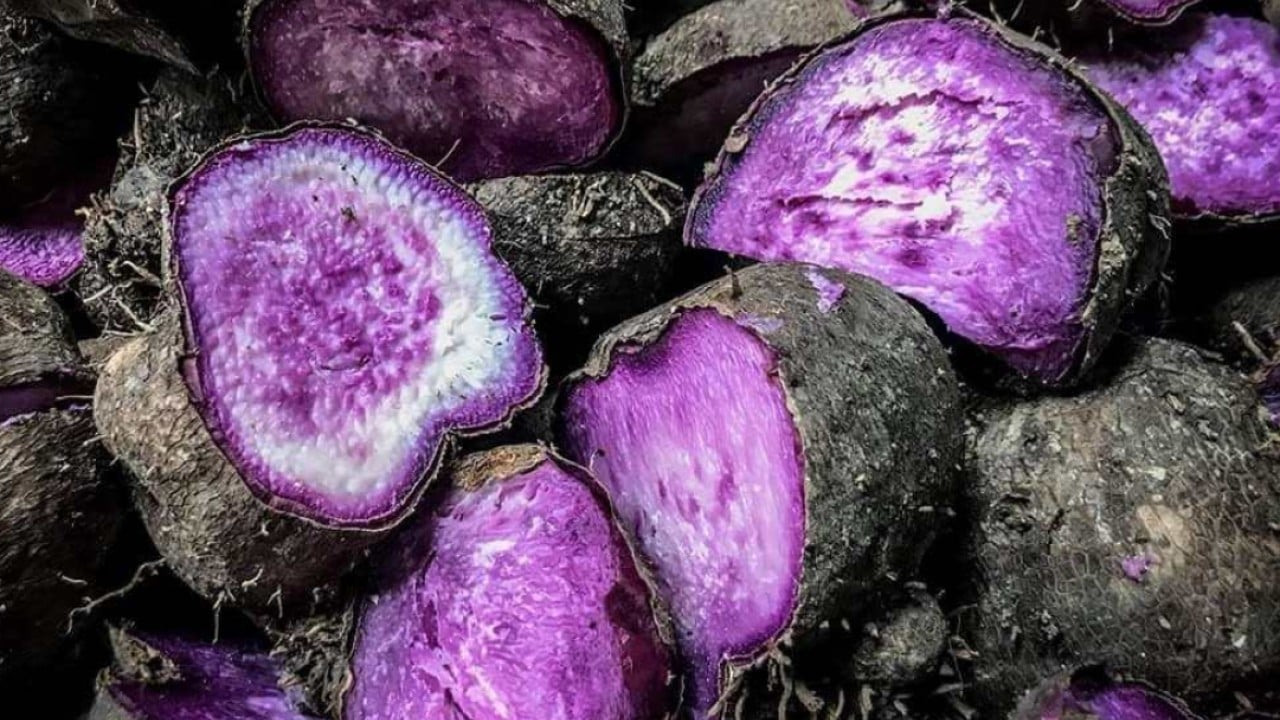
Esmeraldo Maligsa, a farmer and president of the Bohol Ube Growers Association, harvests 2,000kg (4,400lbs) of ube, the purple tuber native to the Philippines, every seven months.
He and the other farmers in his group manage a collective yield of between 5 tonnes and 8 tonnes, fetching prices of 90 to 100 pesos (US$1.50 to US$1.70) per kg.
Such is the price the ubi kinampay, dubbed the “Queen of Philippine yams”, fetches. It is grown in Bohol province and nearby areas in central Philippines, and is prized for its nutty, vanilla-like flavour and distinct aroma.
However, the supply has much to catch up with the surge in demand, which faces shortfalls even back home. “Our yield … is not enough,” Maligsa said. “People call us and ask for two tonnes per month. How can we supply that?”
Today, the rest of the world has caught up with the craze, with ube showing up on the menus of bakeries, cafes, and restaurants globally.
In the United States alone, ube menu items had grown by over 200 per cent since 2022, the Philippine Daily Inquirer reported. Even popular coffee chain Starbucks has introduced a line of ube-flavoured drinks in its stores in the US and across Europe.
View original source — South China Morning Post ↗
Related stories

Philippine Daily Inquirer
PoliticsJun 30, 2026 · 1 min
LIVE REPORT: INC holds Edsa protest over alleged 'selective justice'
Philippine Daily Inquirer

Philippine Daily Inquirer
PoliticsJun 30, 2026 · 1 min
Surprise INC protest snarls EDSA traffic; 900 cops deployed
Philippine Daily Inquirer
ABC News
PoliticsJun 30, 2026 · 1 min
Moira Deeming set to be dumped as Liberal candidate after assault allegation
ABC News

Dawn
PoliticsJun 30, 2026 · 1 min
Controversial bill to be last nail in coffin of freedom of expression: opposition
Dawn