Indian Express
At 32, her LDL cholesterol stayed high although she didn’t smoke, ate clean and exercised: What triggered it?
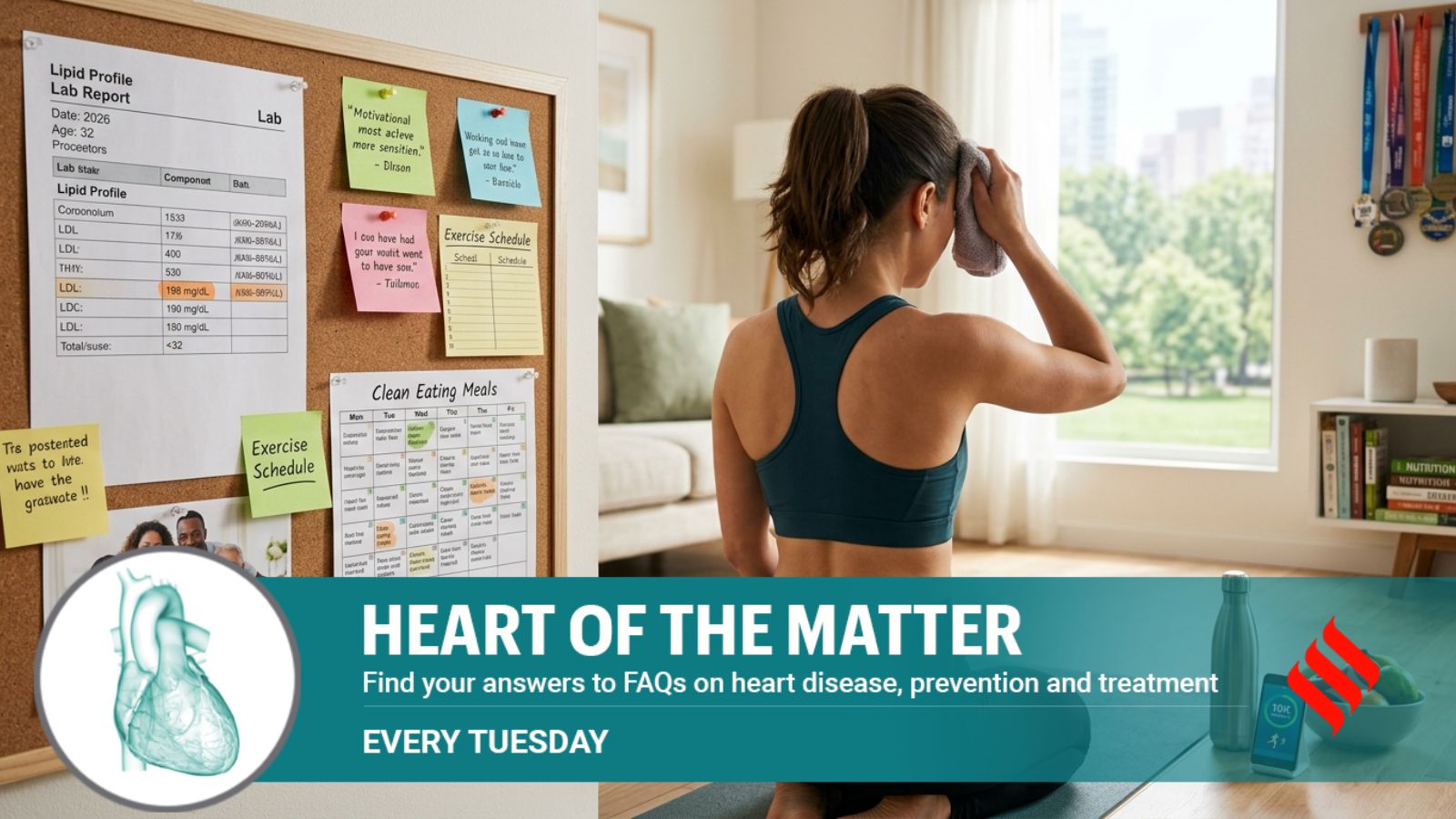
A 32-year-old woman came to my clinic carrying years of blood reports. Every test told the same story — her LDL (low-density lipoprotein or “bad” cholesterol, the kind that accelerates plaque buildup in the arteries) was around 190 mg/dL. Yet she was neither overweight nor diabetic. She exercised five days a week, avoided fried foods and had never smoked. Yet her cholesterol refused to come down.
“Doctor, what am I doing wrong?” she asked. My answer surprised her. “Probably nothing.” She had familial hypercholesterolaemia (FH) — a common but often overlooked inherited disorder in which the liver cannot efficiently remove LDL cholesterol from the blood. Unlike cholesterol that rises because of an unhealthy lifestyle, FH is caused by a genetic mutation. Patients are born with high LDL cholesterol, and without treatment, it remains elevated throughout life.
A silent condition with lifelong consequences
High LDL cholesterol does not cause pain or obvious symptoms. It quietly deposits cholesterol in the walls of arteries over decades, leading to premature atherosclerosis — the narrowing and hardening of blood vessels. People with untreated FH have a markedly higher lifetime risk of heart attack, stroke and other cardiovascular diseases, often at a much younger age than the general population. Many are diagnosed only after a heart attack in themselves or a close family member.
When should you suspect familial hypercholesterolaemia?
An LDL cholesterol level of 190 mg/dL or higher in adults should always prompt evaluation for familial hypercholesterolaemia, particularly if there is a family history of high cholesterol or heart disease occurring before the age of 55 in men or 65 in women. Some patients may also develop cholesterol deposits in tendons (called tendon xanthomas) or yellowish deposits around the eyelids, although these signs are not present in everyone.
Because FH is inherited in an autosomal dominant pattern, each child of an affected parent has a 50% chance of inheriting the condition. Once one person is diagnosed, screening parents, siblings and children — known as cascade screening — can identify affected relatives before complications develop.
Lifestyle matters but it cannot overcome genetics
A heart-healthy diet, regular physical activity, maintaining a healthy weight and avoiding tobacco remain essential because they reduce overall cardiovascular risk. But in familial hypercholesterolaemia, lifestyle measures alone usually lower LDL cholesterol by only a modest amount. They cannot correct the underlying genetic defect. This is why many patients require medication even though they appear to be doing everything right.
When are medicines needed?
Not everyone with elevated cholesterol needs medication immediately. For people with mildly or moderately raised LDL cholesterol, treatment decisions depend on the individual’s overall cardiovascular risk, age, diabetes, blood pressure, smoking status and family history.
Story continues below this ad
However, adults with LDL cholesterol of 190 mg/dL or above generally require high-intensity statin therapy, unless there are contraindications such as pregnancy. If LDL cholesterol remains above target despite maximum tolerated statin therapy, additional medicines such as ezetimibe or, in selected high-risk patients, PCSK9 inhibitors may be recommended.
The unique challenge in young women
The woman I treated was planning a pregnancy within the next year. This required careful planning because statins are not recommended during pregnancy and are usually stopped before conception. Women of reproductive age with FH should discuss pregnancy plans early with their physician, so cholesterol-lowering therapy can be safely interrupted when necessary and restarted after pregnancy and breastfeeding, depending on individual circumstances.
During pregnancy, lifestyle measures become even more important. A balanced diet, regular physical activity as advised by the obstetrician and avoiding smoking remain the cornerstone of care.
Many patients ask about omega-3 supplements. While these supplements may help reduce triglyceride levels in selected patients, they do not significantly lower LDL cholesterol and cannot replace appropriate treatment for familial hypercholesterolaemia.
Story continues below this ad
Menopause changes the picture
Women generally develop cardiovascular disease about 7 to 10 years later than men because oestrogen offers some protection before menopause. After menopause, however, LDL cholesterol often rises while this natural protection declines. For women with familial hypercholesterolaemia, this means the risk accelerates with age, making regular follow-up and appropriate treatment even more important.
One simple question can save lives: Has anyone in your family had a heart attack or needed bypass surgery at an unusually young age? If the answer is yes — and especially if multiple family members have high cholesterol — it is worth getting your cholesterol checked early rather than waiting until middle age.
Familial hypercholesterolaemia is estimated to affect about one in every 250 people, making it one of the most common inherited disorders worldwide. Yet most people with the condition remain undiagnosed.
(Dr Shetty is lead cardiologist and medical director, Sparsh Hospital, Bengaluru)
View original source — Indian Express ↗
Related stories

AllAfrica
TechnologyJun 30, 2026 · 1 min
Uganda: Maj Gen Busizoori Outlines New Ebola Measures Along Uganda-DRC Border
AllAfrica

AllAfrica
TechnologyJun 30, 2026 · 1 min
Nigeria: UK Rejects 1.34m Visa Applications By Nigerians
AllAfrica

AllAfrica
TechnologyJun 30, 2026 · 1 min
Uganda: 'When a Girl Is Empowered, an Entire Community Benefits'
AllAfrica
ABC News
TechnologyJun 30, 2026 · 1 min
Scam texts will be easier to detect with changes to business IDs
ABC News