Indian Express
Indian Express··5 min read
‘Stuck for a decade’: Delhi’s Kathputli Colony project misses another deadline, residents suffer
5 min readJun 30, 2026 09:03 AM IST
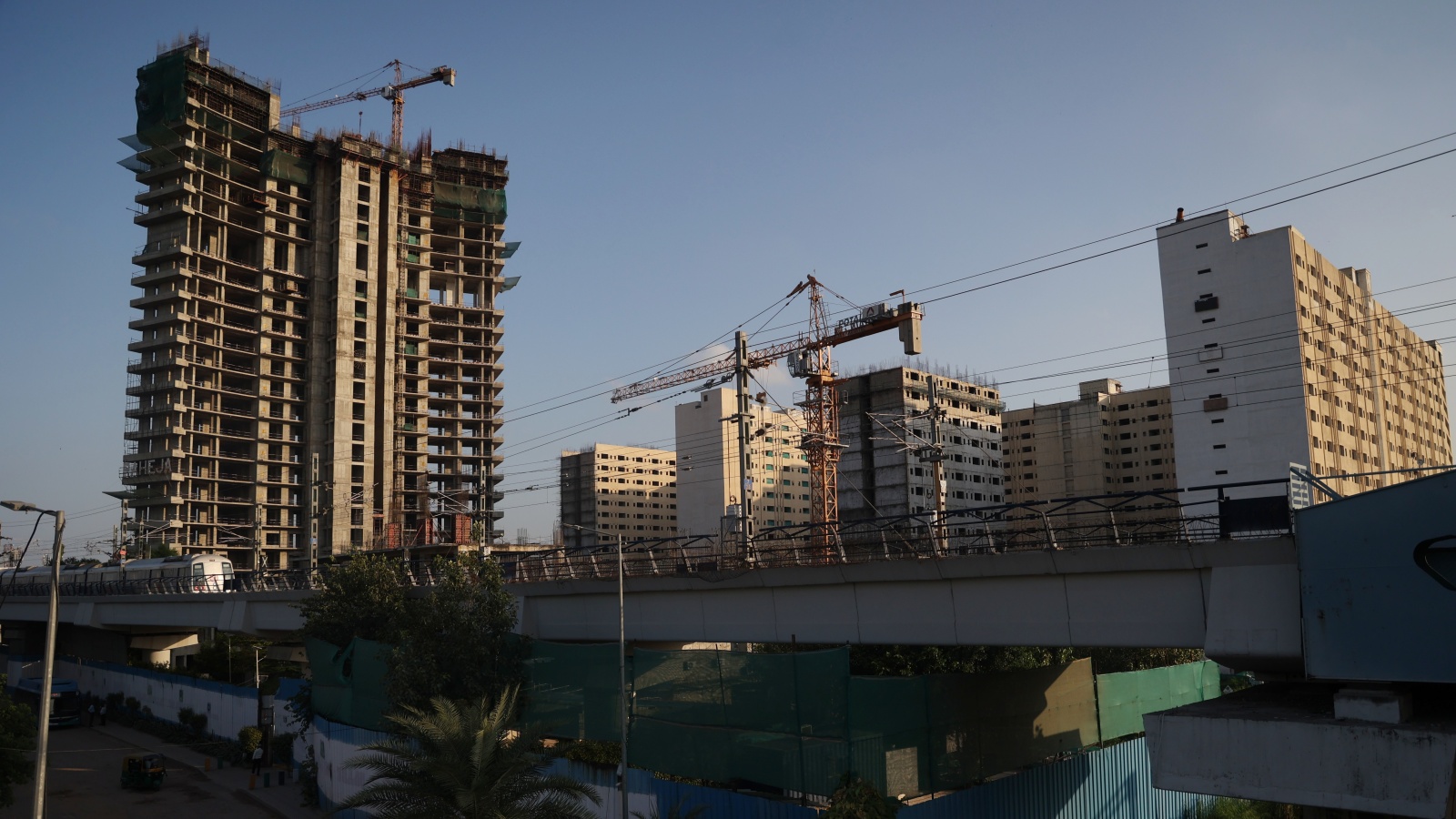
The DDA's EWS housing project, whioch was scheduled to be completed in June 2026, is likely to take one more year (File photo: Tashi Tobgyal)
“Aisa lagta hai idhar hi jeevan khatam ho jaayega… (It feels like our life will end here only),” says a woman, who is one of thousands of people living in Anand Parbat transit camp of New Delhi after being moved from Kathputli Colony. Home to musicians, puppeteers, magicians and dancers, Kathputli Colony in West Delhi’s Shadipur area was the first slum in the Capital conceived for in-situ rehabilitation in 2008 — the only such project undertaken by a private firm, Raheja Developers, under a Public-Private Partnership (PPP) mode.
The demolitions began in 2017 and the construction at the site to build a new housing complex started in 2018. Delhi Development Authority (DDA) officials had told The Indian Express last September that the first batch of the flats would be ready by December 2025, according to a timeline sent by developer Raheja Developers Limited. The deadline to finish the full project — comprising 2,800 Economically Weaker Section (EWS) flats — was June this year.
ALSO READ | Rubble to canvas: How artist Paribartana Mohanty brings to life Delhi’s demolished Kathputli Colony
But DDA is set to miss yet another deadline for the completion of the housing complex. The project’s original completion date was 2020 and after repeatedly missing deadlines, it is expected to take one more year to complete, The Indian Express has learnt.
“The delay is from the contractor’s side who is claiming to have liquidity issues. However, the DDA is constantly talking to them to expeditiously complete the project,” a senior DDA official said, adding: “The project has made 65-70% physical and financial progress. 1,400 flats are ready, while the remaining 1,400 are under different stages of construction.”
The project was conceived way back in 2008 and approved in 2009. Residents of the slum moved in batches to makeshift camps in Anand Parbat and Outer Delhi’s Narela between 2014 and 2017, when all the slums were finally demolished and the land was cleared. Construction for the housing project eventually started in 2018.
People who are living in the transit camps now have gone weary due to repeated announcements of the project nearing completion over the years.
Story continues below this ad
ALSO READ | Kathputli Colony to Pragati Apartments: Delhi housing colony for slum dwellers gets a new name, new identity
The Indian Express spoke to people living in Anand Parbat — many of them are losing hope of rehabilitation. “At the last meeting with DDA officials earlier this month, they said it will take one more year. But I don’t know what will happen now. I had three homes there in Kathputli. They shifted us, saying we will have new homes in two years. Now we have been stuck here for almost 10 years,” said Patashi Devi, president of the local RWA.
The transit camp is made of tin porta cabins. “In summers, it is boiling inside the houses,” Devi points out.
“At the Kathputli colony, there were taps inside homes from which we used to get clean water. But here, locals end up fighting among themselves so often as there are common taps that everyone has to use,” says Suraj (20), a resident who works in bands performing at weddings.
Story continues below this ad
Established between the late 1960s and early 1970s, the Kathputli Colony was home to artists and performers originally from Rajasthan, and named after its resident puppeteers. They were later joined by folk artists and migrant workers from Uttar Pradesh, Maharashtra, Gujarat, Bihar and Andhra Pradesh. Many of the artists have won national awards, among other accolades, and performed in events in other countries, representing Indian culture. .
The housing complex — where the EWS flats are being constructed — was last year named as Pragati Apartments. Officials claimed that it was done after residents urged authorities to “adopt a name that reflects progress.”
Developer under scanner
Meanwhile, the developer has been facing action over other projects. Earlier in June, the Enforcement Directorate (ED) had attached assets worth Rs 503.48 crore linked to Raheja Developers, its promoter Navin M Raheja and members of his family as part of an ongoing money-laundering investigation into an alleged fraud against homebuyers. With this action, the total value of assets attached by the agency in this case has risen to about Rs 1,617.29 crore.
There are other disputes involving Raheja Developers and homebuyers across other projects in Gurgaon, with insolvency proceedings already initiated or under consideration in other developments by the company too. The principal bench of National Company Law Tribunal (NCLT) had admitted an insolvency petition filed by 176 homebuyers of Raheja Developers’ Revanta project in Sector 78 of Gurgaon.
© The Indian Express Pvt Ltd
Devansh Mittal is a Correspondent at The Indian Express, based in the New Delhi City bureau. He reports on urban policy, civic governance, and infrastructure in the National Capital Region, with a growing focus on housing, land policy, transport, and the disruption economy and its social implications.
Professional Background
Education: He studied Political Science at Ashoka University.
Core Beats: His reporting focuses on policy and governance in the National Capital Region, one of the largest urban agglomerations in the world. He covers housing and land policy, municipal governance, urban transport, and the interface between infrastructure, regulation, and everyday life in the city.
Recent Notable Work
His recent reporting includes in-depth examinations of urban policy and its on-ground consequences:
An investigation into subvention-linked home loans that documented how homebuyers were drawn into under-construction projects through a “builder–bank” nexus, often leaving them financially exposed when delivery stalled.
A detailed report on why Delhi’s land-pooling policy has remained stalled since 2007, tracing how fragmented land ownership, policy design flaws, and mistrust among stakeholders have kept one of the capital’s flagship urban reforms in limbo.
A reported piece examining the collapse of an electric mobility startup and what it meant for women drivers dependent on the platform for livelihoods.
Reporting Approach
Devansh’s work combines on-ground reporting with analysis of government data, court records, and academic research. He regularly reports from neighbourhoods, government offices, and courtrooms to explain how decisions on housing, transport, and the disruption economy shape everyday life in the city.
Contact
X (Twitter): @devanshmittal_
Email: [email protected] ... Read More
Stay updated with the latest - Click here to follow us on Instagram
View original source — Indian Express ↗
Related stories

The Punch
NewsJun 30, 2026 · 1 min
‘It’s not only akara,’ Remi Tinubu defends comments, says FG also supports tomato, pepper sellers
The Punch
The Punch
NewsJun 30, 2026 · 1 min
NYSC reforms: All you need to know about 11 specialised streams, new camp structure
The Punch
The Punch
NewsJun 30, 2026 · 1 min
Police arrest housewife for slitting husband’s throat in Katsina
The Punch
The Punch
NewsJun 30, 2026 · 1 min
Ogun CJ unveils two new courtrooms
The Punch