CNA
CNA··6 min read
Preparatory works for 'Long Island' to start from end-2026
Singapore
An environmental study found that the preparatory works are predicted to have an “overall minor impact” on the surrounding environment.
New: You can now listen to articles.
This audio is generated by an AI tool.
30 Jun 2026 12:00PM
(Updated: 30 Jun 2026 12:36PM)
SINGAPORE: Preparatory works for “Long Island”, Singapore’s large-scale coastal protection strategy, will start from the end of 2026.
It follows the completion of an environmental study commissioned by the Housing and Development Board (HDB), which found that the preparatory works are predicted to have an “overall minor impact” on the surrounding environment, HDB and the Urban Redevelopment Authority (URA) said in a joint press release on Tuesday (Jun 30).
The preparatory works, to be carried out in two phases, will primarily involve removing seabed obstructions and constructing temporary sand bunds and sand infilling.
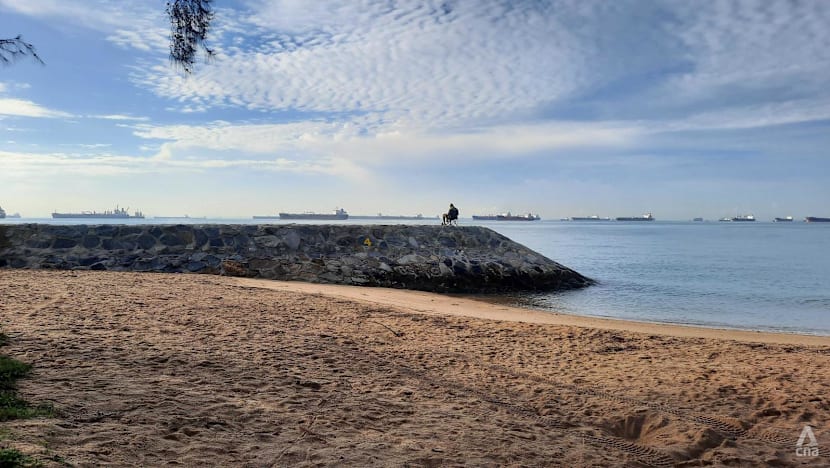
The works will be at least 130m away from the shoreline, in the waters off East Coast, and will be demarcated by silt screens and/or floating barriers.
They will lay the groundwork for future land reclamation of the decades-long, 800 ha project – dubbed "Long Island" for now – that is aimed at protecting Singapore from sea-level rise.
As a low-lying city state, Singapore needs to “plan early and act decisively” to mitigate the impact of climate change, said Minister for National Development Chee Hong Tat in a video posted on Facebook on Tuesday.
Long Island would also strengthen water resilience with an additional reservoir and create new land for future needs, he added.
“It is a complex project that requires many years of careful planning and implementation. This is why we are starting preparatory works in the waters off East Coast later this year,” he said.
IMPACT ON BEACH, SEASPORTS COMMUNITY
The preparatory works will be conducted in phases to facilitate the continued use of part of the sea space fronting East Coast Park.
The first phase will start at the end of 2026 and be carried out in the waters west of Bedok Jetty. It will cover an area of about 570 ha – the size of about 800 football fields – and will span around 7km in length from east to west, and up to 1km wide from north to south.
Works for the second phase, which spans about 155 ha, will only start after the 2029 Southeast Asian Games.
HDB, as the appointed reclamation agent for Long Island, will implement measures to mitigate the impact of preparatory works on the environment and community, HDB and URA said.
The study, conducted by DHI Water and Environment, identified that there would be no significant changes to water quality, which will “continue to meet the prevailing marine water quality criteria”, the agencies said.
It started in February 2025. As part of the process, agencies engaged nature groups the following month and they provided input and feedback to refine the scope of the study.
While nearshore swimming conditions are expected to remain unaffected, sea users are advised to maintain a safe distance from the marine vessels deployed for the works and the designated work area, which will be cordoned off to ensure public safety, HDB and URA said.
Beaches along East Coast Park will remain open and accessible for near-shore swimming, while all exercise paths and tracks will stay accessible for jogging and cycling.
However, the preparatory works may cause “slight localised changes” to the currents and waves near Bedok Jetty, which will have a minimal impact on existing water-based activities, HDB and URA said.
Some sea sport users will be displaced due to a reduction in sea space along East Coast.
“The impact will be mitigated by the phasing of preparatory works, with kiteboarding being the most affected, and minor to moderate impact on other sea sport users,” the agencies added.
In response to queries from CNA, Sport Singapore (SportSG) said it recognises that East Coast Park is an "important recreational space with shared memories".
"Agencies have been engaging the affected groups and will continue to work closely with them to explore alternative sites to continue their activities. This includes the sea space to the east of Bedok Jetty, as well as other locations such as Changi, Pasir Ris, Sembawang and Sentosa," SportSG said.
The agency added that in the longer term, the new reservoir and Long Island coastline could potentially support a range of water-based activities and sports. This is being assessed as part of the ongoing technical studies, it said.
IMPACT ON ENVIRONMENT, BIODIVERSITY
The agencies said that minor visual and ambient air quality impact from sand infilling operations is expected, with intermittent sediment plumes and dust.
HDB and URA said this will be minimised through the use of silt screens to contain the sediment plumes, in addition to close monitoring of dust levels.
The agencies added that the impacts on the natural environment are “generally slight and localised”.
In response to queries from CNA, HDB said that seagrass habitats are generally resilient to periodic turbidity - the cloudiness or haziness of the waters - and are expected to recover without long-term degradation.
It added that there are no sensitive coral communities or intertidal habitats within the project footprint of the preparatory works, and mobile species such as fish are expected to move away from the area where works are conducted.
Macrobenthic communities within the infilling area, including small organisms such as worms, marine snails and clams on the seabed, will be displaced.
“However, the affected area is small relative to similar habitats in surrounding waters, and recovery is expected outside the work footprint,” HDB and URA said, adding that there are no corals and seagrasses within the work footprint.
While the majority of coral and seagrass beds found outside the preparatory work are largely unaffected, those in specific locations such as Marina East and the eastern parts of East Coast may be “slightly affected” by suspended sediments.
Mangroves, intertidal fauna and most marine fauna are “largely unaffected”, the agencies added.
Additionally, while offshore-feeding birds may temporarily be affected due to reduced water space and increased turbidity, they are able to move away from the area, HDB and URA said.
The agencies added that turtle nesting at East Coast Park may be affected, although nesting areas to the east of Bedok Jetty remain accessible during the first phase of preparatory works.
The National Parks Board (NParks) ongoing turtle egg relocation efforts to Sisters’ Island will also support hatching survival over the longer term.
HDB and URA said that no harmful algal blooms or release of heavy metals are expected, and that the risk of oil spills is low given the small number of vessels involved and the mitigation measures in place.
HDB and URA said an environmental monitoring and management plan will be put in place throughout the preparatory works to monitor environmental conditions such as water quality, suspended sediment levels, noise and dust.
This ensures that the project’s environmental impact remains within the levels predicted in the environmental assessment, HDB and URA said.
The environmental study report is available for public feedback for four weeks from Jun 30.
“Agencies will thoroughly evaluate the feedback received and incorporate suitable suggestions, before finalising the mitigation measures that will be adopted,” HDB and URA said.
FURTHER STUDIES, ENGAGEMENT
The agencies said the first stage of the environmental study assessed the potential impact of preparatory works. The second stage, which is ongoing, will assess the potential impact of reclamation and is expected to be completed over the next few years.
The area that is used for preparatory works is not reflective of the future land profile of Long Island, HDB and URA said.
The main reclamation works for Long Island will only commence after agencies have completed the relevant technical studies, determined mitigation measures, and reviewed and incorporated feedback from further public engagements.
When completed, around 20km of new waterfront parks could be added to East Coast Park, which will triple the length of waterfront parks in the area and could add waterfront living concepts, according to URA’s website.
To date, more than 14,000 people have shared ideas on the project. The next phase of engagement will start from end-2026, where the public and stakeholders will be invited to explore key topics, including potential recreational activities along the new coastline and within the future reservoir.
Further technical studies will cover environmental engineering assessments for the actual reclamation profile and works, and are expected to be completed over the next few years.
Source: CNA/er(mi)
Related stories

The Punch
NewsJun 30, 2026 · 1 min
INEC restores NDC nomination portal access, says Dickson
The Punch
The Punch
NewsJun 30, 2026 · 1 min
‘It’s not only akara,’ Remi Tinubu defends comments, says FG also supports tomato, pepper sellers
The Punch
The Punch
NewsJun 30, 2026 · 1 min
NYSC reforms: All you need to know about 11 specialised streams, new camp structure
The Punch
The Punch
NewsJun 30, 2026 · 1 min
Police arrest housewife for slitting husband’s throat in Katsina
The Punch