Times of Israel
Israel-Lebanon deal may entrench stalemate rather than end war, analysts say
BEIRUT (Reuters) — A security deal between Israel and Lebanon risks entrenching a stalemate rather than resolving Israel’s underlying conflict with Hezbollah by tying Israel’s pullout from southern Lebanon to the Iran-backed terror group’s disarmament, a condition regional analysts and politicians say is unattainable.
At its core is a bargain few see as workable: Hezbollah has flatly rejected disarmament, and no Lebanese government has the power to enforce it.
With Hezbollah unlikely to disarm, analysts say Israel has political cover to keep an open-ended military presence in southern Lebanon, which it invaded after Hezbollah began firing missiles and drones at Israel on March 2 in solidarity with Tehran near the beginning of the US-Israeli war with Iran.
The deal leaves the Lebanese state trapped between obligations it cannot meet and sovereignty it cannot fully reclaim, the analysts say.
The framework deal also collides with Lebanon’s political realities, asking a fragile sectarian state to confront the most powerful armed faction in the country despite a post–civil war system built on power-sharing rather than coercion.
Get The Times of Israel's Daily Edition
by email and never miss our top stories
By signing up, you agree to the terms
“This is not an agreement, it is an imposed settlement,” said a senior Lebanese politician who declined to be named.
The Lebanese army, he said, was neither structured nor equipped to disarm Hezbollah, and expecting it to do so ignored both the group’s entrenched military capacity and the fragile sectarian balance on which Lebanon’s stability rests.
‘This agreement has put all the burden on Lebanon’
Political analysts say the imbalance is built into the agreement’s design, with sweeping obligations placed on Lebanon but no reciprocal guarantee of Israeli withdrawal.
“This agreement has put all the burden on Lebanon,” said Michael Young, a Beirut-based analyst, adding that it “creates a structure that allows the Israelis to remain [in southern Lebanon] indefinitely.”
Fawaz Gerges, a Lebanese scholar at the London School of Economics and Political Science, said the deal was “born dead” and is structurally flawed, hinging on a condition that is impossible to meet in practice.
Gerges said Israel had already consolidated a buffer zone in southern Lebanon about eight to 10 kilometers (five to six miles) deep while tying any future withdrawal to Hezbollah’s disarmament.
The terms of the deal risk the buffer zone becoming long-term and giving it diplomatic legitimacy, he said, describing it as a political “gift” to Israel.
The conflict in Lebanon has been a central part of diplomacy toward ending the wider US-Iran war.
Gerges said Washington’s deliberate decoupling of the conflicts gave Israel greater freedom of action in Lebanon.
Fear of civil conflict
The framework agreement between Israel and Lebanon signed in Washington affirms that Israel has no claim to Lebanese territory and makes the Lebanese Armed Forces’ authority in the south contingent on the verified disarmament of non-state armed groups, including Hezbollah.
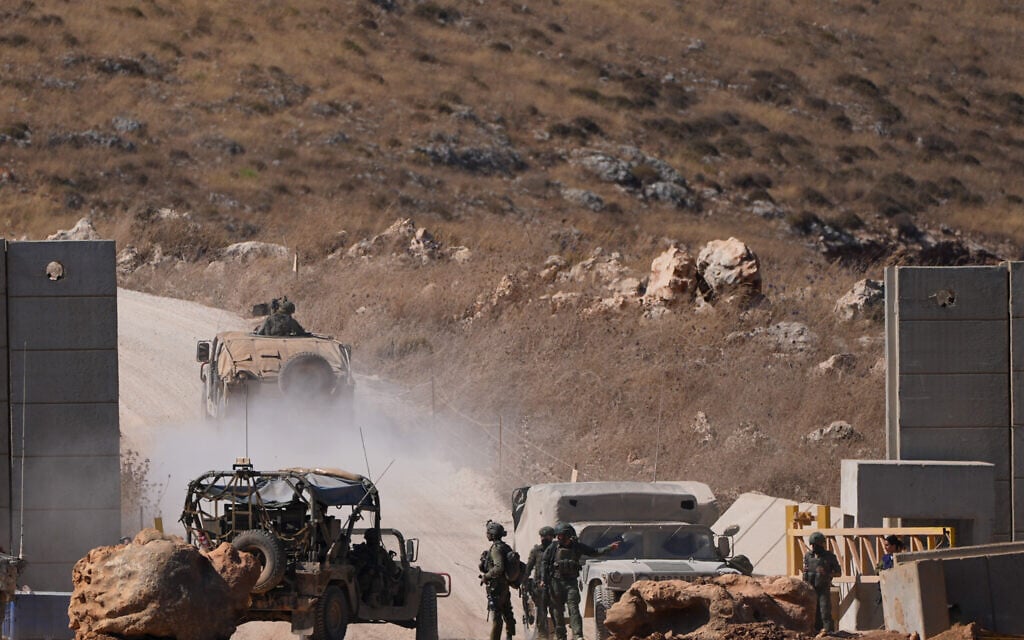
Israeli Prime Minister Benjamin Netanyahu portrays the deal as a historic achievement that could lead to broader peace, while Israeli troops remain deployed in a so-called security zone which Israel says is designed to protect its north from potential attack. Hezbollah and Israel have continued to exchange fire.
“We will continue to hold it until Hezbollah and other terrorist organizations are disarmed, and until no further threat to Israel is posed from Lebanon,” Netanyahu said on Saturday.
Three senior Israeli officials said Israel has little faith in Lebanon’s ability to disarm Hezbollah but sees the deal as a vital diplomatic step toward building peace with Lebanon in the long run.
About 4,000 people have been killed in Lebanon, a toll that includes combatants and civilians, and a million displaced during Israel’s military campaign against Hezbollah.
In the fighting with Hezbollah since March, 38 IDF soldiers and one Defense Ministry civilian contractor have been killed in southern Lebanon. Two civilians were also killed by Hezbollah rockets, and an Israeli civilian was mistakenly killed in the north by Israeli artillery shelling.
In Lebanon, the Israeli military has said that it has killed over 2,500 Hezbollah operatives, including hundreds of members of the terror group’s elite Radwan Force, since early March.
Lebanese President Joseph Aoun welcomed the agreement as a first step toward restoring Lebanon’s sovereignty, saying it should allow Lebanese people to return to fully liberated land.
Parliament Speaker Nabih Berri, a Hezbollah ally, said it amounted to an “agreement of dictates, not one that preserves Lebanon’s rights” and said it would not be implemented.
Hezbollah chief Naim Qassem declared the deal “null and void” and a “surrender,” and said his group would keep fighting until Israel is forced to leave. Hezbollah lawmaker Hassan Fadlallah warned of “internal conflict” in Lebanon.
Any attempt to forcibly disarm Hezbollah would risk deepening sectarian tensions.
Young said the deal “won’t lead us anywhere except to civil conflict, and maybe an insurrection by the Shi’ite community.”
Will the deal be implemented?
Danny Citrinowicz, a regional analyst and former Israeli military intelligence officer, said Hezbollah’s dismantlement was “something that would never happen” and the deal in effect legitimized an open-ended Israeli military presence.
“Nothing will happen. Israel won’t withdraw, and Hezbollah won’t dismantle,” he said.
Citrinowicz said no Israeli prime minister has the domestic political space to withdraw while Hezbollah is still armed and northern Israeli communities remain displaced.
A narrower pact focused on Hezbollah’s pullout from south of the Litani River, an expanded Lebanese army deployment and an extension of state authority would have stood a better chance of success, he said.
Pro-Hezbollah analyst Mohammed Obeid also said the deal was unlikely to be implemented, adding that its provisions were “like explosives,” capable of detonating Lebanon’s internal stability, as they hinge on state action to disarm Hezbollah.
Times of Israel staff contributed to this report.
View original source — Times of Israel ↗
Related stories

The Punch
SportsJun 30, 2026 · 1 min
World Cup: Five African stars among top Young Player Award contenders
The Punch
The Punch
SportsJun 30, 2026 · 1 min
Morocco World Cup win sparks celebration, arrests in Netherlands
The Punch

ESPN
SportsJun 30, 2026 · 1 min
Transfer rumors, news: Olise asks for Bayern meeti...
ESPN

BBC Sport
SportsJun 30, 2026 · 1 min
Swans accept eight-figure Stoke bid for Galbraith
BBC Sport