CNA
CNA··2 min read
Hong Kong prison service pulls controversial AI-generated K-pop ad after anti-drug messaging backfires
HONG KONG: Hong Kong’s prison service has pulled a controversial anti-drug ad featuring AI-generated K-pop stars following online reaction and ridicule.
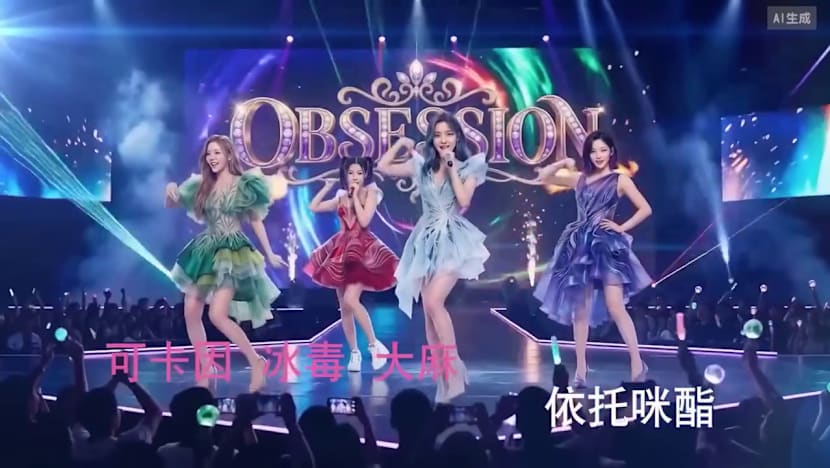
Titled “Obsession: The Sugar-Coated Trap”, the one-minute video featured four female group members named Weedy, Icy, Coke and Little E - representing cannabis, ice, cocaine and etomidate - a strictly regulated anaesthetic agent used in hospitals to induce sedation and also found in vapes.
“If you take me, I'll give you an out of body experience,” Icy told viewers.
Weedy said: “With a romantic puff of smoke, only one stick will help you forget all worries so chill!”
After dancing and introducing themselves on stage, the K-pop stars transform into four old men locked behind bars - before ending with a slogan: “Drugs are extremely harmful and can ruin a life.”
“No matter how pretty they're packaged, drugs are drugs. (They'll) harm your body and ruin your life.”
The video was meant to warn the public about the dangers of drug abuse, Hong Kong’s Correctional Services Department (CSD) said in a statement shared on Facebook on Saturday (Jun 27).
Arrests for drug offences in Hong Kong rose by nearly 30 per cent year on year, according to official statistics - with the number of suspects under 21 surging by 90 per cent, largely driven by the spread of etomidate.
The city also recorded 1,281 serious drug cases in 2025, a 15 per cent increase from the previous year.
ANTI-DRUG MESSAGE BACKFIRES
The video was first posted on Jun 26 but was removed after it was widely mocked online.
“After listening to their introductions, I want to try (taking drugs),” said a Threads user by the handle mmmmmkit12.
Another user, an_chai, said that the video felt more like a promotion for trying drugs. “They listed out (drug) names, and how good they feel.”
“(We) took netizens’ opinions on the way the anti-drug video was presented very seriously and immediately re-edited the video to explain the harm of drugs as much as possible to avoid misunderstandings,” a department spokesperson told the South China Morning Post.
The re-edited version has also since been removed from CSD’s official social media accounts.
“The original intention was to hope people would not be deceived by the lies and false promises surrounding drugs,” CSD said in a statement on Facebook on Jun 27, which “acknowledged shortcomings” and also thanked members of the public for their feedback.
Months earlier in March, Hong Kong’s Security Bureau apologised for an advertising blunder in another anti-drug campaign, which appeared to encourage the use of illegal substances when viewed from certain angles.
Edited versions of CSD’s ad continue to circulate on sites like Facebook and Instagram - with one post drawing 3,300 likes and over 10,000 shares on Threads.
Related stories

The Punch
PoliticsJun 30, 2026 · 1 min
Okpebholo urges govs to tackle insecurity
The Punch
The Punch
NewsJun 30, 2026 · 1 min
If Nigeria police, military can’t solve insecurity, state police won’t — Galadima
The Punch
The Punch
NewsJun 30, 2026 · 1 min
Court grants Sowore fresh N200m bail
The Punch
The Punch
NewsJun 30, 2026 · 1 min
Veritas varsity to adopt ethical AI governance framework
The Punch