Times of India
Hormuz, Suez, Taiwan Strait: Why the world’s supply chains now need war-room planning
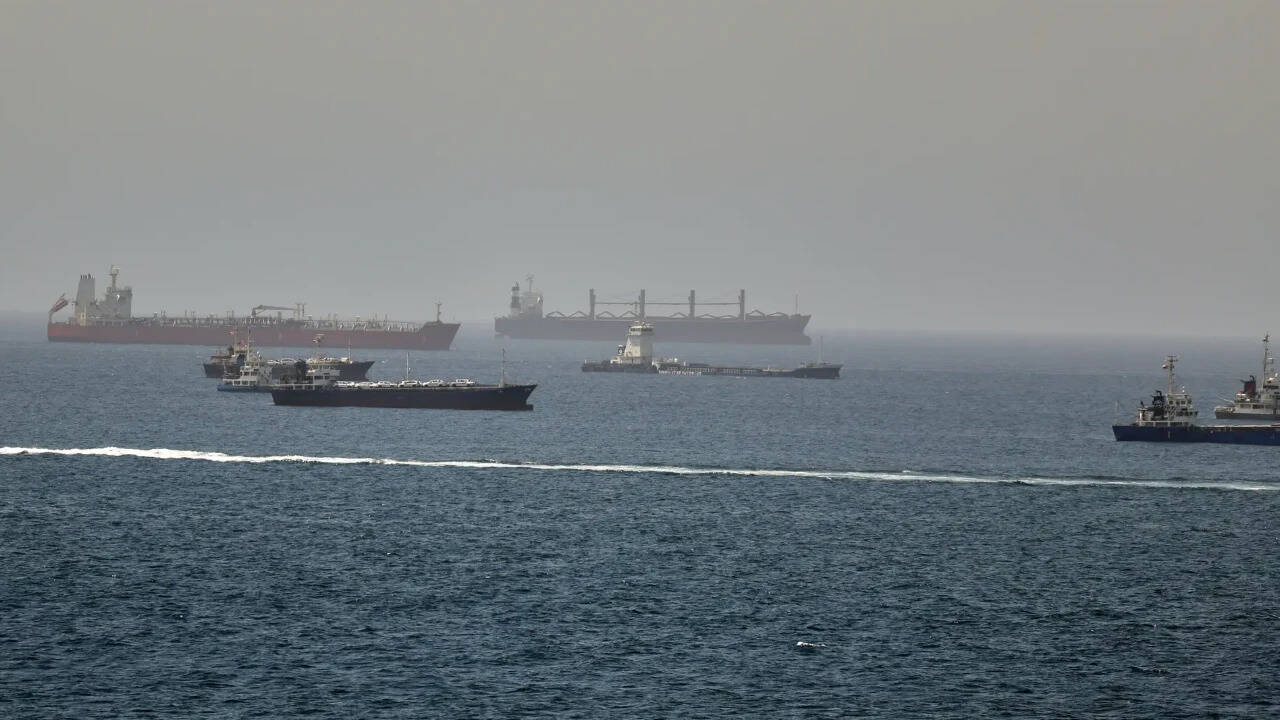
Tankers and cargo vessels are seen in the Gulf of Oman, along shipping routes linking the Strait of Hormuz and the Arabian Sea, Tuesday, June 16, 2026. (AP Photo)
Modern supply chains were built for a world where ships could move freely, insurance stayed cheap and the shortest sea route was usually the safest bet.The US-Iran war has delivered a blunt lesson to the global economy: supply chains are only as strong as the sea routes they depend on.
When the Strait of Hormuz was shut, the shock was not limited to oil tankers in the Gulf. Vessel movement slowed, freight rates climbed, insurance costs surged and fuel prices jumped. A regional conflict had quickly become a global logistics problem.That is why supply chains can no longer be planned only in boardrooms and spreadsheets. They now need war-room planning with shipping routes, energy supplies, insurance risks, alternate ports and geopolitical flashpoints mapped before the next crisis hits.The Middle East crisis proved that if the world is a global village, then the waterways carrying freight across oceans are its arteries -and modern warfare can choke them.This has brought other chokepoints into view.So, here are the world's most critical maritime chokepoints and why each has become a potential battlefield.
Strait of Hormuz
Around 138 ships used to pass through the 33-kilometre-wide Strait of Hormuz daily before the beginning of the war between the US and Iran.
As the conflict erupted, Iran held the advantage at this vital artery, leveraging cheap drones, sea mines, and its geography for asymmetric warfare.The blockade led to a surge in the price of oil and natural gas. Tanker freight rates climbed, and war-risk insurance, usually a small part of shipping costs, became a significant expense for vessel operators.As fuel, fertilizer, and freight costs increased, importers paid more to move goods.
Those costs filtered through to food prices and added to inflationary pressures across the world.
At the beginning of the blockade, US President Donald Trump tried to resolve this with diplomatic efforts and backchannel dialogue. After this tactic failed, he deployed 1,000 more troops to the Middle East and looked into possible US Navy escorts for oil tankers.Although an interim deal between the US and Iran on June 17 reopened the Strait, traffic remains well below pre-conflict levels."Shipping is literally caught in the crossfire as the US and Iran battle for control of the Strait of Hormuz," maritime analyst Michelle Wiese Bockmann told The New York Times.She said the renewed attacks had done little to reassure shipowners that the route was safe again.Harry Vafias, chief executive of Stealth Gas, said one of his vessels had managed to leave the Persian Gulf, but two others remained stranded. The "situation in Hormuz seems to be deteriorating once more," he told the newspaper.
Bab el-Mandeb Strait
The 21-mile-wide Bab el-Mandeb Strait in the Red Sea is another such chokepoint in the Middle East region.Each year, approximately 12 to 15 percent of global maritime trade worth more than $1 trillion transits the waterway, which extends from the Suez Canal in the north to the Bab el-Mandeb Strait in the south.However, sustained interference in the region by Iran-backed Houthi rebels has led to concerns about security in the Red Sea.On June 8, Houthi rebels announced a complete ban on Israeli ships transiting the Red Sea, calling them "legitimate military targets." The announcement came after Iranian officials threatened in April to obstruct trade in the waterway if the Trump administration upheld its naval blockade on Iran. The blockade has since been lifted, but worries linger about the waterway's vulnerability.
The waterway has been an active conflict zone since 2023, when the Yemen-based Houthis began attacking commercial and naval vessels in protest against Israel's military campaign in Gaza, significantly disrupting international shipping.The group's entry into the Iran war in March by firing missiles at southern Israel underscored the Red Sea's potential to become a new front in broader regional tensions. Its total ban on Israeli and Israel-linked shipping in the waterway threatens further escalation amid renewed hostilities between Israel and Iran.The Red Sea is also considered a digital chokepoint, as an estimated 90 percent of undersea fibre-optic cables linking Europe and Asia pass through the waterway.Previous Houthi attacks in the Red Sea have highlighted the economic stakes. The group's response to the Israel-Hamas war disrupted maritime traffic in the Bab el-Mandeb Strait.
Suez Canal
The Suez Canal, which connects the Mediterranean Sea to the Red Sea, is also one of the busiest but most vulnerable waterways in the world.The Suez Canal has spent the past five years oscillating between two roles: the default Asia-Europe corridor and the route everyone avoids.In March 2021, the Ever Given ran aground and blocked the canal for six days, exposing the vulnerability of a waterway that carries around 12-15 percent of global trade.
Since late 2023, attacks by Yemen's Houthi militants on commercial shipping in the adjoining Red Sea have again disrupted the route, forcing many shipping companies to divert vessels around the Cape of Good Hope.The disruption has added 10 days or more to many Asia-Europe voyages, increased freight and insurance costs, and demonstrated that the world's primary alternative to disruption in the Strait of Hormuz can itself become a geopolitical chokepoint.
Taiwan Strait
The Taiwan Strait is one of the world's busiest trade corridors, carrying roughly a fifth of global maritime cargo and more than half of the world's container fleet.It is also the conduit for Taiwan's semiconductor exports, which dominate advanced chip production worldwide.
However, tensions between China and Taiwan make this strait a potential chokepoint that can bring the world economy to its knees. A crisis in the Taiwan Strait would freeze the supply of the chips that run everything from phones to AI data centres.Chinese coast guard and military activity around Taiwan - including incursions near its South China Sea outposts and recurring live-fire drills - has intensified through 2026.This could be perceived as a rehearsal for a blockade rather than routine patrols.According to a Bloomberg analysis, a Chinese air and sea blockade of Taiwan would prompt a projected 5 percent fall in global GDP, comparable to the 2008-09 financial crisis or the Covid-19 pandemic, and a full US-China conflict could shrink the global economy by nearly 10 percent.
Malacca Strait
The Strait of Malacca, a 900-km-long waterway bordered by Indonesia, Malaysia, Thailand, and Singapore, links the Indian and Pacific Oceans and provides the shortest maritime route between East Asia, the Middle East, and Europe.According to the Centre for Strategic and International Studies, around one-fifth of global maritime trade passes through the strait. It is also the busiest oil chokepoint in the world.
Data from the US Energy Information Administration (EIA) shows that in the first half of 2025, about 23.2 million barrels of oil a day, roughly 29 percent of global seaborne oil trade, passed through the Strait of Malacca.However, the strait's geography adds to its vulnerability. At its narrowest point, the Phillips Channel in the Singapore Strait, it is only about 2.7 km wide, creating a natural bottleneck where heavy traffic, shallow waters, and limited manoeuvring space raise the risks of collisions, groundings, and oil spills.Additionally, repeated incidents of piracy and armed robbery in and around the strait lead to security concerns.Rising tensions in nearby waters, including the South China Sea and the Taiwan Strait, also increase the risk of spillover effects.Any disruption would force vessels to take a longer route around the Indonesian archipelago, increasing transit times, freight costs, and fuel consumption.Recognising the strait's global importance, Singapore, Malaysia, Indonesia, and Thailand conduct coordinated patrols to safeguard shipping and have consistently opposed unilateral control over the waterway.
Panama Canal
The Atlantic Ocean is often viewed as home to relatively secure maritime chokepoints, but the Panama Canal and the wider Caribbean have faced repeated disruptions over the years. Like the Mozambique Channel, these routes assume greater strategic importance whenever primary trade corridors come under stress.
The Panama Canal is a vital gateway between the Atlantic and Pacific Oceans and a cornerstone of global trade.
For the United States, it is especially significant, with about 40 percent of its container traffic passing through the canal, particularly shipments between the US East Coast and Asia. China is another major user, accounting for 21.4 percent of the canal's cargo volume in the 12 months to September 2024.The canal has also become a flashpoint in the growing rivalry between the United States and China. Since returning to the White House in 2025, Trump has repeatedly called for the US to regain control of the canal, citing concerns over China's expanding influence around the strategic waterway.
View original source — Times of India ↗
Related stories

The Punch
PoliticsJun 30, 2026 · 1 min
FG vows action against Côte d’Ivoire over Nigerian’s death in prison
The Punch
The Punch
PoliticsJun 30, 2026 · 1 min
Tinubu hails veteran journalist Tunji Bello at 65
The Punch
The Punch
PoliticsJun 30, 2026 · 1 min
Okpebholo urges govs to tackle insecurity
The Punch

TASS
PoliticsJun 30, 2026 · 1 min
Kiev to transform Ukraine into global criminal hub, working with cartels — Russian senator
TASS