Times of India
Times of India··4 min read
South Korea unveils $880B megaplan to challenge US, China and Taiwan in global tech race
PC: SCMP
For years, South Korea's economy has relied on advanced manufacturing, with semiconductors sitting at the centre of its global success. The country already produces many of the memory chips used in smartphones, computers and increasingly the servers powering artificial intelligence.
Yet governments across Asia are now competing to attract even more investment into the same industry, encouraged by soaring demand for computing power and concerns over future technological leadership. Reportedly, against that backdrop, on Monday, Seoul President Lee Jae-myung has announced one of its most ambitious industrial strategies in recent memory. The programme stretches far beyond building additional chip factories, reaching into AI infrastructure, robotics and regional development.
It reflects a wider effort to prepare the country for the next phase of technological competition while also tackling long-standing economic imbalances between the capital and the rest of the nation.
South Korea unveils an $880 billion plan to accelerate AI and chip production
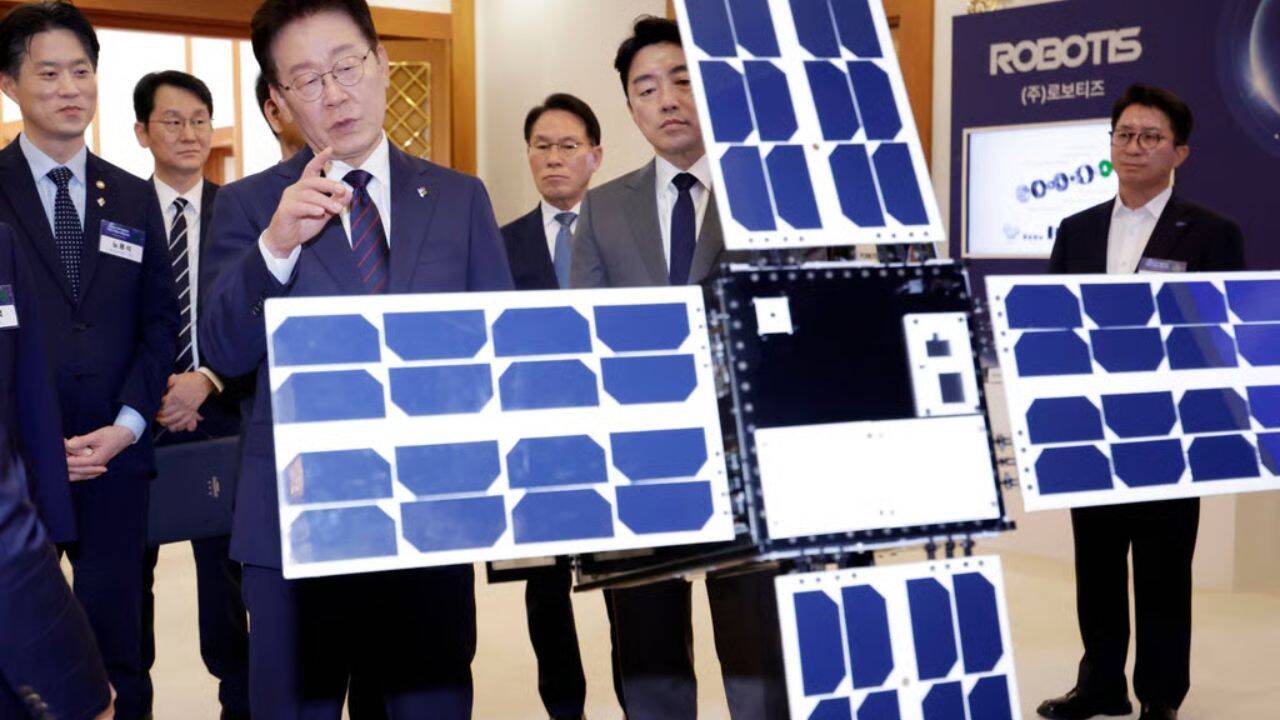
As reported by the BBC, South Korea plans to direct at least $880 billion (Approx £666 billion) towards expanding its semiconductor and artificial intelligence industries over the coming years. "We must secure the core elements of AI faster than any other country," Lee said.
"Semiconductors, physical AI, and AI data centres are the triple axis for a great leap forward."The programme forms part of a broader national strategy that aims to strengthen sectors regarded as essential to future economic growth.Rather than concentrating on a single objective, the initiative combines several large projects. New semiconductor manufacturing hubs are expected to sit alongside expanded AI data centres and investment in robotics, creating an ecosystem designed to support both research and large-scale industrial production.President Lee Jae-myung presented the strategy as an effort to ensure South Korea remains competitive as demand for advanced computing continues to rise around the world.
How the new investment aims to revive regional economies
The investment package also carries a strong regional development focus.South Korea's most advanced technology companies and manufacturing facilities have traditionally been concentrated around Seoul and the surrounding metropolitan area.
That concentration has helped create economic opportunities in the capital but has also contributed to slower growth elsewhere, with many rural regions facing population decline and reduced investment.The government now wants future technology projects to be spread more widely across the country. New industrial clusters and AI infrastructure are expected to be built outside Seoul in an attempt to encourage businesses, skilled workers and supporting industries to establish themselves in other regions.Officials argue that strengthening local economies is no longer simply a regional policy but part of the country's broader economic strategy. Creating more balanced industrial development is seen as a way to support sustainable growth while reducing dependence on a single metropolitan area.
Samsung and SK Hynix stand at the centre of South Korea’s AI push
The announcement was made alongside executives from Samsung and SK Hynix, the country's two biggest semiconductor manufacturers, as reported by the BBC.Both companies already occupy leading positions in the global memory chip market and have become increasingly important suppliers for artificial intelligence systems. Their products are widely used in high-performance servers that process the enormous volumes of data required by modern AI models.Demand from companies building AI infrastructure has significantly strengthened business conditions for both manufacturers.
Customers include some of the world's largest technology firms, where spending on advanced computing equipment continues to expand.
How AI is reshaping semiconductor competition across the world
South Korea's announcement arrives during a period of exceptionally heavy global spending on semiconductor production and artificial intelligence infrastructure.Across Asia, governments in Taiwan, Japan and China have all introduced large-scale programmes designed to increase domestic chip manufacturing capacity and reduce dependence on overseas supply chains.
The rapid expansion of AI services has added fresh urgency to these efforts as businesses require ever greater numbers of advanced processors and memory chips.In the United States, major technology companies have also committed enormous sums to expanding AI capabilities. Google, Amazon and Meta have all outlined spending plans running into hundreds of billions of dollars as they compete to build larger data centres and more powerful computing networks.That surge in investment has transformed parts of the semiconductor industry that were once known for cyclical swings in demand. Memory chips, in particular, have experienced renewed growth as AI systems require significantly greater amounts of high-speed memory than traditional computing applications.
How AI competition is reshaping chip pricing and demand
Artificial intelligence has changed the outlook for chip manufacturers across the industry.As businesses race to build larger AI models, demand for specialised hardware has risen sharply.
The resulting pressure on semiconductor production has contributed to higher prices for many components used in consumer electronics as well as enterprise computing equipment.The shift has also boosted the market value of companies supplying these technologies. SK Hynix has been among the major beneficiaries, with investor confidence rising alongside growing orders linked to AI data centre expansion.Consumers are beginning to feel some of those effects as well. Rising component costs have already prompted several technology companies, including Apple and Microsoft, to increase prices on selected products.
View original source — Times of India ↗
Related stories

The Punch
NewsJun 30, 2026 · 1 min
TETFund challenges scientists to fast-track Nigeria’s first Lassa fever vaccine
The Punch
The Punch
NewsJun 30, 2026 · 1 min
PDP faction faults arrest of Akwa Ibom spokesperson, offers legal support
The Punch
The Punch
NewsJun 30, 2026 · 1 min
Real Madrid’s Mendy to stand trial after dog attacked teenager
The Punch
The Punch
NewsJun 30, 2026 · 1 min
Residents escape as fire guts building, laundry shop in Kwara
The Punch