Indian Express
Apple’s future OLED Macs, iPads may deliver richer colours
3 min readJun 30, 2026 04:22 PM IST
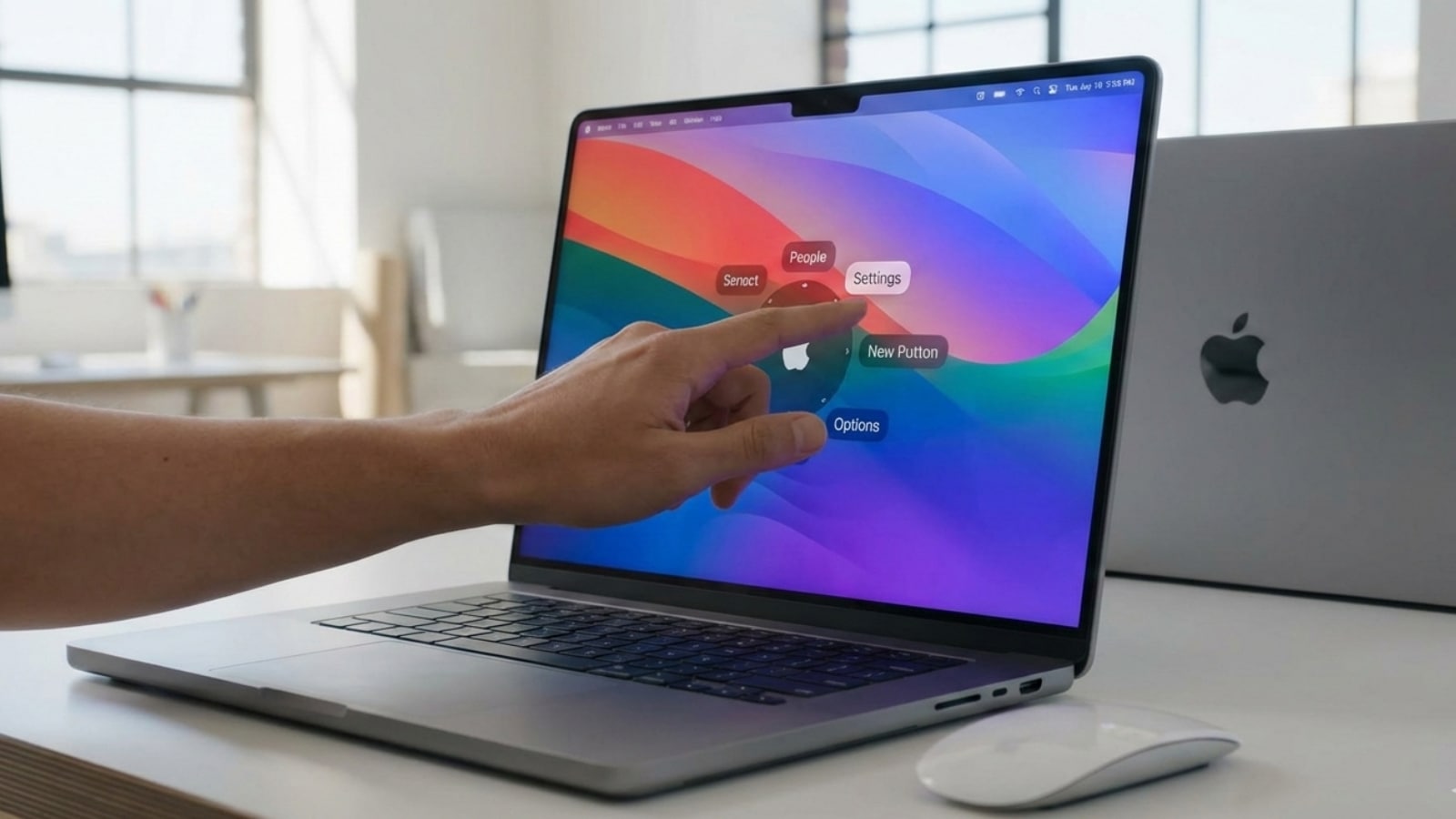
Apple is reportedly preparing to adopt advanced OLED technology for future MacBook Pro, iPad Pro and iMac models. (Image Credit: Gemini AI)
Apple’s future OLED-powered Macs and iPads could offer significantly richer and more accurate colours than current models as the company prepares to adopt a wider colour gamut across its premium displays, according to a new report by market research firm TrendForce.
According to reports from TrendForce, Apple plans to gradually introduce OLED panels capable of covering 95 per cent of the BT.2020 colour gamut in upcoming MacBook Pro, iPad Pro, and iMac models. If implemented, the move would represent a major leap beyond the DCI-P3 colour standard currently used across Apple’s devices.
Apple is preparing for a broader OLED rollout
Apple has already adopted OLED technology across several product categories, including the iPhone, Apple Watch, Vision Pro and the latest iPad Pro models.
Industry reports have also suggested that OLED MacBook Pro models could debut as early as this year, with an OLED iMac expected to follow in the coming years.
According to TrendForce, Apple now wants these future displays to deliver not only deeper blacks and higher contrast but also a substantially wider colour range.
What is BT.2020?
BT.2020, officially known as Rec. 2020, is an ultra-wide colour standard designed for next-generation 4K and 8K video.
Compared to today’s DCI-P3 standard, BT.2020 covers a much larger portion of colours visible to the human eye, allowing displays to reproduce more vibrant reds, deeper greens and richer blues.
Story continues below this ad
TrendForce noted that achieving such coverage requires major improvements in colour purity, brightness, power efficiency and material performance.
As a result, future OLED competition is expected to move beyond traditional specifications like brightness, contrast and thinner panels.
Instead, manufacturers will increasingly focus on balancing colour accuracy, energy efficiency and long-term durability.
New OLED materials could make it possible
According to reports, advances in OLED materials make these improvements feasible.
Story continues below this ad
Another technology discussed is multi-resonant thermally activated delayed fluorescence (MR-TADF). MR-TADF employs special molecular structures that create narrower light wavelengths and hence allow production of pure colours that will satisfy the BT.2020 standard.
Hyperfluorescence is another technology that makes displays more energy efficient through optimal usage of light-emitting excitons, while phosphorescence-assisted thermally activated sensitising fluorescence (pTSF) is intended to increase luminance and lifetime of OLED panels.
Thus, these new systems can provide more brightness, power efficiency, and lifetime for OLED displays without any losses in terms of colour purity.
Competition among display companies
It is reported that Apple’s constantly changing display requirements prompt panel manufacturers to focus on next-generation OLED technologies.
Story continues below this ad
According to reports, Samsung Display works on new OLED materials along with electroluminescent quantum-dot technologies, while several Chinese manufacturers work on developing new emissive systems and increasing domestic production of OLED materials.
It seems that Apple’s new display strategy may also result in an increasing number of suppliers due to growing competition among manufacturers.
View original source — Indian Express ↗
Related stories

The Guardian
TechnologyJun 30, 2026 · 1 min
Rocky week for AI as shares slump but no sign of crash – yet
The Guardian

Dawn
TechnologyJun 30, 2026 · 1 min
India's Cockroach party seeking education minister's ouster awaits cabinet reshuffle
Dawn

The Punch
TechnologyJun 30, 2026 · 1 min
Russia says over 400 Ukrainian drones intercepted, infant killed near Moscow
The Punch
TechRadar
TechnologyJun 30, 2026 · 1 min
8849 Tank 5 review: A fast-charging, heavyweight rugged phone with an incredible projector
TechRadar