Indian Express
Indian Express··4 min read
SIR 2026 revisions reach Delhi, Maharashtra, and more: All you need to know
1 min readUpdated: Jun 30, 2026 06:55 PM IST
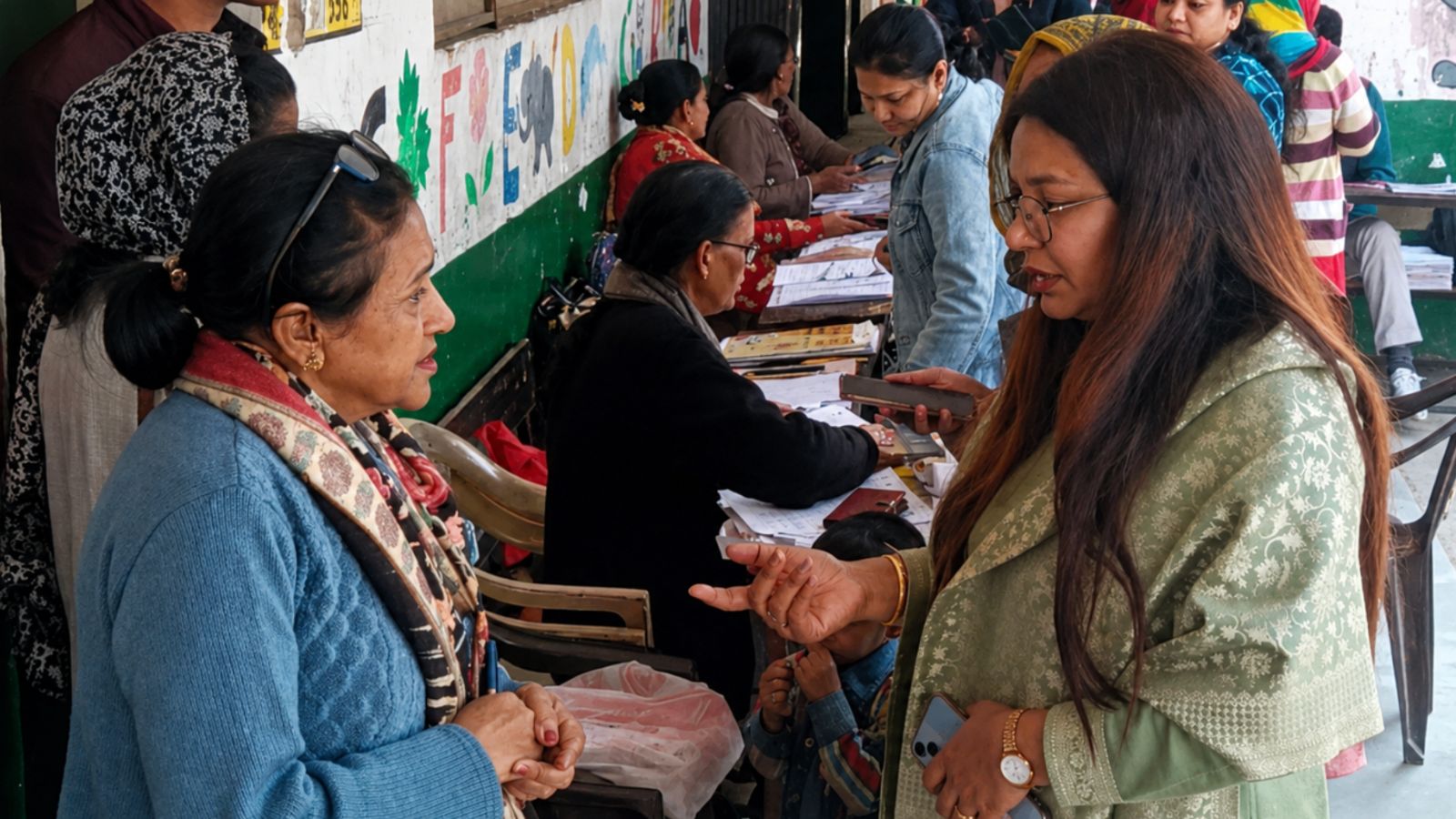
SIR begins in Delhi, Karnataka, Maharashtra and more. (Photo: X/ECI)
On Tuesday, June 30, the Election Commission of India (ECI) began the Special Intensive Revision (SIR) of electoral rolls in Karnataka, Meghalaya, Maharashtra, Jharkhand, and Delhi.
The SIR is a nationwide exercise aimed at improving the accuracy of electoral rolls by verifying voter records through house-to-house enumeration, pre-filled forms, and cross-checking of existing data. The exercise seeks to remove the names of deceased voters, those who have permanently moved, duplicate entries, and non-citizens, while ensuring that all eligible citizens who are missing from the rolls are included.
The initiative was announced on October 27, 2025, by Chief Election Commissioner Gyanesh Kumar at Vigyan Bhawan in New Delhi and has since been rolled out in phases across the country.
The exercise also aligns with the ECI’s constitutional mandate to conduct free and fair elections. In May 2026, the Supreme Court upheld the validity of the Special Intensive Revision, observing that the exercise was consistent with the provisions of the Representation of the People Act.
01Which states and Union Territories does SIR phase-3 cover?
Phase-III SIR verification covers the states of Odisha, Mizoram, Sikkim, Manipur, Dadra and Nagar Haveli & Daman and Diu, Uttarakhand, Andhra Pradesh, Arunachal Pradesh, Haryana, Chandigarh, Telangana, and Punjab, with visits having started between May 30 and June 25, 2026.
Verification in Karnataka, Meghalaya, Maharashtra, Jharkhand, and Delhi begins on June 30, 2026. While Nagaland follows on August 16, 2026, and Tripura starts on September 15, 2026.
Phase III for Delhi, Karnataka, Maharashtra, Jharkhand, and Meghalaya will take place between June 30 and July 29.
02What is the BLO's role in SIR?
The Booth Level Officer (BLO) is assigned to visit every household to verify existing voter details, enrol new eligible voters, and identify electors who have died, permanently moved, or are registered in more than one place. Each BLO is assisted by Booth Level Agents (BLAs) appointed by political parties for transparency.
03Do I have to submit my enumeration form/documents online or offline?
Enumeration forms can be submitted online and offline. You can hand the filled enumeration form to the visiting BLO, or fill and submit it yourself online via the ECI portal (voters.eci.gov.in) or the Voter Helpline app. If you submit your form online, the BLO will still verify it during a household visit.
04Will I be marked absent if the BLO finds my house locked? What happens if I am not at home during the BLO's visit?
No, you won't be marked absent after a single missed visit. The SIR norms require BLOs to make at least three visits to a household. In your absence, the BLO typically leaves the enumeration form at your house or with the security authorities of the area to be collected on a later visit.
05What can I do when I am not home for a long duration during the SIR exercise?
Don't wait for the BLO for your form. Fill and submit your enumeration form online yourself, or drop it off at a designated revision centre like schools, government offices, or polling stations before the draft roll deadline.
06Where can I get my voter details from 2002?
Each state's Chief Electoral Officer (CEO) has digitised the old rolls. For Delhi, search by name, EPIC number, or polling station at ceodelhi.gov.in, or use the ECI's nationwide search tool at voters.eci.gov.in.
07I moved to this city after the last SIR (Eg; post-2002 in Delhi). Does the old electoral roll matter to me?
No. The old-roll reference is only needed to verify continuity for long-standing voters. As a newer resident, you simply fill out the enumeration form as a fresh applicant with your current age and residence proof.
08I can't find my name or my family's name in the old rolls. What should I do?
You can link yourself through a parent's or relative's entry in the old roll instead. If no family link exists, you can apply as a new elector with standard age and residence proof.
09What documents do I submit as proof?
It is unlikely to require any document proof at the enumeration stage; the filled-out and signed form is enough.
However, if the ERO does ask for verification, acceptable documents include passports, birth certificates, educational certificates, caste certificates, any government-issued ID predating July 1987, or land/housing allotment certificates.
10I have submitted my form/documents as asked. How do I check if my name is added to the draft voters' list?
Check the draft electoral roll once published (per your group's schedule) on the CEO website or ECI portal by searching your name, EPIC number, or constituency details.
11What if my name is missing or spelt wrong in the draft roll?
In such cases, you can file a claim or objection during the designated window for your state/UT group. These complaints and claims are reviewed and resolved before the final electoral roll is published.
12What if I never received or returned an enumeration form at all?
This is the biggest threat to your voter registration; it could prevent your name from appearing on both the draft and final rolls.
Proactively submit your form online through the ECI portal or app well before your group’s draft roll date, even if no ballot of registration has arrived.
© IE Online Media Services Pvt Ltd
View original source — Indian Express ↗
Related stories

The Punch
PoliticsJun 30, 2026 · 1 min
Compensate Lagos flood victims, probe coastal road, Doherty tells govt
The Punch
The Punch
NewsJun 30, 2026 · 1 min
Lagos seals club, hotel over noise pollution
The Punch
The Punch
NewsJun 30, 2026 · 1 min
UNIOSUN probes student’s death, announces overhaul of campus health services
The Punch

ESPN
SportsJun 30, 2026 · 1 min
How a small Oregon town became a Mexican soccer stronghold
ESPN