Indian Express
Indian Express··5 min read
Gujarat can emerge as major defence manufacturing hub, says Rajnath Singh
4 min readVadodaraUpdated: Jun 30, 2026 07:26 PM IST
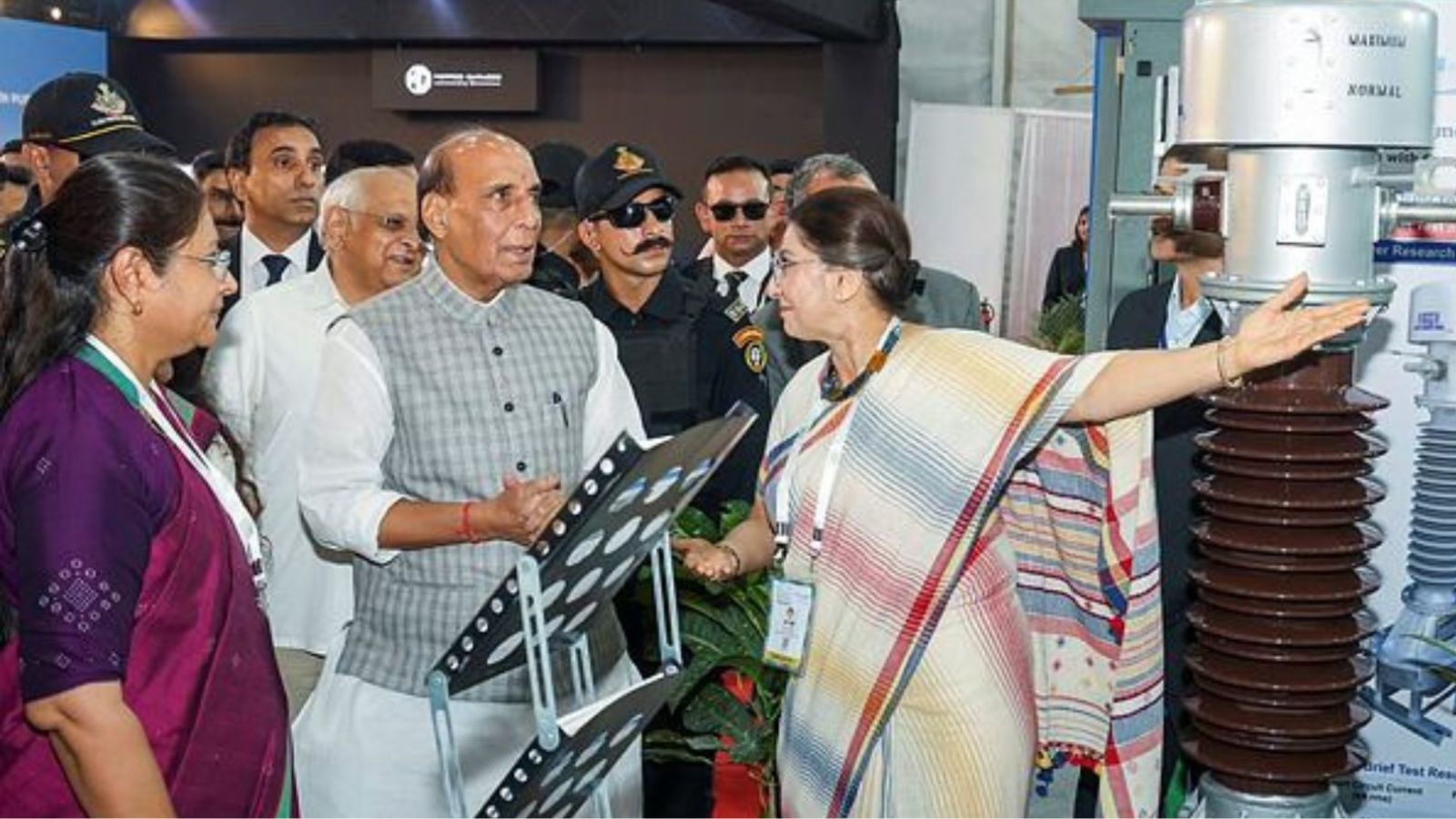
Rajnath, in his address, said, "Some people may wonder what connection a defence minister has with Vibrant Gujarat." (ANI)
Positioning Gujarat at the centre of India’s defence-industrial ambitions, Defence Minister Rajnath Singh on Tuesday said the state has the industrial strength, skilled workforce, entrepreneurial culture and technologies required to emerge as one of the country’s foremost defence manufacturing hubs.
At the valedictory ceremony of the Vibrant Gujarat Regional Conference in Vadodara, Singh stated that economic strength and national security were inseparable, and that the next phase of India’s industrial growth would be driven as much by defence manufacturing as by conventional industry.
Meanwhile, Chief Minister Bhupendra Patel said the fourth edition of the Conference has attracted investment proposals worth Rs 3.34 lakh crore through 3,700 memorandums of understanding (MoUs), with the potential to create nearly 1.97 lakh jobs. Patel said the investments would contribute to increasing Gujarat’s Gross State Domestic Product and per capita income while creating new employment opportunities across sectors, describing the conference as an embodiment of Prime Minister Narendra Modi’s vision of inclusive and regional development.
Rajnath, in his address, said, “Some people may wonder what connection a defence minister has with Vibrant Gujarat… The security of any state and its economy are deeply interconnected. A strong economy creates the foundation for strong defence capabilities, while a secure nation provides an enabling environment for development, innovation and industry to flourish.”
Calling defence manufacturing a force multiplier for the wider economy, Singh said the sector was “not limited merely to weapons manufacturing” but also acted as a catalyst for infrastructure development, logistics, industrial expansion and employment generation. The Defence Minister made a strong pitch for Gujarat’s role in this transformation, declaring that the state already possesses “the complete ecosystem required to become a defence manufacturing hub.”
“Gujarat possesses a strong industrial foundation, a skilled workforce, and an entrepreneurial mindset that can play a crucial role in India’s journey towards self-reliance. From advanced manufacturing to cutting-edge research, the state has the potential to become a major hub for defence production and technology,” Singh said.
He pointed to Vadodara’s emergence as the location of India’s first private-sector military aircraft manufacturing facility under the Tata-Airbus C-295 programme, describing it as “a historic milestone in India’s aerospace journey.”
Story continues below this ad
Singh also highlighted the manufacture of the K-9 Vajra self-propelled artillery system in Gujarat, stating the platform had “significantly enhanced the combat capabilities of the Indian armed forces”. Looking beyond conventional manufacturing, the Defence Minister identified semiconductors as the defining strategic technology of the coming decades.
“Future warfare and economy will run on chips,” he said, expressing confidence that semiconductor projects coming up in Dholera and Sanand would become the foundation of India’s technological sovereignty.
According to Singh, Gujarat’s industrial strengths mapped directly to the needs of India’s defence sector. The state’s chemical and petrochemical industries could support advanced materials, composites and propellants, while its electronics ecosystem could contribute to avionics, sensors and communication systems.
Singh emphasised that Gujarat has ports and shipbuilding capabilities that could strengthen naval systems and maritime security, even as renewable energy and green hydrogen sectors could open new pathways for the next generation of defence technologies.
Story continues below this ad
Recalling India’s dependence on foreign suppliers a decade ago, Singh said the country’s defence sector had undergone “unprecedented reforms” over the last ten years. “India was once heavily dependent on imports to meet its defence requirements, but, today, India is rapidly emerging as a major force in defence manufacturing and exports,” he said.
The minister said that domestic defence production rose from Rs 46,000 crore in 2014 to around Rs 1.78 lakh crore, while defence exports rose from roughly Rs 1,000 crore to nearly Rs 39,000 crore over the same period. Singh emphasised that India’s self-reliance strategy was not “inward-looking protectionism” but “confidence to stand firmly on its own feet and engage with the world as an equal partner.”
Calling on industry to participate in the transformation, the Defence Minister urged stakeholders to “transform regional strengths into national capabilities, local innovation into global competitiveness and industrial growth into strategic strength.”
© The Indian Express Pvt Ltd
Aditi Raja is an Assistant Editor with The Indian Express, stationed in Vadodara, Gujarat, with over 20 years in the field. She has been reporting from the region of Central Gujarat and Narmada district for this newspaper since 2013, which establishes her as a highly Authoritative and Trustworthy source on regional politics, administration, and critical socio-economic and environmental issues.
Expertise:
Core Authority & Specialization: Her reporting is characterized by a comprehensive grasp of the complex factors shaping Central Gujarat, which comprises a vast tribal population, including:
Politics and Administration: In-depth analysis of dynamics within factions of political parties and how it affects the affairs in the region, visits of national leaders making prominent statements, and government policy decisions impacting the population on ground.
Crucial Regional Projects: She consistently reports on the socio-economic and political impact of infrastructure projects in the region, especially the Statue of Unity, the Sardar Sarovar Project on the Narmada River, the Mumbai-Ahmedabad High Speed Rail bullet train project as well as the National Highway infrastructure.
Social Justice and Human Rights: Her reporting offers deep coverage of sensitive human-interest topics, including gender, crime, and tribal issues. Her reports cover legal proceedings from various district courts as well as the Gujarat High Court (e.g., the Bilkis Bano case remission, POCSO court orders, Public Interest Litigations), the plight of tribal communities, and broader social conflicts (e.g., Kheda flogging case).
Local Impact & Disaster Reporting: Excels in documenting the immediate impact of events on communities, such as the political and civic fallout of the Vadodara floods, the subsequent public anger, and the long-delayed river redevelopment projects, Harni Boat Tragedy, Air India crash, bringing out a blend of stories from the investigations as well as human emotions.
Special Interest Beat: She tracks incidents concerning Non-Resident Gujaratis (NRIs) including crime and legal battles abroad, issues of illegal immigration and deportations, as well as social events connecting the local Gujarati experience to the global diaspora. ... Read More
Stay updated with the latest - Click here to follow us on Instagram
View original source — Indian Express ↗
Related stories

The Punch
PoliticsJun 30, 2026 · 1 min
Compensate Lagos flood victims, probe coastal road, Doherty tells govt
The Punch
The Punch
NewsJun 30, 2026 · 1 min
Lagos seals club, hotel over noise pollution
The Punch
The Punch
NewsJun 30, 2026 · 1 min
UNIOSUN probes student’s death, announces overhaul of campus health services
The Punch

ESPN
SportsJun 30, 2026 · 1 min
How a small Oregon town became a Mexican soccer stronghold
ESPN