I'm an AI fan, but Netflix's use of an AI-generated Gene Wilder voice for its Willy Wonka reality show broke me
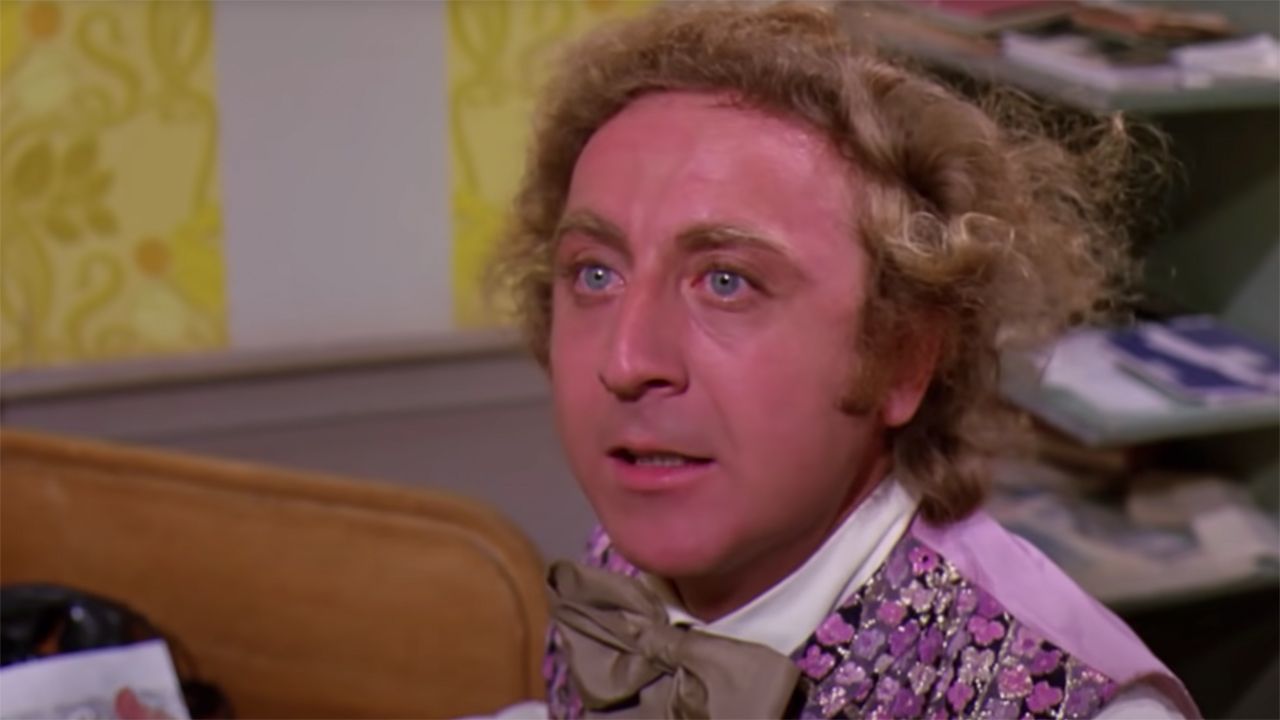
55 years ago, the legendary Gene Wilder invited us to join him in "a world of pure imagination." Now, a disembodied AI recreation of his sonorous vocals is inviting us to join him in his "my newest wonders beyond imagination."
But there's little-to-nothing imaginative about the use of an AI-generated version of Wilder's voice to help sell Netflix subscribers on a new Willy Wonka and the Chocolate Factory-themed reality show, and, quite honestly, I hate everything about it.
To catch you up, this new show, which is set to air in September on one of the best streaming services, Netflix, borrows sets (recreations), themes, and even one living actor who played an Oompa Loompa from the original 1971 film to create a reality show that it hopes will somehow, if not match, approach the charm and danger of the original film.
Not getting the point
Willy Wonka and the Chocolate Factory, based on the Roald Dahl bookCharlie and the Chocolate Factory, is a commentary on wealth, poverty, family, risk, and cruelty, all wrapped in a candy-covered fantasy.
The protagonist, Charlie Bucket, is so poor he lives in a ramshackle London cottage with multiple generations of family members, including a grandfather who has not left his bed in years. Meanwhile, Wonka is finally opening up his secretive factory to a select group of the public, chosen at random via golden tickets hidden in some of his candy.
I know, it sounds like a confection, but the first scene in which Wilder appears gives you a hint that this is not your typical children's story. When all the winners, including Charlie, arrive, Wonka (Wilder) unsteadily walks out while using a cane to greet them. As he approaches the gate, Wilder loses his grip on the cane and falls forward, but instead of face-planting, he does an effortless tumble and is suddenly upright and boisterous.
I tell you all this because there is so much complexity and nuance in that one scene and virtually all of it engineered by Wilder's performance. Throughout the film, his face and especially his voice drive the narrative and mood, yo-yoing it between playful host and sinister guide who keeps losing children to one self-imposed calamity after another.
Sign up for breaking news, reviews, opinion, top tech deals, and more.
Never before or since have I seen a character in a children's film swing so wildly from gentle and childlike to ominous. It's a wonder the Academy didn't recognize his performance.
Wonka's The Golden Ticket | Official Teaser | Netflix - YouTube
Watch On
Fast forward more than half a century to this streaming show, which uses Wilder's voice with the permission of his family; you can get your first sample of it in the new show trailer (above). Created by increasingly well-known ElevenLabs, the voice is, in my opinion, a poor recreation at best, but I guess I might also call it unmistakably Wilder-like.
It's also depressing. The thing about Wilder's real voice in films like Willy Wonka, The Producers, Stir Crazy, and Young Frankenstein is that it could be wildly emotional. Wilder as a hysteric was often the funniest thing you had ever seen. No one went off the rails like Gene Wilder, but also few other actors could express such warmth and compassion, and sometimes he did it all in a single scene.
At the end of Willy Wonka and the Chocolate Factory, Wonka discovers Charlie is stealing his everlasting gobstopper to deliver it to Wonka's chief competitor. His anger at Charlie is terrifying, but as soon as Charlie leaves the candy behind, Wonka (Wilder) transforms, and the compassion and joy in his voice is something to behold.
The AI Wilder voice in this trailer is devoid of passion, pathos, or really any recognizable human emotion. It's a soulless Gene Wilder.
Look, there's no doubt the power of AI is transforming life and culture. It lets us do things we never thought possible. It's a co-worker, a companion, a sleuth, a coder, and a creator, but we are now at the point where we must ask ourselves: Just because AI can, should it?
I guess we can ask a similar question about the AI-generated Val Kilmer in the unfortunately titled As Deep as the Grave. While I can understand if Kilmer had completed some filming and they wanted to bridge the gap in scenes filmed after his death, this full-scale recreation, even with the estate's permission, seems wrong. I love these actors, but none are irreplaceable, and using their likenesses and voices simply to generate nostalgia and sell a product feels very wrong, and certainly not the best use of AI (and all the resources behind it).
Surely, we can agree that it's often better to let the dead stay dead and not try to resurrect a simulacrum of their essence through the power of AI. The results are, to be honest, rather like the work of Baron Von Frankenstein: a monstrous creation that probably has no place on earth.
A 38-year industry veteran and award-winning journalist, Lance has covered technology since PCs were the size of suitcases and “on line” meant “waiting.” He’s a former Lifewire Editor-in-Chief, Mashable Editor-in-Chief, and, before that, Editor in Chief of PCMag.com and Senior Vice President of Content for Ziff Davis, Inc. He also wrote a popular, weekly tech column for Medium called The Upgrade.
Lance Ulanoff makes frequent appearances on national, international, and local news programs including Live with Kelly and Mark, the Today Show, Good Morning America, CNBC, CNN, and the BBC.
View original source — TechRadar ↗
Related stories
TerraMaster F4-425 Pro NAS review

Acer’s Swift Go 16 is a lot of laptop for $900
Control Resonant's ray tracing is a heavy demand on the RTX 5090 — but it's an absolute delight to the eyes