Indian Express
Indian Express··4 min read
Locked houses, mistaken for salespersons: BLOs distribute 1.68L forms as SIR begins in Delhi
3 min readNew DelhiJul 1, 2026 04:07 AM IST
“I spent the entire day writing down names and making columns for all the electors to whom I will distribute forms tomorrow,” said Ritu Maheshwari, a BLO in Old Delhi's Sitaram Bazar.
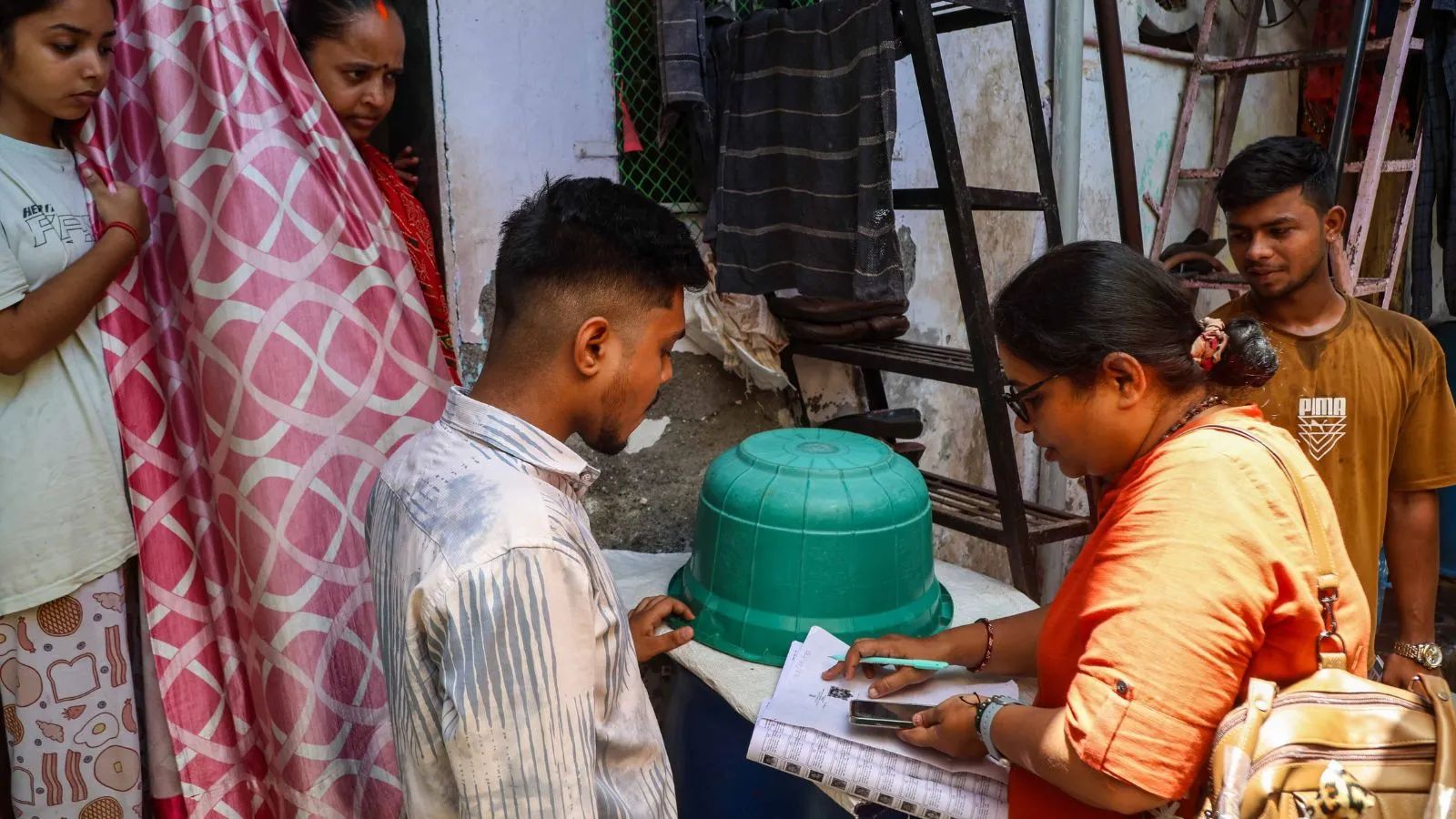
From being mistaken for salespersons and facing angry residents to finding locked homes and families that had shifted, booth level officers (BLOs) hit the ground on the first day of Delhi’s Special Intensive Revision (SIR) of electoral rolls on Tuesday, going door-to-door to distribute enumeration forms.
“When I went to one house, the residents shouted at me saying they didn’t want to fill any form. So, I shouted back,” said Neha Rawat, a school teacher deployed as a BLO in West Delhi’s Moti Nagar. “Then they told me that they thought I was a salesperson. But will you shout at someone who has been walking in the sun all day?” she told The Indian Express.
According to the Election Commission, 1.68 lakh enumeration forms were distributed and 7,605 forms were digitised on the first day of the exercise. More than 13,000 BLOs have been deployed across Delhi, with house-to-house visits scheduled to continue until July 29.
Rawat had carried 126 forms for distribution but could hand over only 92. “Some houses were locked, some were under repair, some residents had gone abroad on vacation, and in a few cases, the women in our records had got married and shifted from the premises,” she said.
“I was in the field since morning until around 8 pm and have distributed about 100 forms,” said 45-year-old Naresh, a primary school teacher on BLO duty in Dharampura Extension in Najafgarh.
While several BLOs spent the day visiting households, others used the first day to prepare for the nearly three-month-long exercise. Each BLO has been provided a register in which they will get signatures of every elector to whom they distribute the forms.
“I spent the entire day writing down names and making columns for all the electors to whom I will distribute forms tomorrow,” said Ritu Maheshwari, a BLO in Old Delhi’s Sitaram Bazar.
Story continues below this ad
“I arranged my forms in the order in which I plan to visit households,” said Kuljeet Kaur, a BLO in Moti Nagar.
As part of the SIR process, voters are required to fill the enumeration forms and return them to the BLOs. If a house is found locked during verification, BLOs will leave the forms at the premises and make at least three attempts to collect the filled form. If the form is still not returned, the BLO may record probable reasons such as the elector being absent, having shifted residence, being deceased or having a duplicate registration based on local inquiries.
In Delhi, the draft electoral roll will be published on August 5, following which claims and objections will be invited until September 4. While disposal of claims and objections will continue until October 3, the final electoral roll is slated to be published on October 7.
© The Indian Express Pvt Ltd
Devansh Mittal is a Correspondent at The Indian Express, based in the New Delhi City bureau. He reports on urban policy, civic governance, and infrastructure in the National Capital Region, with a growing focus on housing, land policy, transport, and the disruption economy and its social implications.
Professional Background
Education: He studied Political Science at Ashoka University.
Core Beats: His reporting focuses on policy and governance in the National Capital Region, one of the largest urban agglomerations in the world. He covers housing and land policy, municipal governance, urban transport, and the interface between infrastructure, regulation, and everyday life in the city.
Recent Notable Work
His recent reporting includes in-depth examinations of urban policy and its on-ground consequences:
An investigation into subvention-linked home loans that documented how homebuyers were drawn into under-construction projects through a “builder–bank” nexus, often leaving them financially exposed when delivery stalled.
A detailed report on why Delhi’s land-pooling policy has remained stalled since 2007, tracing how fragmented land ownership, policy design flaws, and mistrust among stakeholders have kept one of the capital’s flagship urban reforms in limbo.
A reported piece examining the collapse of an electric mobility startup and what it meant for women drivers dependent on the platform for livelihoods.
Reporting Approach
Devansh’s work combines on-ground reporting with analysis of government data, court records, and academic research. He regularly reports from neighbourhoods, government offices, and courtrooms to explain how decisions on housing, transport, and the disruption economy shape everyday life in the city.
Contact
X (Twitter): @devanshmittal_
Email: [email protected] ... Read More
Stay updated with the latest - Click here to follow us on Instagram
Tags:
New Delhi
View original source — Indian Express ↗
Related stories

ESPN
SportsJul 1, 2026 · 1 min
France have Mbappé but are so much more -- and tha...
ESPN

The Punch
NewsJul 1, 2026 · 1 min
Power surge sparks fire in Kwara laundry shop
The Punch

Straits Times
NewsJul 1, 2026 · 1 min
US imposes sanctions on Mexicans, entities tied to Mexican fuel smuggling network
Straits Times

BBC
NewsJul 1, 2026 · 1 min
Trump made more than $1bn from crypto in first year back in office
BBC