
Rio Times
How Goldman Sachs Turned the World Cup Into a Trading Model
Sport
Key Facts
—The forecaster. Goldman Sachs built a statistical model, led by its chief economist, to predict the 2026 World Cup.
—The first call. Its pre-tournament model gave Spain a 26% chance to win, ahead of France at 19% and Argentina at 14%.
—The engine. It rests on the Elo rating system and nearly 20,000 international matches played since 1978.
—The update. The model is refreshed as results land, and the exits of Germany and the Netherlands reshaped it.
—The lesson. France’s odds improved once those upsets cleared tough opponents from its path.
—The caveat. The bank stresses the model is limited, and it missed badly in 2018.
The Goldman Sachs World Cup forecast is not really about football; it is a trading model in disguise, a probability engine that reprices the tournament every time a result lands.
One of the world’s biggest investment banks has spent this tournament doing what it does with interest rates and company earnings. It is trying to price an uncertain future before the event has happened.
For a reader watching from Latin America, where the football matters as much as anywhere on earth, the exercise is a rare chance to see how a bank turns messy reality into numbers. The World Cup just makes the machinery easier to see.
How the Goldman Sachs World Cup forecast works
The bank’s team, led by its chief economist, built the model the way a quantitative desk would approach any market question. They gathered a vast history of results and used it to estimate how likely each outcome is.
At its heart sits the Elo rating system, a method first designed for ranking chess players and later adapted to football. It scores each team’s strength by its results and the quality of the opponents it faced.
Goldman fed the model with nearly twenty thousand international matches played since 1978. It then simulated the whole tournament many times over to turn that history into forward-looking odds.
The result is a set of probabilities rather than a single confident pick. Before a ball was kicked, the model made Spain the favorite with about a one-in-four chance, ahead of France and defending champions Argentina.
Why the model keeps changing
The most revealing feature is that the forecast is not fixed. The bank updates it as results come in, exactly as a market reprices an asset when fresh news arrives.
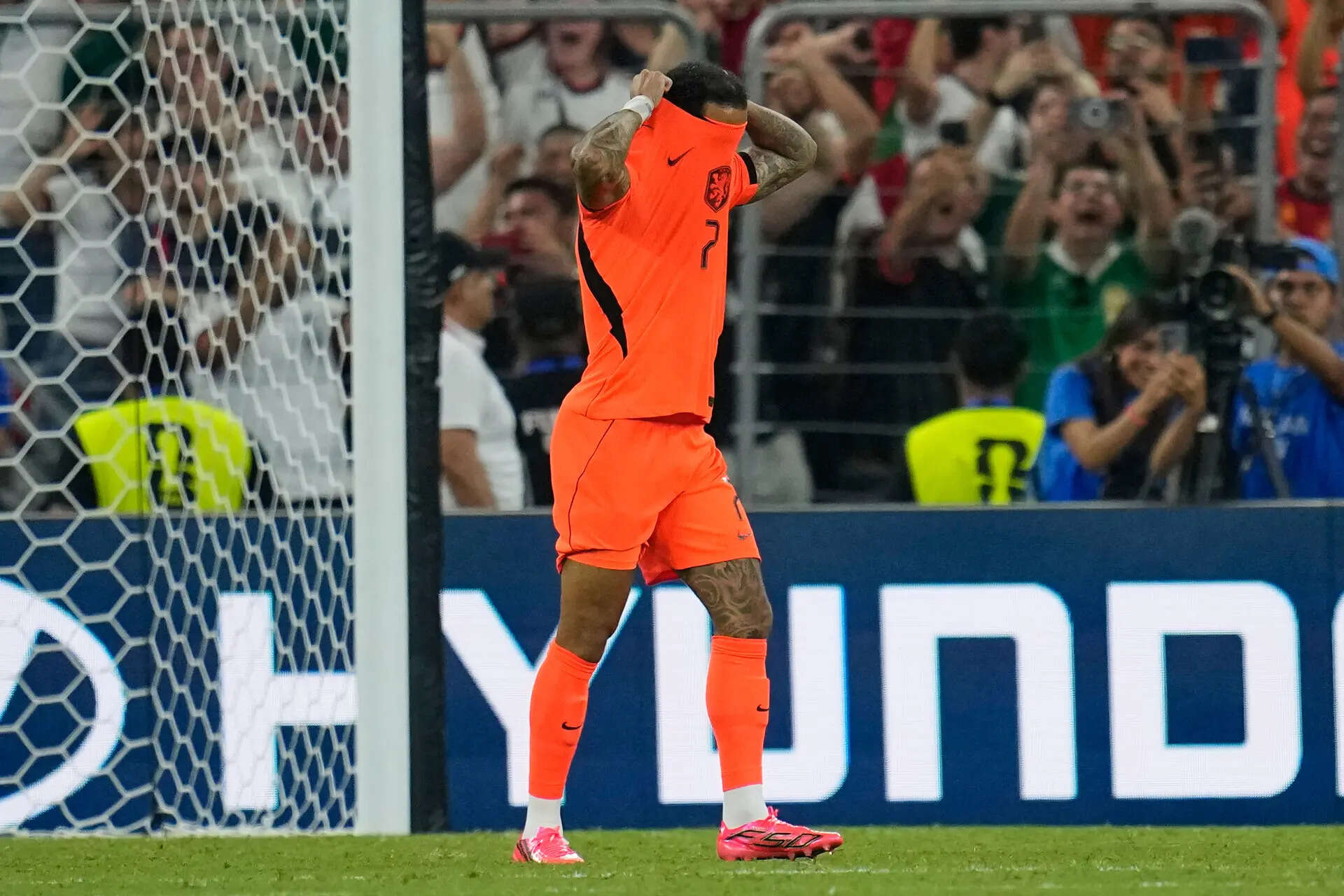
The knockout round delivered the fresh news in dramatic form. Germany was knocked out by Paraguay on penalties, and the Netherlands fell to Morocco, removing two heavyweight names from the draw.
Those upsets did more than shock fans. They changed the paths the surviving teams face, and the model responded by shifting the odds of everyone still in the tournament.
France was a clear beneficiary. With Germany gone from its side of the draw, the road ahead looked easier, and its chances of going deep improved as a result, a move driven by arithmetic rather than by anything France did on the pitch.
The market lesson inside the football
This is where the exercise stops being about sport. A team’s odds can rise or fall without the team playing at all, simply because the field around it changed.
That is precisely how financial markets behave. The price of one asset moves when something happens to another, because the two are linked through the web of possible outcomes.
There is a second, humbler lesson. If Spain was the best team in the field yet had only a one-in-four chance of winning, it is a reminder that even the strongest favorite usually loses a knockout tournament, because so much can go wrong along the way.
For anyone who follows prediction markets, the same logic is familiar. Betting platforms priced the race as a closer contest than Goldman did, a gap that itself shows how differently two honest methods can read the same facts.
Why the bank bothers
Goldman has done this before, for tournaments stretching back more than a decade. The forecasts double as a showcase for the kind of modeling the bank sells to clients every day.
A World Cup is the perfect stage for it. The event is global, its outcomes are clean wins and losses, and the whole thing resolves in a month, so the model’s calls are quickly proved right or wrong.
For the watching region, there is a business story folded into the football. The same tools that price a striker’s chances price the commodities, currencies and shares that shape Latin American economies.
The case for not taking it too seriously
The strongest note of caution comes from the bank itself. Goldman openly calls the model’s power limited and warns that football is full of inherent unpredictability.
The record backs up the modesty. In 2018 the bank ran a million simulations and projected a Brazil win, only for Brazil to fall in the quarter-finals and France to lift the trophy.
Critics make a sharper point too. A model fed only on match history knows nothing of a key player’s injury, a coach’s nerve or the mood in a dressing room, so it captures a thin slice of what actually decides a game.
And yet that is the honest place to leave it. The value of the Goldman Sachs World Cup forecast was never the winner it named, but the way it shows, in public and in real time, how a serious institution prices an uncertain future and then changes its mind when the facts do.
Frequently asked questions
What is the Goldman Sachs World Cup forecast?
It is a statistical model the bank built to estimate each team’s chance of winning the 2026 tournament. It uses the Elo rating system and nearly twenty thousand matches played since 1978.
Who did the model favor?
Before the tournament it made Spain the favorite with about a one-in-four chance, ahead of France and Argentina. The odds shift as results come in.
Why did the odds change during the knockout round?
The exits of Germany and the Netherlands cleared strong teams from parts of the draw. That improved the outlook for survivors such as France, whose path became easier.
Is the forecast reliable?
The bank itself calls it limited and notes football’s unpredictability. It projected a Brazil win in 2018, and Brazil was eliminated in the quarter-finals.
View original source — Rio Times ↗
Related stories

ESPN
SportsJul 1, 2026 · 1 min
Mexico send a World Cup message from 'Fortress Azt...
ESPN

The Guardian
SportsJul 1, 2026 · 1 min
Two confirmed dead in mass celebrations by Mexico fans after World Cup victory
The Guardian

The Punch
SportsJul 1, 2026 · 1 min
Two dead in World Cup celebrations in Mexico City
The Punch
Times of India
SportsJul 1, 2026 · 1 min
Déjà vu! Kluivert repeats father Patrick's penalty heartbreak 26 yrs later - Watch
Times of India