The Guardian
Signet City – futuristic parasites feed off 80s social realism in dystopian RPG
Over the past decade, an impression has taken root among gamers that any real creativity and originality in the industry is to be found in the indie, rather than mainstream, sector. Gareth Damian Martin can claim some responsibility for that. Their first game, 2020’s In Other Waters, merged sci-fi and underwater xenobiology in a uniquely calming and thought-provoking manner, while Citizen Sleeper (2022) and Citizen Sleeper 2: Starward Vector (2025) were full-blown sci-fi epics with ultraminimal aesthetics and a rare intelligence.
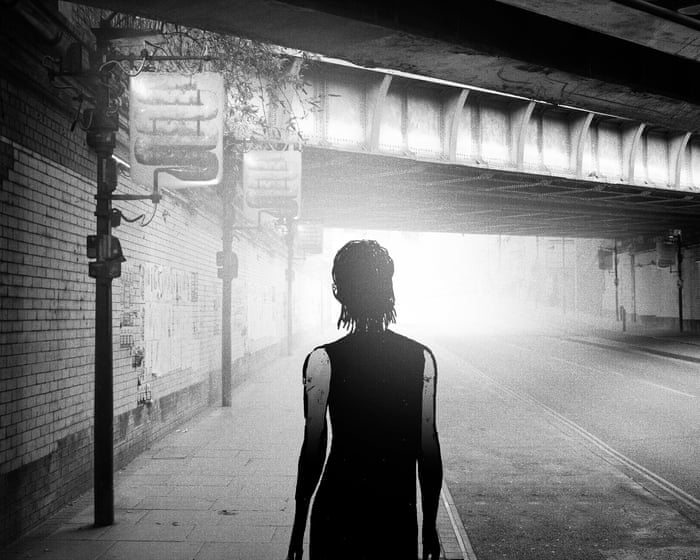
Martin has broken with tradition by unveiling their next game, Signet City, far in advance of its 2027 launch. Set in a dystopian monochrome city, it’s a narrative role-playing adventure with a curious first-person perspective. “You play as a parasite,” says Martin. “And it felt natural that it should be a game where you see the world through the eyes of your hosts, very literally. You wake up in the mind of a person called Sid at the same time as she’s waking up in the river of a city. You’re coming to understand what you are, why it is that you’re in the mind of this person who doesn’t know that you’re there, along with what your capabilities are, and what the world is, through Sid.”
From here, you slowly discover what your bigger objective is, but, Martin says, it’s still very much the story of a city that’s in the middle of multiple overlapping crises, with all the characters providing flashpoints for that. Their inspiration comes from novels featuring multi-perspective stories about cities, where readers jump around into different characters – Perdido Street Station by China Miéville or Jeff VanderMeer’s Ambergris books.
Gameplay-wise it sounds like the classic Gareth Damian Martin elements are present, such as tabletop-style use of dice. “Each time you drop into the mind of a host – and you have multiple hosts that you’re moving between, depending on what you’re trying to do – their part of the city comes with them,” says Martin. “If this person is working in, let’s say, the algae burners, then that’s also your environment, and that’s what you’ll be exploring and finding characters around and in.”
Players have a limited amount of actions a day. “You have objectives as a parasite – bigger objectives about growing and becoming more powerful and how you want to influence the city,” says Martin. “But each of the hosts will also have things that they are supposed to be doing, and their own emotional storyline. There’s a dice-based tabletop element to it, governing actions you can find in the world, and those are affected by the emotions of the host.”
You might get a host into an argument in a pub which then angers them, for example, making it easier for them to kick down a door. “There’s a kind of lock-and-key element, but also a skill-based system that’s about you adjusting modifiers by making narrative decisions,” says Martin. “I want to make games where the narrative element and mechanical elements are not separable.”
Martin reveals that the striking monochrome style also meshes with one of their areas of obsession: “I had this very particular vision of wanting to have hand-drawn characters that are in my natural art style, but then to balance that with a photographic environment. I love the way that in black and white photography you get imaginary detail that’s created from grain. So in the in-game visual, we have a complex post-processing effect. The game is very much inspired by 80s social photography, especially by Tish Murtha – I absolutely love her photographs.”
As for Signet City itself, we can expect sci-fi aspects to be blended with elements of 1980s northern English city life. “I’m trying to dig into this idea of a city as a living structure – not just as a space that contains people, but also contains ecology and different animals, and layers of systems that are overlapping with each other. But also I wanted to make something that drew more on British history and culture, and what I was born into, and the 80s – and fascinating events like the winter of discontent – cast a long shadow over the contemporary day.”
If you like your sci-fi warped through a black and white lens of 80s social realism, Signet City promises an utterly unique gaming experience.
View original source — The Guardian ↗
Related stories

Wired
TechnologyJul 1, 2026 · 1 min
Just About Anyone Can Sell You GLP-1s Online Now
Wired

AllAfrica
TechnologyJul 1, 2026 · 1 min
Kenya: Eight Utumishi Girls Minors Charged With Murder Over Student Death
AllAfrica

France 24
TechnologyJul 1, 2026 · 1 min
White House rejects ethical concerns as Trump makes over $1 billion from crypto
France 24

Indian Express
TechnologyJul 1, 2026 · 1 min
2 weak trees, 2 young lives snuffed out in Mumbai in 2 months
Indian Express