Times of India
Times of India··4 min read
The new family member has fur: India’s pet parenting boom goes mainstream
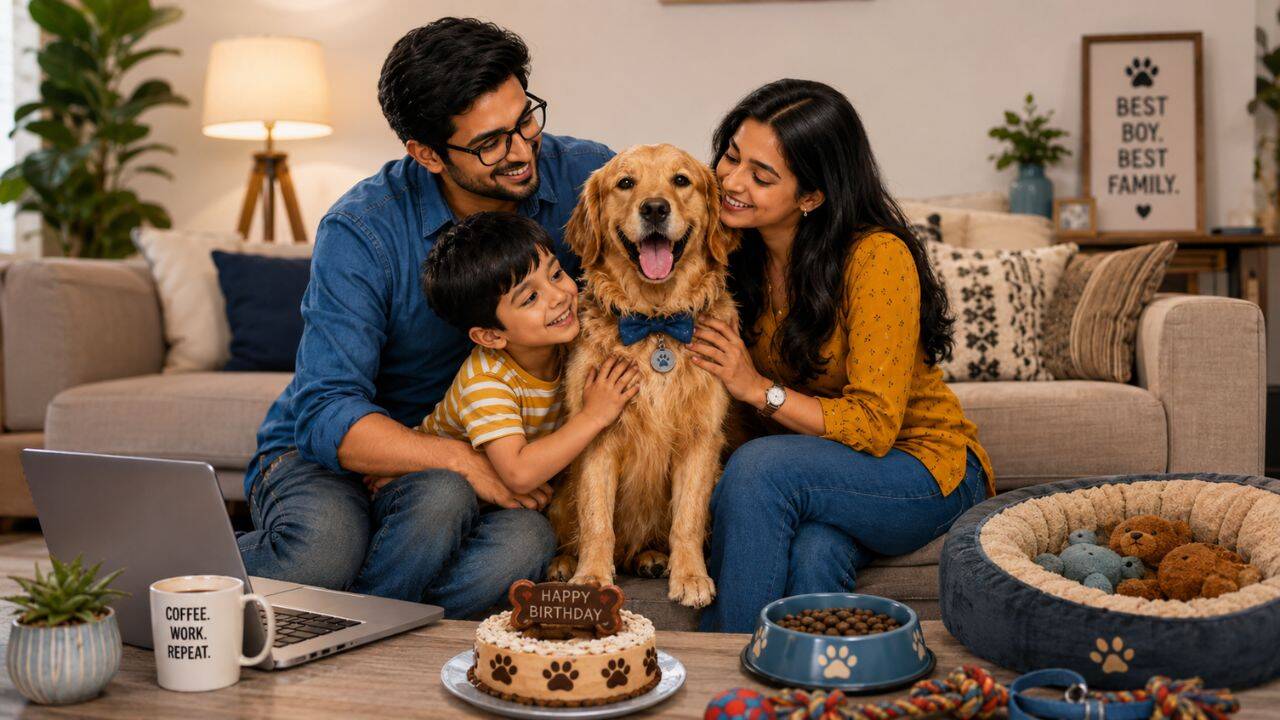
The changing relationship with pets is evident across generations. (AI image used for representational purpose only).
For years, pets in Indian households were often seen as companions, watchdogs or helpful additions to the family. Today, in many urban homes, they occupy a very different place, somewhere between a child, best friend and a family member.The shift is visible not only in the way people speak about their pets but also in how much time, attention and money they are willing to invest in them. From birthday parties and petfriendly cafes to physiotherapy, insurance and mobile grooming services, a rapidly expanding pet-care ecosystem is emerging across cities in India.
This growth of specialised services reflects wider social changes. Urban India is witnessing a rise in nuclear families, single-person households and an ageing population.
For many people, pets provide companionship, routine and emotional support that was traditionally derived from larger family structures.Dr Sarungbam Yaiphabi Devi, a veterinarian with 25 years of experience, said she had witnessed a marked change in pet ownership over the years. “Earlier, pets were part of the household, but the emotional bond was often not as intense. Many people lived in joint families and pets were one among many relationships.
Today, with the rise of nuclear families, pets have become integral family members. They accompany owners on outings, are included in family activities and often share a very close one-to-one bond with their caregivers,” she said.
Mental health experts believe the trend is also linked to changing social structures and increasing loneliness in cities. “Disintegrating family structures and the isolation of urban life have increased the need for loyal companions who offer unconditional support,” said Dr Sameer Malhotra, principal director and head of the department of mental health and behavioural sciences at Max Hospitals, Saket and Panchsheel Park.
“The strongest human-animal relationships develop when the emotional needs of both the pet and the owner are recognised and respected.”He added that research had consistently shown the positive impact of pets on mental wellbeing. “Interacting with pets can reduce stress, loneliness and feelings of social isolation. Physical contact with animals may also promote the release of oxytocin. Pets can play a meaningful role in the lives of people with autism spectrum disorders and disabilities, while therapy dogs are increasingly being used in educational, healthcare and rehabilitation settings.”For 27-year-old Kartik Uniyal, his journey as a pet parent began unexpectedly when he rescued a tiny kitten from an office airconditioning vent about five years ago. The kitten was so young that he had to feed her milk through a baby’s feeding bottle and nurse her around the clock. Though the cat later passed away, the experience left a lasting impact on him.Today, he lives alone with his French bulldog, who has become the centre of his world.
“Rescuing that kitten changed the way I look at animals. She was so tiny and vulnerable that I became completely responsible for her. Though she’s no longer here, she taught me what it means to care for another living being,” he said.His bond with his dog is no less intense. “Living alone, he isn’t just a pet, he’s family. My daily routine revolves around him. I think about him before making plans, whether it’s work schedules, weekends or travel.
He goes with me to my vacations, so I find pet-friendly accommodation every time. His food, toys, healthcare and comfort are all things I prioritise,” he said, adding that seeing him waiting at the door after a long day at work instantly helps him unwind. “People often say I spoil him, but when you share your life with a pet, you naturally want the best for them.”Dr Devi also agreed that people were now willing to spend substantial amounts on their pets, sometimes even more than they spend on themselves.
“They treat them much like children and invest heavily in their wellbeing. At the same time, pet parents have become far more involved. There are occasions when it becomes overwhelming for veterinarians. I remember three friends who got golden retrievers around the same time and would constantly call with highly specific questions, such as how many grams of curd to give.”The changing relationship with pets is evident across generations.
Hemlata (72), who has lived with dogs for as long as she can remember, said the bond between owners and their pets had evolved significantly over the decades. “Growing up, our dogs were loved, but they lived very differently. They ate what the family ate, stayed mostly outdoors and visits to the vet were rare unless something was seriously wrong,” she recalled. Today, her labrador has regular health check-ups, specialised food and scheduled grooming appointments.
“The biggest change is also that services are easily available now.”Grooming salons, pet bakeries, boarding centres, trainers, physiotherapists, ambulances and insurance providers are finding a growing customer base. “A few years ago, grooming was largely limited to occasional baths or haircuts. Today, customers ask about coat care, skin treatments, de-shedding therapies, tick prevention, paw care and breed-specific grooming. Many book regular monthly appointments and treat grooming as part of preventive healthcare,” said Ajeet, who works with a mobile pet grooming service operating across Delhi-NCR. The demand for doorstep grooming services has grown steadily in recent years, he added.
View original source — Times of India ↗
Related stories

ESPN
SportsJul 1, 2026 · 1 min
Men's boxing pound-for-pound rankings: 'Boots' Enn...
ESPN

ESPN
SportsJul 1, 2026 · 1 min
From surging Marlins to slumping Braves: MLB winne...
ESPN

The Punch
NewsJul 1, 2026 · 1 min
PICTORIAL: Ex-Nollywood star Grace Bassey announces engagement
The Punch
ESPN
SportsJul 1, 2026 · 1 min
What it feels like to pull off a World Cup upset: ...
ESPN