Indian Express
Indian Express··4 min read
‘No hurry to tear up’ Jaipur Polo Ground, Delhi High Court tells Centre
3 min readNew DelhiJul 1, 2026 03:30 PM IST
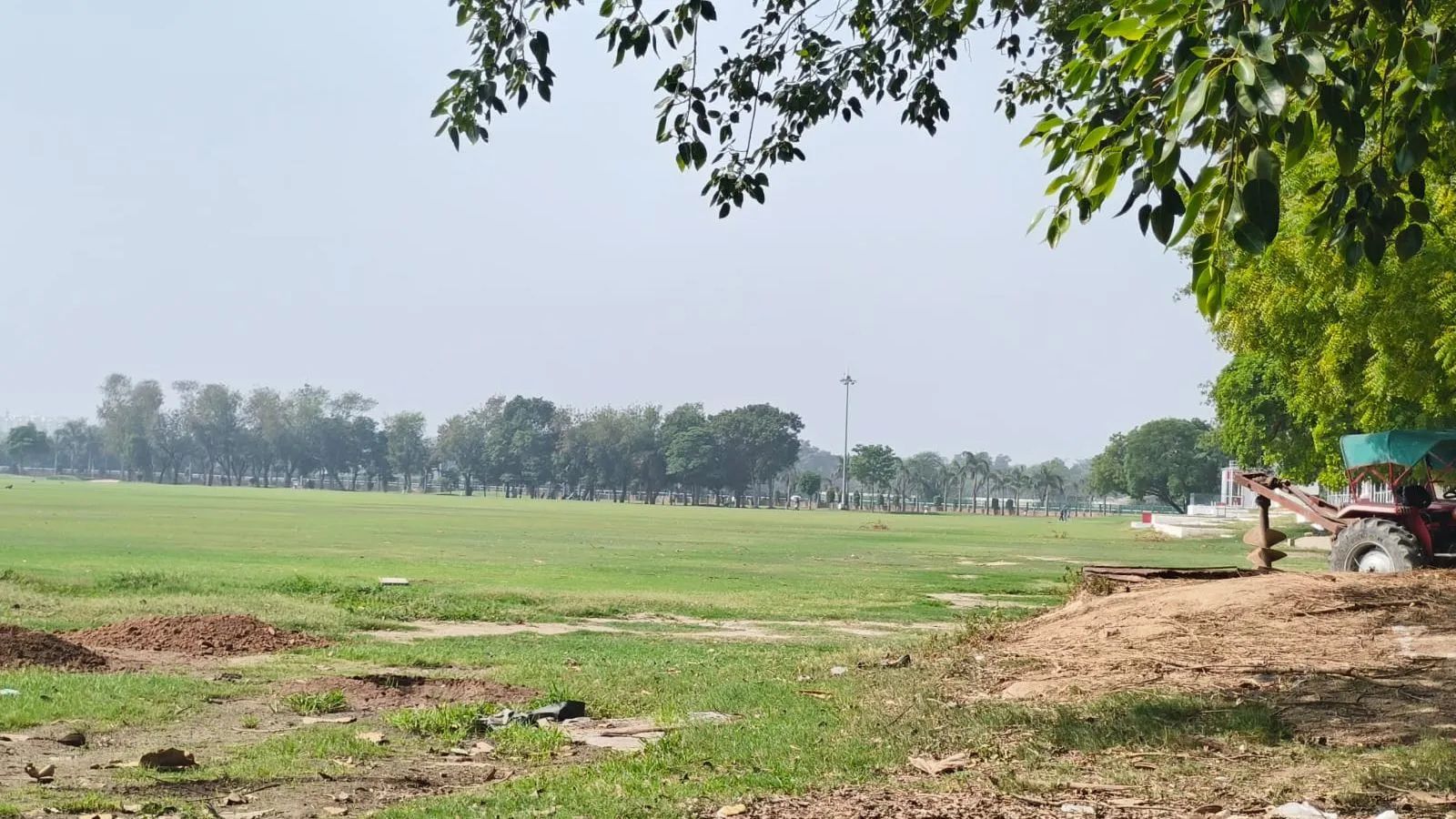
After the government took physical possession of the land, the IPA moved a petition before the Delhi HC on June 20. (File Photo)
The Delhi High Court Wednesday refrained from passing immediate orders to protect the Jaipur Polo Ground, now in government possession, from irreversible alteration, but orally remarked to government counsel: “You’re anyway in possession, there is no hurry to tear it up.”
The Indian Polo Association (IPA), which managed the ground, in its petition sought that the government be restrained from “demolition, uprooting, digging, disturbing or altering the Jaipur Polo Ground”, or any other physical alteration of the land and turf at the specialised sporting facility.
Eviction and takeover
On June 13, the government began the process of taking physical possession of the Jaipur Polo Ground, one of the Capital’s most prominent sporting venues, spread across 15.20 acres in the heart of Lutyens’ Delhi.
The move was initiated following an eviction order issued on May 20 directing the IPA to vacate the property under the Public Premises (Eviction of Unauthorised Occupants) Act. The order stated that the land was required “for a larger public purpose and benefit”.
While the IPA had challenged the eviction order, the sessions court on June 12 refused to grant a stay.
A trial court on June 18 also dismissed an application by the association seeking restoration of possession. After the government took physical possession of the land, the IPA moved a petition before the Delhi HC on June 20.
What happened in court
On Wednesday, even as IPA’s counsel pressed for interim relief, Justice Harish Vaidyanathan Shankar orally observed that the earlier coordinate benches of the High Court dealing with the case had declined to give relief to the association in any manner. The court posted the matter for hearing on July 9.
Story continues below this ad
However, addressing government’s standing counsel Ashish Dixit, the court orally remarked, “You’re anyway in possession, there is no hurry to tear it (the ground) up… I’m not passing any order (today).”
On June 29, Dixit had told the court that the Jaipur Polo Ground is only being demarcated for raising a boundary and nothing was being done to the playing area turf.
He reiterated the position orally before the court on Wednesday, after the association’s counsel flagged their concerns over digging up of the polo turf. The IPA added that there are events slated later this month.
Brief history
The land parcel where the ground is situated was gifted by the erstwhile Maharaja of Jaipur to the Delhi Polo Club around 1930, and was formally leased on February 24, 1951, to the Club by the Central Public Works Department for a period of 20 years.
Story continues below this ad
According to IPA, the lease was extended in 1971 till 1982, with further extensions continuing thereafter. In 1983, the lease was extended until March 1993.
Following the dissolution of the Delhi Polo Club in 1983, the premises were transferred and allotted in favour of IPA.
Over the decades, the Jaipur Polo Ground has been a centre of national and international polo events and tournaments such as the Asian Games equestrian events, IPA National Polo Championship, Indian Masters Trophy, among others.
In February 1922, the Jaipur Polo Ground hosted a polo match between Jodhpur and Patiala, which according to IPA, was witnessed by 1,50,000 people at the time.
© The Indian Express Pvt Ltd
Sohini Ghosh is a Senior Correspondent at The Indian Express. Previously based in Ahmedabad covering Gujarat, she recently moved to the New Delhi bureau, where she primarily covers legal developments at the Delhi High Court
Professional Profile
Background: An alumna of the Asian College of Journalism (ACJ), she previously worked with ET NOW before joining The Indian Express.
Core Beats: Her reporting is currently centered on the Delhi High Court, with a focus on high-profile constitutional disputes, disputes over intellectual property, criminal and civil cases, issues of human rights and regulatory law (especially in the areas of technology and healthcare).
Earlier Specialty: In Gujarat, she was known for her rigorous coverage in the beats of crime, law and policy, and social justice issues, including the 2002 riot cases, 2008 serial bomb blast case, 2016 flogging of Dalits in Una, among others.
She has extensively covered health in the state, including being part of the team that revealed the segregation of wards at the state’s largest government hospital on lines of faith in April 2020.
With Ahmedabad being a UNESCO heritage city, she has widely covered urban development and heritage issues, including the redevelopment of the Sabarmati Ashram
Recent Notable Articles (Late 2025)
Her recent reporting from the Delhi High Court covers major political, constitutional, corporate, and public-interest legal battles:
High-Profile Case Coverage
She has extensively covered the various legal battles - including for compensation under the aegis of North East Delhi Riots Claims Commission - pertaining to the 2020 northeast Delhi riots, as well as 1984 anti-Sikh riots.
She has also led coverage at the intersection of technology and governance, and its impact on the citizenry, from, and beyond courtrooms — such as the government’s stakeholder consultations for framing AI-Deepfake policy.
Signature Style
Sohini is recognized for her sustained reporting from courtrooms and beyond. She specialises in breaking down dense legal arguments to make legalese accessible for readers. Her transition from Gujarat to Delhi has seen her expand her coverage on regulatory, corporate and intellectual property law, while maintaining a strong commitment to human rights and lacuna in the criminal justice system.
X (Twitter): @thanda_ghosh ... Read More
Tags:
delhi high court
View original source — Indian Express ↗
Related stories

ESPN
SportsJul 1, 2026 · 1 min
Way-Too-Early Top 25: Michigan drops out of top 3;...
ESPN

ESPN
SportsJul 1, 2026 · 1 min
Men's boxing pound-for-pound rankings: 'Boots' Enn...
ESPN

ESPN
SportsJul 1, 2026 · 1 min
From surging Marlins to slumping Braves: MLB winne...
ESPN

The Punch
NewsJul 1, 2026 · 1 min
PICTORIAL: Ex-Nollywood star Grace Bassey announces engagement
The Punch