Antara News
Antara News··3 min read
Indonesia eyes carbon incentives for green ports under NEK scheme
..when incentives for green ports will be implemented, we first need an MRV methodology.
Jakarta (ANTARA) - The Coordinating Ministry for Food Affairs is reviewing the possibility of including ports implementing the green port concept in the Carbon Economic Value (NEK) scheme.
This has the potential to generate economic incentives for efforts to reduce carbon emissions in the port sector.
"This could be an incentive, similar to green building. Green ports could also potentially be included in the carbon pricing scheme. That's an opportunity," said Nani Hendiarti, Deputy for Coordination of Food Affordability and Security at the Coordinating Ministry for Food Affairs, in Jakarta on Wednesday.
The initiative is expected to encourage more port operators to adopt Green and Smart Port principles, improving not only environmental performance but also the competitiveness of ports and related businesses.
However, Hendiarti explained that the incentive scheme has yet to be implemented because the government is still developing a Measurement, Reporting, and Verification (MRV) methodology, which will serve as the basis for calculating carbon emission reductions in the port sector.
"As for when incentives for green ports will be implemented, we first need an MRV methodology. We will develop it together," she said.
The methodology will be developed in collaboration with relevant ministries and institutions so that emission reductions from the port sector can be calculated accountably before being integrated into the NEK scheme.
The development of this scheme is part of the implementation of the Carbon Economic Value (NEK) as stipulated in Presidential Regulation Number 110 of 2025.
This mechanism supports the achievement of Indonesia's greenhouse gas emission reduction target of 31.89 percent through its own efforts and 43.20 percent with international support by 2030, as well as the target of net-zero emissions by 2060 or sooner.
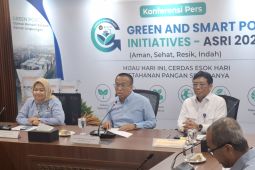
The incentive opportunities were discussed during the launch of ASRI's Green and Smart Port Initiatives (GSPI) 2026, which encourages the implementation of environmentally friendly and technology-based ports through environmental assessments and digitalization.
The Green and Smart Port program has been running since 2019, and by 2025, 41 ports had participated in the assessment. Eight ports met the criteria to receive Green and Smart Port certification and awards on July 15, 2026.
Hendiarti stated that environmental friendliness is a key component of the Green and Smart Port assessment, weighing 80 percent, while the application of technology and digitalization, or smart port, weighs 20 percent.
She explained that the environmental friendliness assessment includes port and ship waste management, renewable energy use, mangrove restoration, and carbon emission reduction efforts.
"The most important thing is environmental awareness. So, even mangrove planting is mandatory, renewable energy is also expected, and waste management from the port itself and from incoming ships is also assessed," she explained.
Meanwhile, Tatang Yuliono, Deputy for Food Trade and Distribution Coordination at the Coordinating Ministry for Food Affairs, said the proposed incentives could significantly increase port operators' interest in participating in the Green and Smart Port assessment.
"We are confident that if Green and Smart Ports receive incentives, operators will be eager to comply with mandatory requirements because there are tangible benefits and opportunities," Yuliono said.
As the government's assessment partner, state-owned survey services holding company IDSurvey supports the development of standards and certification for green ports in Indonesia.
IDSurvey Chief Operating Officer David Sirait said the transition to Green and Smart Ports is not merely about regulatory compliance but also represents a long-term investment in strengthening Indonesia's competitiveness.
According to him, IDSurvey, together with PT Sucofindo, PT Surveyor Indonesia, and PT Biro Klasifikasi Indonesia, remains committed to supporting the development of Green and Smart Ports through assurance, verification, inspection, and certification services that enhance the national logistics system.
"The transformation to Green and Smart Ports is not only about regulatory compliance but also about sustainability. Stronger competitiveness will improve logistics performance and ultimately support the economic growth we aspire to achieve," Sirait said.
Related news: Indonesia to lead global forest climate action, minister says
Related news: ASDP turns Merak and Bakauheni Ports into green energy hubs
Translator: Arie Novarina
Editor: M Razi Rahman
Copyright © ANTARA 2026
View original source — Antara News ↗
Related stories

ESPN
SportsJul 1, 2026 · 1 min
Men's boxing pound-for-pound rankings: 'Boots' Enn...
ESPN

ESPN
SportsJul 1, 2026 · 1 min
From surging Marlins to slumping Braves: MLB winne...
ESPN

The Punch
NewsJul 1, 2026 · 1 min
PICTORIAL: Ex-Nollywood star Grace Bassey announces engagement
The Punch
ESPN
SportsJul 1, 2026 · 1 min
What it feels like to pull off a World Cup upset: ...
ESPN