Indian Express
Indian Express··4 min read
How Ram Temple theft row shapes UP politics as Oppn puts BJP on back foot
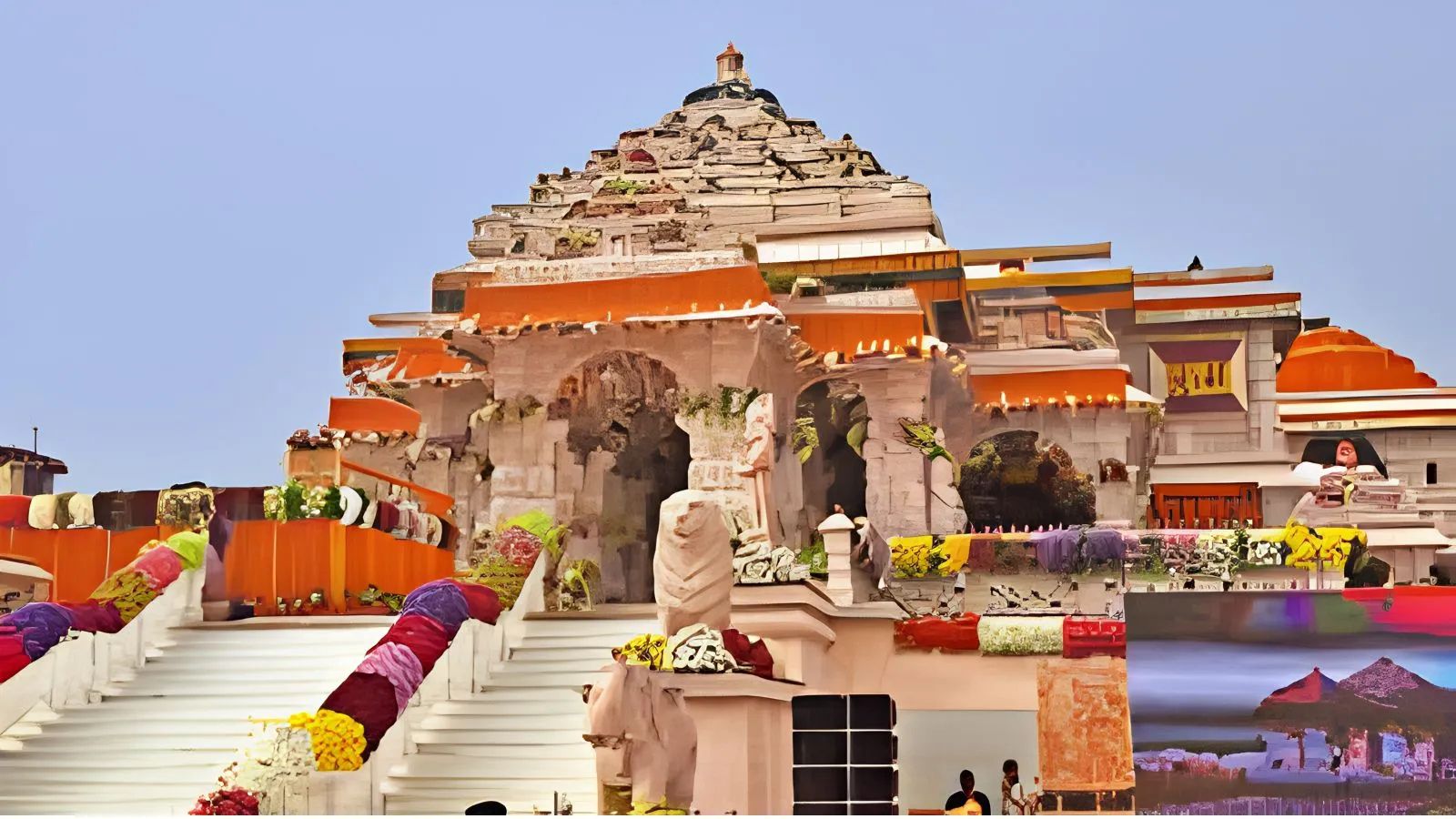
The alleged theft and embezzlement of funds and valuables donated to the Ram Temple in Ayodhya has snowballed into a major political controversy in Uttar Pradesh, with the Opposition seeking to turn the heat on the ruling BJP in the run up to the Assembly elections due in February-March 2027.
What began with Samajwadi Party (SP) chief Akhilesh Yadav repeatedly questioning the alleged theft of the Ram Temple’s donations has turned into a larger Opposition campaign, with the Congress and the Bahujan Samaj Party (BSP) joining the attack. Together, they are attempting to challenge the BJP on the very ideological issue, centred on faith and religion, that has defined its politics over the decades.
The controversy comes at a time when the BJP has built much of its governance narrative around Ayodhya, the Kashi Vishwanath corridor, the Mahakumbh and religious tourism.
But the allegations in the temple donation row, followed by a Special Investigation Team (SIT) probe, an FIR and arrests, have shifted the focus from the construction of the Ram Temple after what the BJP describes as a “500-year struggle” to the alleged mismanagement of devotees’ offerings.
The political sensitivity of the issue stems from the scale of public participation in the temple project. During the nationwide fundraising campaign, lakhs of devotees contributed an estimated Rs 3,500 crore for the construction of the temple. Besides monetary donations, devotees also offered gold, silver and other valuables as expressions of faith.
While the funds collected for the temple’s construction were maintained separately from the account used for daily offerings after the temple opened following its consecration on January 22, 2024, the recent allegations have raised broader concerns among devotees over the transparency and safety of contributions made in the name of Lord Ram.
BJP leaders acknowledge that irrespective of the eventual findings of the SIT probe, the controversy has created doubts among devotees about how offerings — whether a few rupees dropped into a donation box or larger contributions — are being accounted for.
“It is an emotional issue for devotees and could have long-term repercussions if not addressed appropriately before the 2027 Assembly elections,” a BJP leader said.
BJP’s stance
Sensing the political challenge, UP Chief Minister Yogi Adityanath has sought to shift the narrative back to the BJP’s larger Hindutva agenda. Addressing a recent public meeting, he challenged Akhilesh to support the Shri Krishna Janmabhoomi movement in Mathura.
“Ab Mathura ki baat kariye (now speak about Mathura),” Adityanath said, asking the SP chief to openly back the Krishna Janmabhoomi movement if he was trying to project himself as a religious leader.
Adityanath also invoked the 1990 police firing on kar sewaks during the Mulayam Singh Yadav government.
The CM has repeatedly targeted the SP and the Congress, accusing them of developing “sudden faith” in Lord Ram after having allegedly opposed the Ram Temple movement, questioned Ram’s existence or ordered firing on Ram bhakts.
“Those who supported the Babri Masjid have no moral right to speak about Lord Ram or the Ram Temple. One ordered firing on Ram bhakts, while another tried to delay the temple’s construction. As for the current irregularities, only Ram bhakts could have acted so swiftly. The SIT was constituted within 24 hours of receiving information from the Ram Temple Trust, submitted its report within three days, an FIR was lodged and the accused were arrested. Only Ram bhakts can do this; the rest are merely playing politics,” BJP spokesperson Rakesh Tripathi said.
Opposition’s attacks
Despite the BJP’s attempts to portray the Opposition’s interest in the issue as “politically motivated”, the Opposition appears determined to keep the spotlight on Ayodhya.
Akhilesh has continued to attack the BJP government, accusing it of failing to safeguard devotees’ offerings while promising that an SP government would develop Ayodhya into “Siyaram Dham”.
The Congress has also sought to turn the issue into a political campaign. A nine-member Congress delegation, including four MPs, state party president Ajay Rai, an MLA and former MLCs, travelled to Ayodhya to offer prayers at the Ram Temple. The party alleged that the administration prevented the delegation from visiting the temple and confined its members to a government guest house. Congress leaders later announced that they would go on a hunger strike if denied “Lord Ram darshan”.
The Congress has accused the BJP government of preventing devotees from offering prayers while protecting those allegedly responsible for irregularities in temple donations.
A senior Congress leader told The Indian Express that their visit to Ayodhya was intended to demonstrate that the party was opposed to the alleged corruption surrounding the Ram Temple Trust.
The BSP has also entered the debate. In a post on X, BSP chief Mayawati described media reports of alleged theft, embezzlement and irregularities in temple donations as “serious and worrying”. While cautioning against politicising the matter, she called for a transparent accounting mechanism for donations on the lines of other major temples and urged that the issue be resolved quickly.
The controversy marks a notable shift in UP politics. During the Ram Temple consecration, much of the Opposition had stayed away, allowing the BJP to dominate the narrative around Ayodhya. This time, however, the Opposition parties are framing their criticism not against the temple or Ram, but around alleged corruption involving devotees’ offerings.
For the BJP, the challenge extends beyond responding to the allegations. The party also has to reassure millions of devotees whose contributions — cash, gold, silver and other offerings — helped build the temple and continue to sustain it. Restoring confidence in the management of those donations may become as politically important for the BJP as defending its ideological narrative.
View original source — Indian Express ↗
Related stories

ESPN
SportsJul 1, 2026 · 1 min
Way-Too-Early Top 25: Michigan drops out of top 3;...
ESPN

ESPN
SportsJul 1, 2026 · 1 min
Men's boxing pound-for-pound rankings: 'Boots' Enn...
ESPN

ESPN
SportsJul 1, 2026 · 1 min
From surging Marlins to slumping Braves: MLB winne...
ESPN

The Punch
NewsJul 1, 2026 · 1 min
PICTORIAL: Ex-Nollywood star Grace Bassey announces engagement
The Punch