Dawn
Consumer inflation rate eases slightly to 11.1pc in June due to lower energy, food prices: PBS
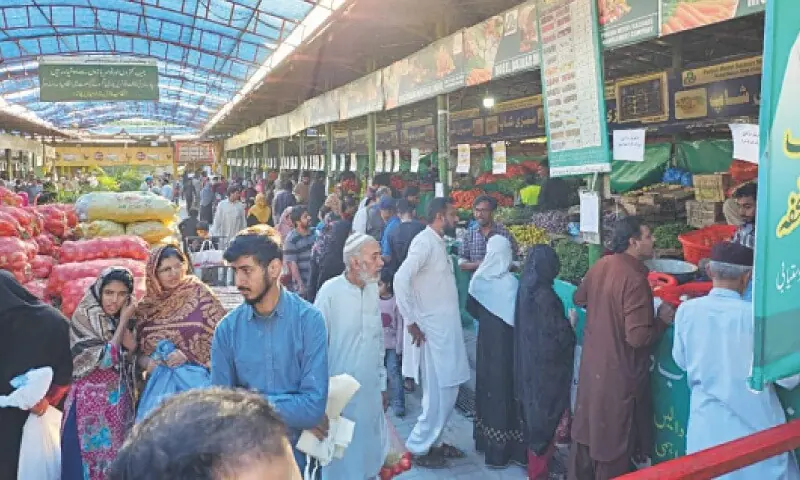
ISLAMABAD: Pakistan’s consumer inflation rate eased slightly to 11.1 per cent in June from 11.7pc a month earlier, mainly due to lower prices of energy and essential food items, according to data released by the Pakistan Bureau of Statistics on Wednesday.
The modest decline suggests that recent cuts in petrol and diesel prices have provided some relief to households. However, the government has yet to fully pass on the benefit of lower international oil prices to domestic consumers, limiting the overall reduction in inflationary pressures.
On a month-on-month basis, inflation decreased by 0.3pc compared to the previous month.
Inflation between July 2025 and June 2026 was recorded at 7.05pc, over the 4.49pc in the corresponding months last year. This was despite a high base effect from last year.
The government has projected a revised inflation target of 7.5pc for the current fiscal year. For FY27, it has projected an inflation target of 8.2pc.
The continued increase in monthly inflation, measured by the Consumer Price Index (CPI), has pushed it beyond the earlier projection of the government mainly because of an unprecedented increase in price of petroleum products.
In June, energy prices saw a drastic downward revision, but the impact on overall inflation was minimal due to the continued blockage of the Strait of Hormuz, through which most of Pakistan’s energy imports are routed.
The slight decrease in prices during June was largely driven by a fall in transport, which declined by 7.22pc from the previous month of May. The transport charges in June increased by 25.72pc compared to June 2025.
Non-perishable food items also recorded a sharp increase of 10.21pc, highlighting volatility in essential commodities. Housing, water, electricity, gas and fuels registered a 15.5pc increase, adding further pressure on household budgets.
The SBP increased its policy rate to 11.5pc in April from the previous 10.5pc in response to rising inflation. It was kept unchanged at 11.5pc. Earlier, the central bank had kept the policy rate at 10.5pc unchanged, effective from December 16, 2025.
The data showed that urban inflation stood slightly higher at 11.2pc, compared to 10.9pc in rural areas on an annual basis. On a monthly basis, urban prices decreased by 0.5pc, while rural inflation posted no change.
Food inflation in June increased by 8.2pc in urban areas and 9.4pc in rural areas. On a month-on-month basis, food inflation increased 1pc in urban areas and 0.9pc in rural areas. Non-food inflation reached 13.1pc in urban areas, and 12.3pc in rural regions. This indicates that non-food inflation remains very high and has steadily risen in the past few months.
In June, core inflation — excluding volatile food and energy components — stood at 8.7pc in urban areas and 7.9pc in rural areas.
Urban food items that saw notable month-on-month price increases included tomatoes (90.1pc), onions (20.8pc), potatoes (17.76pc), fresh vegetables (12.55pc), wheat flour (2.17pc), wheat products (2.12pc), vegetable ghee (1.85pc), wheat (1.72pc), cooking oil (1.53pc) and fresh milk (1.27pc).
Declines were observed in the prices of chicken (22.44pc), eggs (10.74pc), moong (1.04pc), mash (0.98pc), beans (0.89pc), besan (0.64pc), grams (0.38pc), fish (0.37pc) and masoor (0.20pc).
Non-food categories also witnessed significant price hikes, including newspapers (14.84pc), dopattas (3.78pc), washing soap/detergents/match boxes (1.96pc), liquefied hydrocarbons (1.79pc), tailoring (1.74pc), major tools and equipment (1.66pc), cotton cloth (1.60pc), medical tests (1.48pc), doctor (MBBS) clinic fees (1.47pc), and furniture and furnishing (1.21pc).
Similarly, a decline was observed in the prices of motor fuel (12.06pc), personal effects (6.19pc), electricity charges (4.31pc), marriage hall charges (4.04pc), transport services (0.56pc), household textiles (0.15pc) and solid fuel (0.03pc).
Follow Dawn Business on X, LinkedIn, Instagram and Facebook for insights on business, finance and tech from Pakistan and across the world.
Related stories

MarketWatch
BusinessJul 1, 2026 · 1 min
Opening a ‘Trump account’ for your children? Here is the risk you need to recognize first.
MarketWatch
MarketWatch
BusinessJul 1, 2026 · 1 min
Almost 100% of the Nasdaq-100’s gains in the first half of 2026 came from just 10 stocks
MarketWatch

MarketWatch
BusinessJul 1, 2026 · 1 min
My student loans are paused until 2028. Should I pay them now anyway?
MarketWatch
Bloomberg
BusinessJul 1, 2026 · 1 min
Lagarde Says Inflation, Growth Risks Now More Broadly Balanced
Bloomberg