Indian Express
Indian Express··5 min read
Madhya Pradesh High Court calls in experts over rape accused’s ‘deaf and mute’ claim
6 min readNew DelhiJul 1, 2026 06:00 PM IST
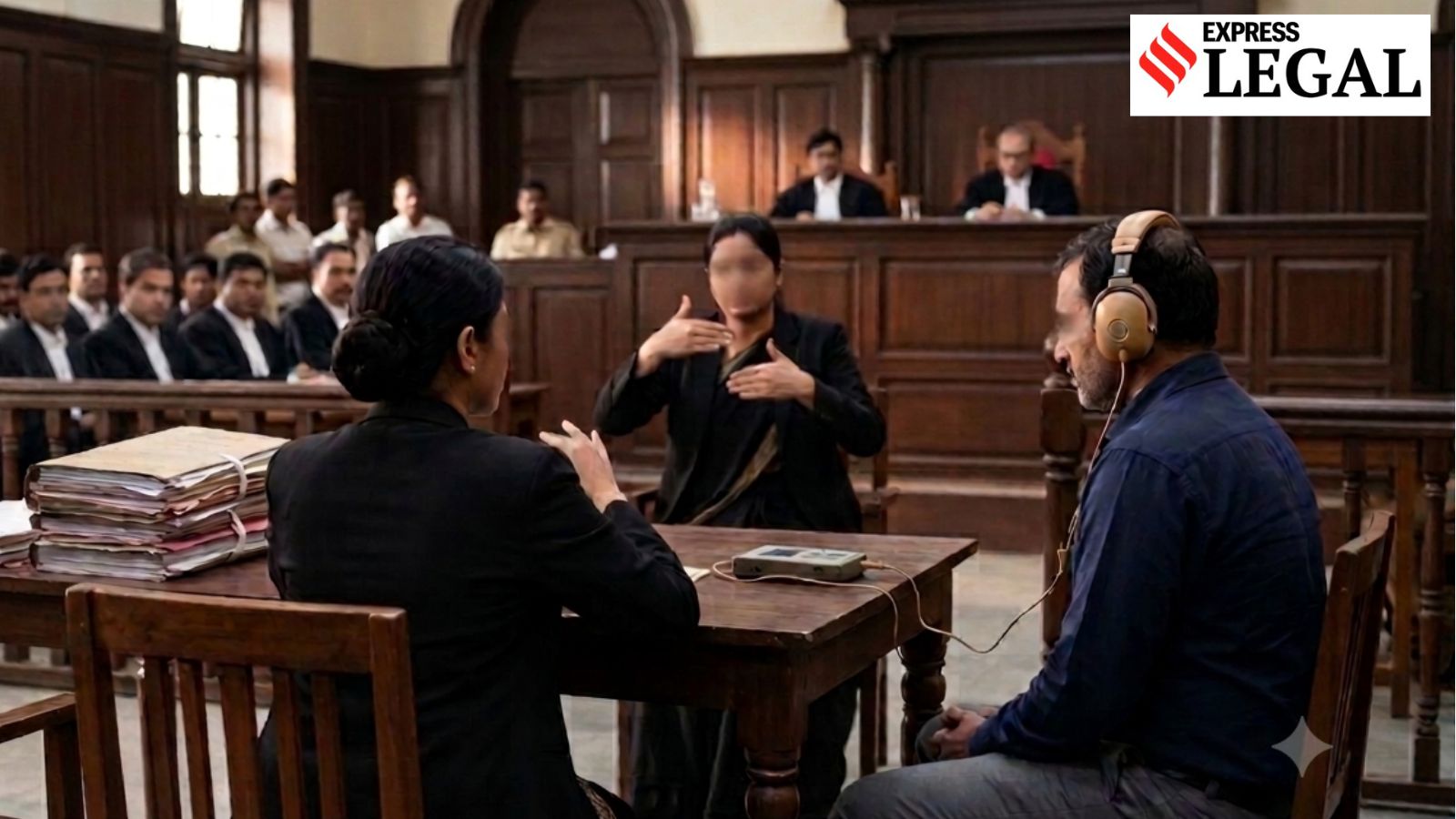
Before recording his statement under Section 313 CrPC, the defence argued that he had hearing and speech disabilities and was incapable of understanding court proceedings. (AI-generated image)
A peculiar situation unfolded before the Madhya Pradesh High Court after a man convicted of raping a minor claimed he was unable to hear or speak and could not understand even sign language, prompting the court to question the plea’s credibility and direct the trial court to use every available aid, including sign language experts, hearing aids and written questions, before proceeding with the case.
A bench of Justices Anand Pathak and Pushpendra Yadav was hearing a criminal reference made by a special POCSO court in Gwalior which convicted the accused of raping a minor girl.
The reference arose because the trial court sought the high court’s directions, observing that it could not record the accused’s mandatory statement under Section 313 (gives accused an opportunity to personally explain the evidence against him) of the Criminal Procedure Code (CrPC), since he allegedly did not understand the court proceedings despite assistance from sign language experts.
“There is no evidence by any of the witnesses that the respondent-accused could not speak or is dumb. Notably, neither any of the medical examiners who examined the accused during investigation in both the cases have opined so, nor is any document in respect of the deaf and dumb ailment on record in both the cases. Therefore, it creates doubt about the very credibility of such illness,” the court said on June 29.
“The allegations are serious in nature, and an accused in such circumstances cannot escape the wrath of the proceedings by cleverly managing to represent himself as deaf and dumb or as a person who cannot understand the proceedings held against him. A cautious approach is required. Victim’s rights are also required to be seen,” it added.
Justices Anand Pathak and Pushpendra Yadav noted that the medical board had found the accused was not of unsound mind and was not totally unable to hear.
The high court found that the accused had faced an earlier rape trial without ever claiming a disability, while medical records suggested he may have been exaggerating his disability. It consequently directed the trial court to record his mandatory statement under Section 313 CrPC after using every available communication aid before taking the proceedings further.
Trial came to halt over disability claim
The case arose from a First Information Report (FIR) registered in Gwalior over allegations that the accused sexually assaulted a seven-year-old girl in July 2022. Following investigation, he was charged under sections 449 (house-trespass to commit an offence punishable with death), 376(A) (rape of a girl below 12 years of age) and 506 (criminal intimidation) of the Indian Penal Code (IPC), along with Section 6 of the Protection of Children from Sexual Offences (POCSO) Act, which prescribes punishment for aggravated penetrative sexual assault.
Story continues below this ad
The special POCSO court convicted him on May 14, 2024. However, before recording his statement under Section 313 CrPC, the defence argued that he had hearing and speech disabilities and was incapable of understanding court proceedings.
The trial court obtained medical opinions, referred him to AIIMS Bhopal for further auditory tests and even called sign language experts to assist in the exercise. When they reported that he could not understand sign language either, the trial court referred the matter to the high court.
Court notes medical reports, 2014 trial
The high court noted that the medical board had found the accused was not of unsound mind and was not totally unable to hear.
According to its report, he could hear loud sounds with amplification through a hearing aid. AIIMS Bhopal also found severe to profound hearing loss but said definitive findings could not be reached because the accused failed to cooperate during the examination.
The medical board described the accused as “malingering” or pretending to be ill to avoid consequences. The high court observed that the accused was “faking or exaggerating his physical (condition) to gain advantage.”
The court attached considerable significance to the accused’s previous conviction in another POCSO case involving a 14-year-old girl. In the 2014 trial, the accused had undergone examination under Section 313 CrPC without raising any disability plea or that he was incapable of understanding court proceedings.
Prosecution witnesses in both cases stated that the accused could speak. Arrest records, consent forms and court documents also bore his signatures, indicating that he understood the proceedings and was capable of communicating.
The accused “knew the nature and consequences of the act very well”, the court said, adding that once an accused knows the consequences of the act, the plea that he does not understand the proceedings loses its sheen.
HC’s directions
“The trial Court (sic) is directed to record the accused statement as per Section 313 of CrPC, and if required, written examination be ensured,” the bench said, adding that it was free to take assistance from sign language experts for the purpose. It is the duty of the trial court to make an inquiry as to whether the accused can be made to understand the proceedings of the court.
The accused is expected to cooperate in the proceedings, and if he does not, the trial court may proceed to pronounce judgment. The high court asked the trial court to complete the exercise preferably within four months.
Story continues below this ad
Significance
The ruling is significant because it clarifies that while courts must provide reasonable accommodation to accused persons with communication disabilities, such claims cannot automatically halt criminal proceedings. It also reinforces that trial courts must exhaust every available communication aid before dispensing with the mandatory examination of an accused under Section 313 CrPC, ensuring both a fair trial and protection of victims’ rights.
Vineet Upadhyay is an Assistant Editor with The Indian Express, where he leads specialized coverage of the Indian judicial system.
Expertise
Specialized Legal Authority: Vineet has spent the better part of his career analyzing the intricacies of the law. His expertise lies in "demystifying" judgments from the Supreme Court of India, various High Courts, and District Courts. His reporting covers a vast spectrum of legal issues, including:
Constitutional & Civil Rights: Reporting on landmark rulings regarding privacy, equality, and state accountability.
Criminal Justice & Enforcement: Detailed coverage of high-profile cases involving the Enforcement Directorate (ED), NIA, and POCSO matters.
Consumer Rights & Environmental Law: Authoritative pieces on medical negligence compensation, environmental protection (such as the "living person" status of rivers), and labor rights.
Over a Decade of Professional Experience: Prior to joining The Indian Express, he served as a Principal Correspondent/Legal Reporter for The Times of India and held significant roles at The New Indian Express. His tenure has seen him report from critical legal hubs, including Delhi and Uttarakhand. ... Read More
Tags:
disability
Madhya Pradesh High Court
POCSO
View original source — Indian Express ↗
Related stories

The Punch
NewsJul 1, 2026 · 1 min
DSS arrests ex-minister Uche Nnaji
The Punch

ESPN
SportsJul 1, 2026 · 1 min
Sources: Powell lands 2-yr., $45M deal with Bulls
ESPN
ESPN
SportsJul 1, 2026 · 1 min
Live NHL free agency tracker: Contract details for...
ESPN
The Punch
SportsJul 1, 2026 · 1 min
FULL LIST: Africa’s Vozinha, Williams lead 2026 World Cup FIFA goalkeepers ranking
The Punch