Indian Express
This queen ant stunned science by giving birth to sons of two different species
Imagine giving birth to a child that belongs to an entirely different species. While, it sounds impossible, scientists have discovered an ant that does something surprisingly close.
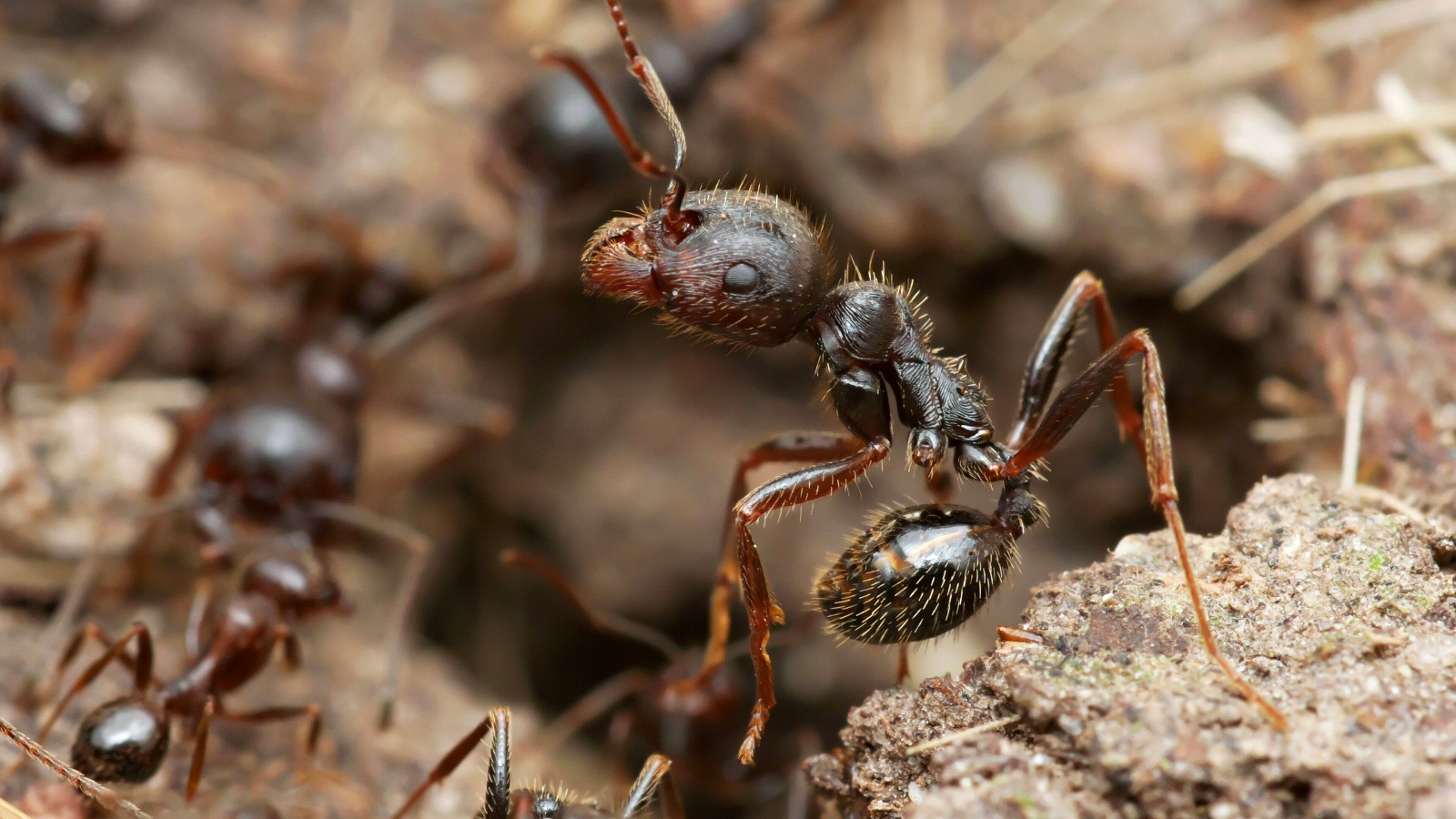
Although most animals reproduce with members of their own species, Iberian harvester ant (Messor ibericus) easily mates with a different species of the same genus called Messor structor.
Reported first in a 2025 study published in Nature, this ant’s unique reproductive style has stunned scientists. As per official records, nothing quite like this has been documented before.
A colony that needs another species
The story begins with the worker ants. Like all ant colonies, Messor ibericus colonies depend on workers to collect food, care for young and maintain the nest. But these workers are unusual. They are hybrids, created when a Messor ibericus queen mates with a male from another species, Messor structor.
Without these hybrid workers, the colony cannot function properly.
This raised a mystery for scientists. Because in several parts of Spain, they found Messor ibericus colonies living hundreds of kilometres away from the nearest known Messor structor populations. Yet the colonies were still producing hybrid workers.
Where were the Messor structor males coming from?
The answer was inside the colony
Genetic analyses revealed something unexpected: the queens were producing them.
Researchers discovered that Messor ibericus queens can generate males of Messor structor within their own colonies. This means a single colony contains individuals from both species and relies on both to survive.
The process is unusual. The queen fertilises eggs with Messor structor sperm and then removes her own nuclear DNA from some of those fertilised eggs. Those eggs develop into males carrying only Messor structor nuclear DNA.
Story continues below this ad
In effect, the colony is able to produce males of the very species it depends on to create its hybrid workers.
Why scientists are excited
The researchers have coined a new term for this phenomenon: xenoparity. It describes a female producing members of another species as a necessary part of reproduction.
The finding is remarkable because Messor ibericus and Messor structor diverged from a common ancestor more than five million years ago. Yet today their life cycles are so intertwined that researchers describe the colony as a “two-species superorganism”. The colony depends on M. structor males to produce the hybrid workers it needs, while also producing males of that species itself.
For now, the Iberian harvester ant appears to be unique in the animal kingdom. The discovery reveals a reproductive strategy unlike any previously documented in animals and is challenging scientists’ understanding of how species can cooperate and reproduce.
View original source — Indian Express ↗
Related stories

Variety
EntertainmentJul 1, 2026 · 1 min
Trump Received $10.7 Million Fee for Amazon’s ‘Melania’ Documentary
Variety

Deadline
EntertainmentJul 1, 2026 · 1 min
Disney Voice Talent Search Selects 10 For Inaugural Class
Deadline

Variety
EntertainmentJul 1, 2026 · 1 min
‘Baywatch’ Fox Reboot Unveils First Footage in New Teaser
Variety

The Hollywood Reporter
EntertainmentJul 1, 2026 · 1 min
I Created ‘Queer Eye.’ Television Has Stopped Reflecting Our Full Humanity.
The Hollywood Reporter