The Next Web
SpaceX reportedly showed investors an AI device prototype, Musk says the report is false
TL;DR
WSJ reports SpaceX showed investors a slim AI device prototype using xAI tech and Qualcomm chips. Musk denies it, calling the report false.
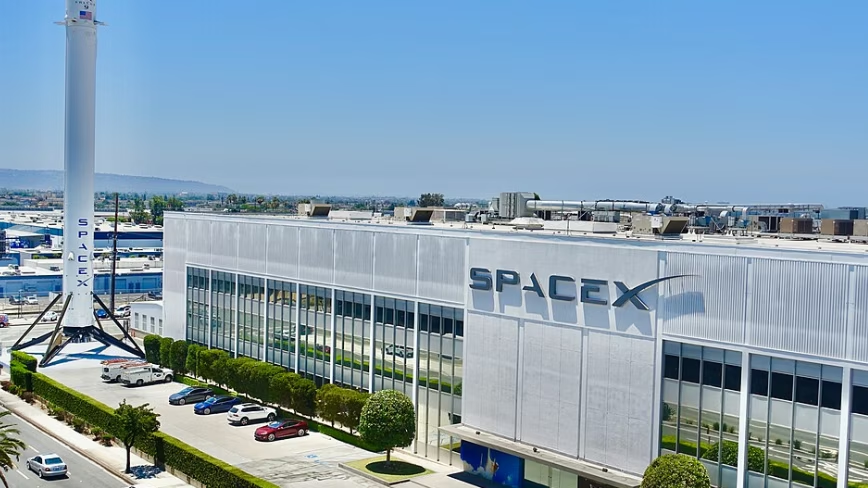
SpaceX showed investors a prototype of a handset-like AI device before its record IPO, according to The Wall Street Journal. The prototype is reportedly slimmer than an iPhone, runs on a proprietary operating system, integrates technology from xAI, and uses a Qualcomm Snapdragon chipset. Elon Musk has denied the report, calling it “utterly false” on X.
The WSJ says SpaceX told investors the project is early enough that the design could still change, and there is no guarantee the device will ever reach production. Qualcomm shares rose about three percent on the news regardless. SpaceX has not made any public announcement about the project.
SpaceX absorbed xAI in February in a merger valued at roughly one and a quarter trillion dollars, giving the rocket company direct access to the AI models and infrastructure Musk’s AI lab had built. A proprietary device running xAI’s technology would keep SpaceX outside the Android and iOS ecosystems entirely, avoiding the platform fees and restrictions that come with building on someone else’s software.
The device would also fit into SpaceX’s broader wireless ambitions. The company recently told investors it plans to sell Starlink phone service directly to US consumers, setting up a potential challenge to Verizon, AT&T, and T-Mobile. SpaceX acquired wireless spectrum from EchoStar for 17 billion dollars and has the satellite constellation to back a standalone network, so an AI device designed for that infrastructure would give SpaceX hardware, software, and connectivity under one roof.
If the report is accurate, SpaceX would be entering a race that already has a well-funded frontrunner. OpenAI recently hired Paul Meade, the Apple vice president who ran Vision Pro hardware engineering, to join a team that already includes Jony Ive, Apple’s former design chief. OpenAI is also developing an AI agent smartphone with Qualcomm and MediaTek targeting mass production in 2028, a device Sam Altman has described as “more peaceful” than an iPhone.
The graveyard of AI hardware failures is hard to ignore. Humane’s AI Pin was permanently bricked in February 2025 after the company sold fewer than 10,000 units and was acquired by HP for 116 million dollars. The Rabbit R1 attracted 100,000 pre-orders but retained only about 5,000 active users after five months, and both devices failed because they asked consumers to carry a second gadget that did less than the phone already in their pocket.
SpaceX has manufacturing expertise through Tesla and access to the chips needed for on-device compute, which gives it more hardware credibility than Humane or Rabbit ever had. But Musk’s flat denial creates an unusual situation: either the WSJ’s sources are wrong, or SpaceX is walking back a project it pitched to investors only weeks ago. Neither explanation is particularly reassuring for anyone trying to judge whether this device will ever exist.
Published July 1, 2026 - 8:09 pm UTC
Back to top
View original source — The Next Web ↗
Related stories

Straits Times
TechnologyJul 1, 2026 · 1 min
TikTok settles with US teenager ahead of social media addiction trial
Straits Times

Wired
TechnologyJul 1, 2026 · 1 min
Mexico’s Victory Over Ecuador Made the Ground Shake. Was It an Artificial Earthquake?
Wired
Ars Technica
TechnologyJul 1, 2026 · 1 min
T-Mobile moving tens of thousands of virtual machines off VMware amid lawsuit
Ars Technica

TechRadar
TechnologyJul 1, 2026 · 1 min
Zoning authority could be the answer to data center woes, as San Marcos becomes the first Texas city to ban data centers
TechRadar