CNA
Your new perfume doesn’t smell like the one you tested at the store – here are 7 reasons why
Style & Beauty
You’re not imagining it. Here’s why there’s a difference.
New: You can now listen to articles.
This audio is generated by an AI tool.
02 Jul 2026 07:20AM
Ever bought a perfume after falling in love with it at the store, only to find it smells different when you get home?
You're probably not imagining it.
According to Scent by Six founder Jason Lee, perfumes are not static – they evolve with exposure to air, temperature, skin chemistry and even the wearer themselves.
“In my years of building scents, I have learnt that a perfume is alive, not a fixed formula. The same juice settles, breathes and reacts differently from counter to skin, so the bottle you carry home can tell a slightly different story from the one you fell for,” he said.
Here’s why there’s a difference.
1. YOU DIDN’T TEST THE SCENT CORRECTLY
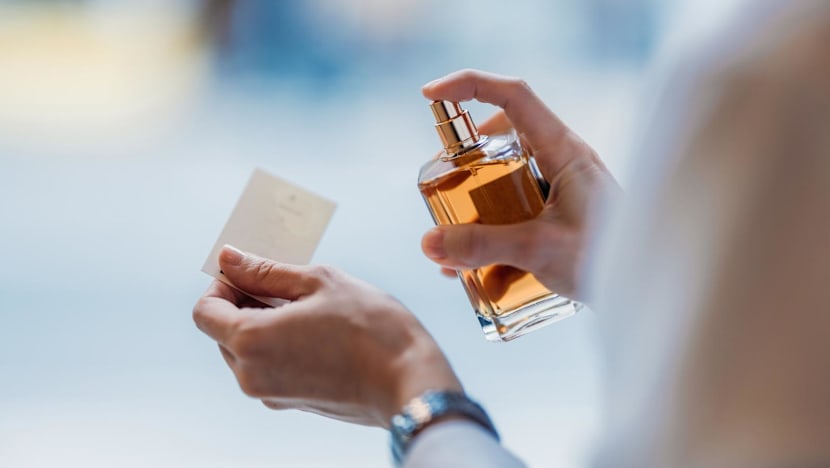
Most people first encounter a fragrance on a paper blotter strip. While blotters offer a quick and convenient way to sample scents, they don't tell the whole story.
A perfume can smell very different once it interacts with your skin. That's because factors such as skin temperature, moisture levels and natural oils affect how fragrance notes develop.
If you like a scent, spray it on a pulse point such as your wrist or inner elbow and let it settle naturally. Avoid rubbing your wrists together, as this can disrupt the fragrance's development.
More important, give it time.
"Testing six scents at one go, rubbing your wrists together after spraying them on and deciding in 10 seconds is the surest way to be misled. Instead, limit yourself to just one or two, spray it on, walk away, and judge them after 30 minutes. A fragrance unfolds in chapters, and it deserves the patience you would give a good story," said Lee.
If possible, wear the fragrance for several hours before making a purchase. What you smell in the first few minutes may be very different from the scent's dry-down later in the day.
2. THE TESTER HAS AGED OVER TIME
A perfume tester may have been sitting on a counter for months before you try it.
Every spray introduces a small amount of air into the bottle, gradually exposing the fragrance to oxidation. Over time, this can subtly alter the scent profile.
"A tester is sprayed hundreds of times over many months, and air enters the bottle with every press of the spray button. It is true that slow oxidation can brighten or flatten the scent. So the tester you loved may already differ from a freshly sealed bottle," said Lee.
In some cases, oxidation softens sharp top notes and brings richer base notes to the forefront. That's why a well-used tester can sometimes smell different – and occasionally stronger – than a newly opened bottle.
3. CLIMATE MATTERS
The environment plays a major role in how a fragrance performs.
Heat and humidity increase the evaporation of fragrance molecules, making scents project more strongly. Cooler, drier conditions tend to mute a perfume's intensity.
"Heat and humidity lift a fragrance and make it louder, while cold, dry air holds it back. A bright, air-conditioned boutique is a very different stage from a humid street. The science is simple – warmth speeds up evaporation, so the same scent can feel bolder or quieter depending on where you wear it," said Lee.
This means a fragrance that feels light and airy inside an air-conditioned boutique may smell much stronger outdoors on a hot, humid day.
4. YOU STORED IT INCORRECTLY
How you store your perfume can also affect how it smells over time.
Exposure to heat, sunlight and air speeds up oxidation, which can gradually alter the fragrance.
"Light, heat and air are a fragrance's nemeses. Keep your bottles somewhere cool and dark, such as a drawer or a box, and never on a sunny windowsill or in a steamy bathroom. Treated with care, a good perfume can stay true to itself for years," Lee advised.
A cool, dark cupboard is generally a better home for perfume than a bathroom shelf or sunny dressing table.
5. PRODUCTION BATCHES CAN VARY
Many fragrances contain natural ingredients such as rose, jasmine, citrus and sandalwood, whose characteristics can vary from harvest to harvest.
"Natural ingredients vary like wine vintages, and a harvest of rose or citrus is never quite the same twice. Reputable houses work hard to keep things consistent, yet small batch-to-batch differences are simply part of an honest, natural craft," said Lee.
While major fragrance houses work hard to maintain consistency, minor variations between batches are not uncommon.
6. YOUR PREFERENCES MAY HAVE CHANGED
Sometimes, the perfume hasn't changed – you have.
Our sense of smell is closely linked to memory, mood and emotions. A fragrance that felt exciting during one phase of life may not resonate in the same way months or years later.
"Smell is bound tightly to mood and memory. Sometimes the perfume did not change at all. You did. What thrilled you in the store may simply not match the person you are in this moment, and that is perfectly natural," said Lee.
7. YOUR SKIN CHEMISTRY HAS EVOLVED
The way a fragrance develops on your skin isn't fixed either.
Factors such as skin oil levels, hormones, stress, medications and even diet can influence how a perfume smells and how long it lasts.
"Your oil levels, diet, hormones and the medication you may be taking can all rewrite how a scent unfolds, which is why a perfume can sing on a friend and fall flat on you. And yes, your chemistry shifts with age, season and stress, so even your signature scent can quietly grow up and evolve alongside you," said Lee.
This is why the same perfume can smell noticeably different on two people – or even on the same person at different stages of life.
THE TAKEAWAY
A perfume is never experienced in exactly the same way twice. From the tester's age and the weather to your skin chemistry and personal preferences, countless factors can influence how a fragrance smells.
That's why fragrance experts recommend spending time with a scent before committing to a bottle. After all, a great perfume isn't just about the first impression – it's about how the story unfolds.
Source: CNA/yy
Related stories

The Punch
EntertainmentJul 2, 2026 · 1 min
WACT-APM Terminals appoints first Nigerian MD
The Punch

Deadline
EntertainmentJul 2, 2026 · 1 min
‘Young Washington’ Review: Just In Time For America’s 250th Comes A Sanitized Origin Story About The First U.S…
Deadline

Deadline
EntertainmentJul 2, 2026 · 1 min
Tom Hanks Sony Baseball Movie ‘The Comebacker’ Sets Late Summer 2027 Release
Deadline

E! Online
EntertainmentJul 2, 2026 · 1 min
Lululemon's July 4th Sale Includes a Chic $39 Mini Shoulder Bag
E! Online