Indian Express
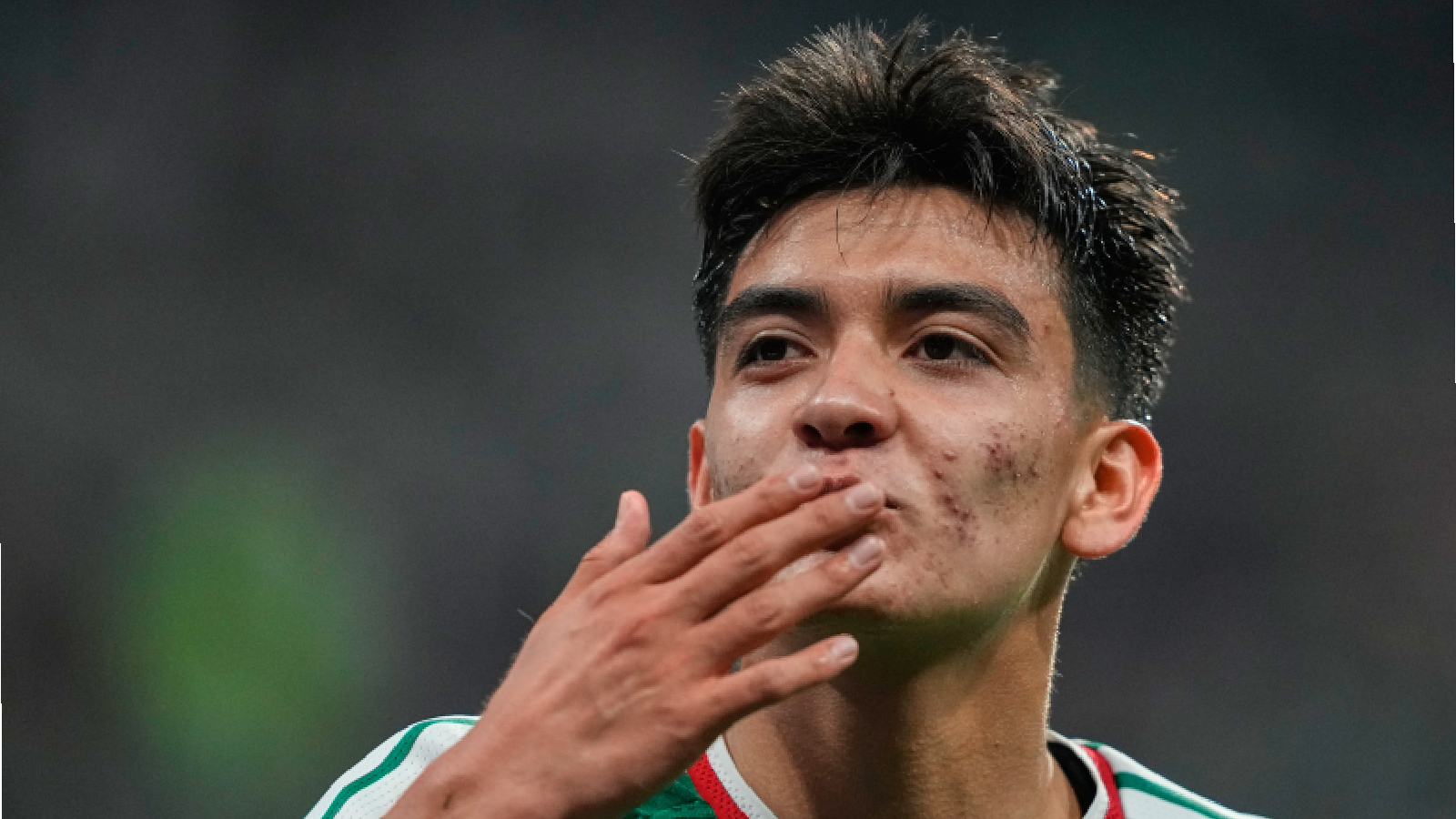
Mexican wonderkid Gilberto Mora’s World Cup began with his father’s free kick
Twenty-three years ago, on the last matchday of a relegation battle in Chiapas, a journeyman midfielder named Gilberto Mora Olayo did something that had nothing to do with talent and everything to do with will. Jaguares needed a win over Tecos to survive in Mexico‘s top flight. A free kick came up, and the regular taker, a man they called Tiba, had already put one off the crossbar. Mora walked over anyway, argued with him over it, and struck it into the top corner. Jaguares stayed up 1-0, the single thing anyone in Chiapas football remembers him for.
Five years later, in that same city, during his father’s six years in Jaguares, his son was born.
The boy grew up on a dirt pitch called Salvador Cabanas, joining the Jaguares youth school at four with his father as one of its coaches. The family moved north when he was seven, to the dry fields of Tijuana’s Otay district, hard against the border fence, but the arrangement stayed the same: a father who had made one perfect decision, coaching a son who kept doing the impossible on schedule. Antonio Rodriguez, now Tijuana’s goalkeeper and captain, remembers a training drill where the ball arrived at a boy he didn’t recognise: one touch, a turn, the defender gone. “Me dejó en shock” [“It left me in shock”], he said.
Youngest to debut for Club Tijuana, at fifteen, then the youngest goalscorer in Liga MX history twelve days later. Youngest to debut for Mexico’s senior team, at sixteen. Youngest player of any nationality to win a senior international trophy at the 2025 Gold Cup, ahead of Yamal and Pele. This June, the youngest player to appear for Mexico at a World Cup broke a record that had stood since 1930. He is known, almost universally in the Mexican press, as Morita.
Gilberto Mora is just 17 years old playing this good at the World Cup but because he’s not Lamine Yamal you guys are mute about it pic.twitter.com/Xzuc9uRtPS
— 𝔸𝕝 𝕍𝕒𝕣𝕠 𝕏 (@al_varo777) July 1, 2026
The records are the least interesting thing about him. Santiago Gimenez, Mexico’s senior striker, described a team bus during last year’s Gold Cup: everyone on their phones, and then Mora, reading a book. “That’s when I thought, this guy is different,” Gimenez said on Instagram. Days before the World Cup, a reporter asked him, half-joking, how he’d celebrate if Mexico won it all. “Yeah, an ice cream,” he said. “Vanilla.” He is seventeen, still studying for university entrance while Europe’s biggest clubs price what he might be worth in three years.
Juan Carlos Osorio, the coach who gave him his senior debut at fifteen after watching him once in a scrimmage, later explained his thinking on a Mexican talk show, Jorge Ramos y su banda: the average player completes roughly seven hundred body turns a match at the highest level, and what he saw in Mora reminded him of Andrés Iniesta, the turn and release as one motion. Rodriguez put it differently to FIFA.com: “He hasn’t gotten dizzy, hasn’t been distracted by what’s said about him. He hasn’t fallen into that wave of applause. He’s still the same.”
Mexico’s Gilberto Mora (19) runs with the ball during the World Cup Group A soccer match between Czechia and Mexico in Mexico City, Wednesday, June 24, 2026. (AP Photo/Natacha Pisarenko )
World stage
At this World Cup, Mora played a brief cameo against South Africa, then nothing against South Korea. Mexico had already won the group, but Aguirre started him anyway against Czechia. Mora was slow for a half, then wasn’t: a shimmy that opened a chance somebody else missed, then the pass that split Czechia’s defence for Mexico’s second. He left the pitch late to a standing ovation, in the same match that brought on Guillermo Ochoa, forty years old and at his sixth World Cup, for a farewell cameo of his own. Neither man mentioned the other. The stadium did the connecting for them.
Four days later, against Ecuador in the Round of 32, Aguirre started him again. Mexico won 2-0. Mora became the second-youngest player in World Cup history to start a knockout match, behind Pele.
Story continues below this ad
There is one part of this story that Mexican football would rather not look at too closely. Asked last year whether he felt more tijuanense (a Tijuana native) or chiapaneco (a Chiapas native), Mora didn’t hesitate: “Más tijuanense ya” [“More Tijuana than anything, by now”], ten years into living there by then. It was a small sentence, and it cost him something at home. Chiapas social media called it a betrayal, an idol falling; some felt written out of his story in five words. He later said he was proud of Chiapas too, which read like an apology to some. One columnist named the uncomfortable part outright: Mexico claims Chiapas once a Chiapaneco succeeds elsewhere, and is considerably less interested in why its most gifted children keep having to leave to do it.
Mora’s dream is Real Madrid, which has sent scouts to watch him at the Azteca. None of it can happen until October, when he turns eighteen, and the rules let him go.
Twenty-three years before any of this, his father stayed behind after training, alone, two or three evenings a week, set up a moving wall himself, and practised the same free kick over and over on an empty pitch, for no one.
View original source — Indian Express ↗
Related stories

ESPN
SportsJul 2, 2026 · 1 min
USMNT's multifaceted win vs. Bosnia-Herzegovina bo...
ESPN

BBC Sport
SportsJul 2, 2026 · 1 min
USA march on but will Balogun red card prove costly?
BBC Sport

ESPNcricinfo
SportsJul 2, 2026 · 1 min
Lister replaces injured Sears for ODI series in the West Indies
ESPNcricinfo

TASS
SportsJul 2, 2026 · 1 min
US advances to Round of 16 at 2026 World Cup after 2-0 win over Bosnia and Herzegovina
TASS