South China Morning Post
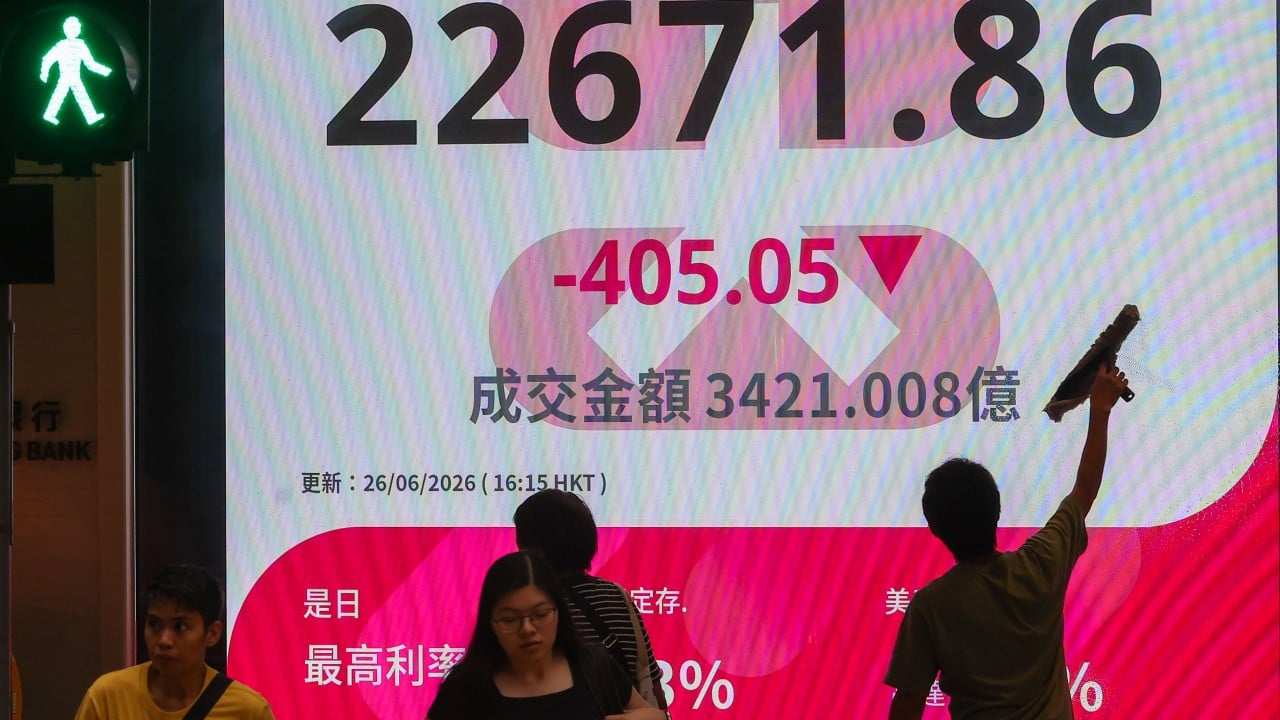
Why Hong Kong has become this year’s worst-performing stock market
There are many disconnects in financial markets. One of them is Japan’s benchmark 10-year bond yield, which currently stands at just 2.7 per cent despite the country’s large public debt burden – more than 240 per cent of economic output.
Although Japanese bond yields have risen sharply in the past three years, the 10-year yield is slightly lower than that of Germany, whose government debt as a percentage of economic activity is around one-quarter the size of Japan’s.
Another anomaly is the outperformance of the debt of non-investment grade companies. The credit spread, or risk premium, on junk-rated bonds is close to its lowest level since 2007 despite the prospect of higher interest rates, acute geopolitical risks and rising defaults in the increasingly vulnerable private credit market.
One of the most striking peculiarities is the growing divergence within Hong Kong’s equity market. Hong Kong remains the top fundraising venue in Asia. In the second quarter of this year, proceeds from share sales – which include listings, placements and block trades – reached their highest quarterly level in five years, according to Bloomberg data.
The artificial intelligence (AI) surge has been a boon to the city’s equity market. Chinese high-end manufacturing companies across the AI supply chain continue to launch multibillion dollar offerings, cementing Hong Kong’s role as the primary conduit between Chinese and global finance.
Moreover, mainland Chinese investors are a vital source of demand for Hong Kong stocks, constituting more than 40 per cent of daily turnover via the Stock Connect’s southbound channel, according to Societe Generale. In a report on May 18, the bank said more than 90 per cent of initial public offerings in Hong Kong were in the advanced manufacturing, technology and biotechnology sectors, industries “deemed to be strategic in accordance with the 15th five-year plan”.
02:56
Musk is the world’s first trillionaire: will the second come from China?
View original source — South China Morning Post ↗
Related stories

MarketWatch
BusinessJul 2, 2026 · 1 min
‘There was a catch’: My doctor friend was outraged by his hospital’s fundraising tactics. Where do we draw the line?
MarketWatch

BBC
BusinessJul 2, 2026 · 1 min
EU border delays 'not bearable' over summer, warns airport boss
BBC

Rio Times
BusinessJul 2, 2026 · 1 min
BHP Files to Reopen an Idled Chile Copper Mine on Recycled Water
Rio Times

Euronews
BusinessJul 2, 2026 · 1 min
Young and wealthy: Where does Europe’s youth hold the most net wealth?
Euronews