Indian Express
38 parasites found in a British woman’s brain after years of no symptoms
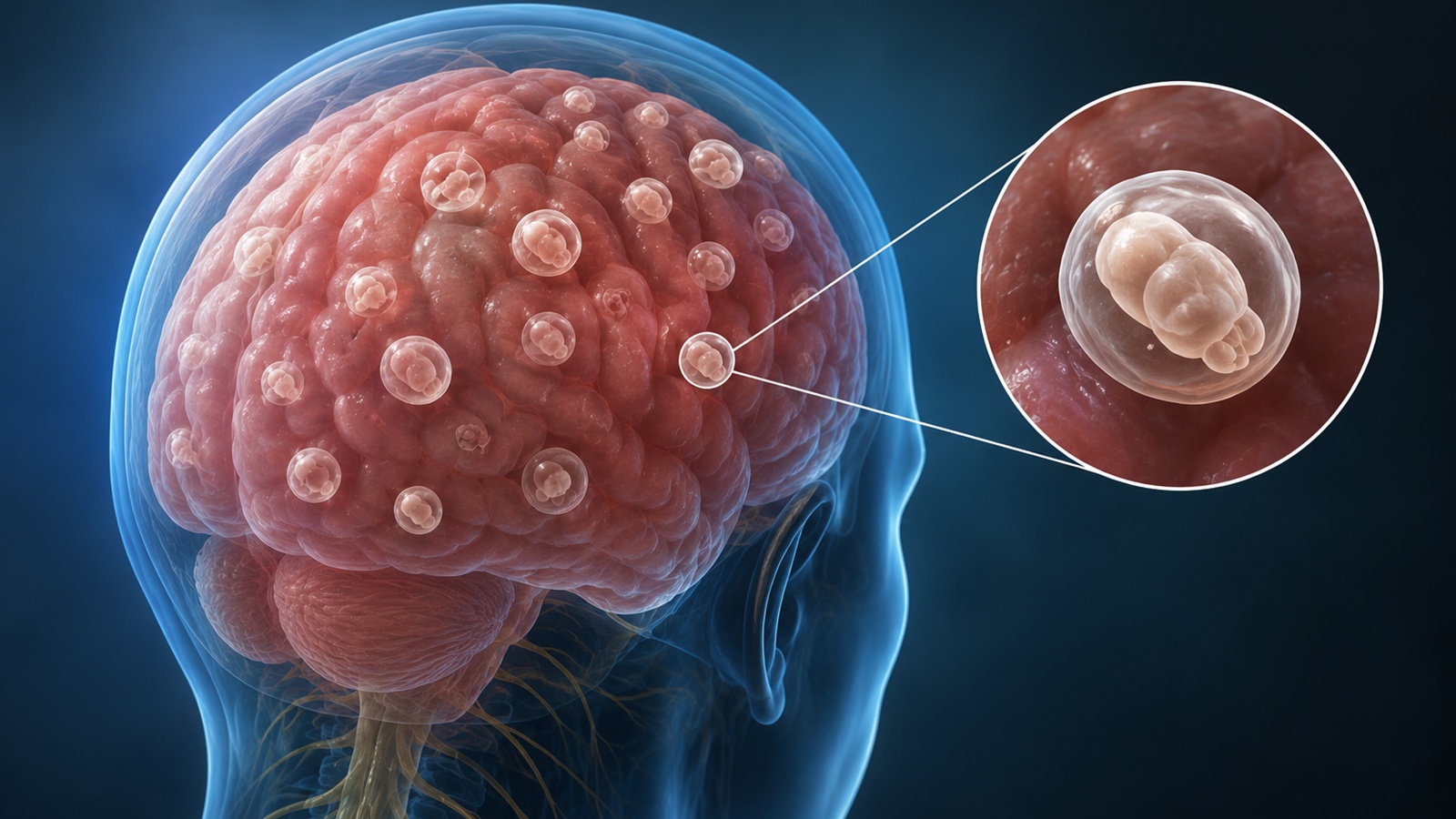
A British woman has expressed her shock after discovering 38 parasites living inside her brain following a trip to India three years before diagnosis. The woman from Wales, United Kingdom, Lowri Denman, had taken a trip to the country in 2007 but was diagnosed with a rare condition of neurocysticercosis, a brain infection caused by pork tapeworm larvae, only in 2010-11.
DISCLAIMER: This article is based on information from the public domain and/or the experts we spoke to. Always consult your health practitioner before starting any routine.
She initially found a metre-long tapeworm while using a restaurant toilet but didn’t realise its significance. However, according to a BBC Wales report, within 12 months, she started developing “severe headaches, seizures, and psychosis”. The subsequent scans revealed 38 parasites in her brain. According to the treating doctor, Dr Brendan Healy, a specialist in infectious diseases and microbiology, the condition remained silent for years before causing neurological symptoms. After anti-parasitic treatment, steroids, and years of rehabilitation, the parasites calcified, and her health gradually improved, but she remains on epilepsy medication. Denman now wants to raise awareness about the importance of early diagnosis, food hygiene, and recognising persistent neurological symptoms after travel.
What is neurocysticercosis?
Dr Pankaj Agarwal, director of neurology, stroke and neurocritical care at Gleneagles Hospital Parel, Mumbai, said neurocysticercosis is a “serious, rare brain infection” caused by the larval form of the pork tapeworm Taenia solium. “If left untreated, it can lead to complications such as recurrent seizures, brain swelling, hydrocephalus (fluid build-up in the brain), stroke-like symptoms, memory and cognitive problems, and, in severe cases, permanent neurological disability or even death. Early diagnosis and timely treatment are essential to prevent these complications,” said Dr Agarwal.
Dr Amit Saraf, director, department of internal medicine, Jupiter Hospital, Thane, clarified that many people mistakenly believe they can get this condition just by eating pork. “In fact, the infection typically happens when tiny tapeworm eggs are swallowed through contaminated food or water or from poor hand hygiene. Once in the body, the eggs hatch into larvae, enter the bloodstream, and can spread to various organs, including the brain, where they create cysts,” said Dr Saraf.
Can someone carry the infection for years without showing any symptoms?
Dr Agarwal said that a person “can carry neurocysticercosis for years without any symptoms”. “Signs often appear only when the cysts begin to die or trigger inflammation in the brain, leading to seizures, headaches, or other neurological problems,” described Dr Agarwal.
What are the earliest warning signs people often ignore?
Dr Agarwal noted that early warning signs of neurocysticercosis that people often ignore include persistent headaches, occasional dizziness, unexplained nausea, or brief episodes of confusion. “Some individuals may also experience their first seizure or changes in vision, which should never be overlooked and require immediate medical evaluation,” said Dr Agarwal.
Story continues below this ad
Although these symptoms can have many causes, they should never be ignored and require prompt medical evaluation for an accurate diagnosis, added Dr Agarwal.
How important are hand hygiene and safe drinking water in preventing infection?
Hand hygiene and access to safe drinking water are among the most effective ways to prevent neurocysticercosis. “Washing hands with soap before eating and after using the toilet, drinking clean water, and maintaining good food hygiene can significantly reduce the risk of infection,” said Dr Agarwal.
Why is neurocysticercosis so difficult to diagnose early?
Experts urge that neurocysticercosis is difficult to diagnose early because many people remain symptom-free for years, and when symptoms do appear, they often mimic common neurological conditions such as migraines or epilepsy. “Brain imaging and specific clinical evaluation are usually needed to confirm the diagnosis,” said Dr Agarwal.
Which tests confirm the diagnosis?
The diagnosis of neurocysticercosis is usually confirmed using brain imaging tests such as a CT scan or MRI, which can detect cysts in the brain. Blood tests may also be used in some cases to support the diagnosis, said Dr Agarwal.
Story continues below this ad
Can brain parasites be completely cured?
Dr Agarwal noted that neurocysticercosis can be treated with antiparasitic medicines, anti-inflammatory drugs, and anti-seizure medications, depending on the number and location of the cysts. Early diagnosis and timely treatment greatly improve recovery and reduce the risk of long-term neurological complications.
What does prevention look like?
Preventing neurocysticercosis mainly involves good hygiene and food safety practices. “Regular handwashing, drinking safe water, thoroughly washing fruits and vegetables, and ensuring food is prepared safely can greatly lower the risk. Proper sanitation and good food handling practices are also essential,” said Dr Saraf.
What to note?
The key message is that persistent, unexplained neurological symptoms, especially new seizures or severe headaches, should never be overlooked. “Early diagnosis and prompt treatment can lead to better outcomes and help avoid long-term complications,” said Dr Saraf.
View original source — Indian Express ↗
Related stories

TechRadar
TechnologyJul 2, 2026 · 1 min
Xbox might be following PlayStation's lead, as new reports claim Microsoft is testing a new disc-to-digital game…
TechRadar

TechRadar
TechnologyJul 2, 2026 · 1 min
I'm a NAS expert — here's how to build your own personal cloud for just over $1000
TechRadar

RFI
TechnologyJul 2, 2026 · 1 min
Google loses final appeal against EU’s record €4.1bn anti-trust fine
RFI

BBC
TechnologyJul 2, 2026 · 1 min
Google must pay €4.1bn fine for using Android to 'block' rivals
BBC