Philippine Daily Inquirer
DepEd issues guidelines to address school security violations
MANILA, Philippines — The Department of Education (DepEd) has issued streamlined guidelines to address security violations within schools, classifying bomb threats and carrying and concealing deadly weapons as critical offenses that carry severe disciplinary penalties.
“In line with the goal of President [Ferdinand] Bongbong Marcos [Jr.] of ensuring the well-being and protection of schools, we will not allow anything to threaten the safety of our students. It’s all our responsibility to make sure that each school is safe, peaceful, and free from fear or violence,” Angara said in Filipino.
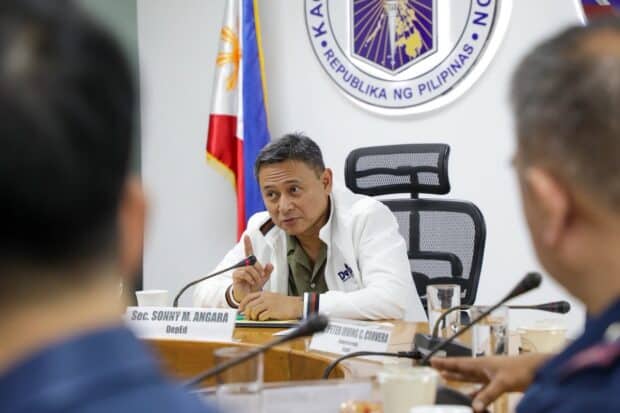
According to a DepEd statement issued on Thursday, the guidelines — contained in DepEd Order No. 006, series of 2026 — are part of the comprehensive School Safety Campaign spearheaded by Education Secretary Sonny Angara.
Article continues after this advertisement
READ: DepEd ramps up school security: Metal detectors, etc.
FEATURED STORIES
NEWSINFO
NEWSINFO
NEWSINFO
The order — which was issued on March 24 this year — institutionalizes the Guidelines on Ensuring a Safe and Motivating Learning Environment (ESMLE) to harmonize learner protection policies across all public schools.
“The guidelines also outline mandatory risk assessments, standardized procedures for confidential incident reporting, and the immediate provision of mental health and psychosocial support for affected victims,” the DepEd statement says.
“Through this comprehensive framework, DepEd seeks to cultivate an inclusive, protective, and accountable institutional culture across the country’s basic education system,” it adds.
READ: DepEd reminds schools to ban gadget use during class hours
Article continues after this advertisement
Three levels of offenses
The ESMLE guidelines introduce a structured, graduated approach to learner discipline based on severity — first-level, second-level, and third-level — with the third being the most severe disciplinary classification:
First-level offenses
Article continues after this advertisement
These are minor infractions such as uttering profanities or swear words inside school premises, simple vandalism, disruptive behavior, and sharing false information that can create confusion or commotion in the school.
Violators will get a written reprimand, a summons for parents, and a suspension.
Second-level offenses
These are severe or repeated behaviors that go beyond minor infractions, including stalking, inflicting slight physical injuries, theft, intimidation, and harassment.
Penalties for these secondary violations scale up to mandatory suspensions on the first offense, non-readmission on the second offense, and exclusion on the third offense.
Third-level offenses
These include the most egregious violations, such as hazing, homicide, murder, and sexual assault, carrying the maximum administrative penalties of non-readmission or exclusion alongside automatic referral to law enforcement and other appropriate agencies and provision of interventions.
These offenses also include joining street gangs, cheating during exams, making bomb threats or jokes, inflicting serious physical injuries inside or outside the school, bringing illegal drugs and liquor, acts of lasciviousness, bringing deadly weapons (such as firearms, ammunition, explosives, and bladed weapons), and sharing demeaning and sexual videos of oneself or other learners and school personnel.
Under the penalty of non-readmission, a student will no longer be allowed to be admitted for the following school year but is allowed to complete the current school year.
Under the penalty of exclusion, a student is immediately dropped from the class list of the school. In such cases, the learner may continue his education through appropriate educational interventions.
Erring students found guilty of third-level offenses face immediate administrative sanctions, including non-readmission on the first offense and exclusion from the institution on the second offense.
Your subscription could not be saved. Please try again.
Your subscription has been successful.
Schools are mandated to immediately refer these grave cases to law enforcement authorities and social welfare agencies for appropriate handling and interventions. /atm
View original source — Philippine Daily Inquirer ↗
Related stories

Straits Times
PoliticsJul 2, 2026 · 1 min
Hungary to launch $128 million school-start benefit scheme
Straits Times

OnlineKhabar
PoliticsJul 2, 2026 · 1 min
5 ways to safely store a large quantity of mangoes
OnlineKhabar

Antara News
PoliticsJul 2, 2026 · 1 min
Indonesia, Belarus push trade pact as FTA ratification progresses
Antara News

The Moscow Times
PoliticsJul 2, 2026 · 1 min
Georgia’s Only Oil Refinery to Stop Using Russian Crude by September
The Moscow Times