
Hacker Noon
Why 70% of Manufacturing ERP Projects Miss ROI Targets
Manufacturing companies rarely invest in an ERP system simply to acquire new software. They invest because something in their operations is hindering growth. Inventory counts don’t match physical stock. Production schedules shift daily. Purchase orders arrive late. Managers spend hours generating reports instead of making decisions. ERP promises to address these issues, yet many businesses struggle to realize the returns they anticipated. The cause is surprisingly predictable. ERP projects typically fail to deliver ROI not due to software shortcomings, but because companies underestimate the operational changes required. ROI Begins Before Deployment One common misunderstanding appears in nearly every ERP conversation. Companies assume ROI starts after go-live. In truth, ROI begins during planning. Manufacturers with clear business objectives often see tangible improvements because implementation targets specific operational problems. Companies with ambiguous goals usually spend months configuring software without addressing the issues that erode profitability. Instead of asking, "Which ERP should we purchase?" leadership should first ask: Which process drives the highest operational cost? Which KPI needs urgent improvement? Which manual task consumes the most employee time? These answers should guide the implementation. Technology Cannot Mend Poor Processes Many factories continue using inefficient workflows after transitioning to ERP. Purchase approvals still rely on multiple emails. Production planning still depends on spreadsheets. Inventory adjustments still occur at week’s end rather than in real time. Replacing Excel with ERP while maintaining the same process rarely enhances business performance. A manufacturer producing industrial components cut purchase approval time from three days to a few hours, not because of ERP alone, but because approval steps were redesigned before implementation. Software supported the new workflow instead of automating an inefficient one. Process improvement drives ROI. ERP makes those improvements scalable. Data Quality Determines ERP Quality ERP decisions are only as reliable as the information stored in the system. If Bills of Materials contain outdated components, production planning becomes unreliable. If inventory records are inaccurate, procurement buys unnecessary material while production faces shortages. If routing information is incomplete, capacity planning becomes guesswork. Many implementation teams spend months discussing dashboards while neglecting master data. That choice often proves costly after go-live. Experienced implementation teams usually devote significant effort to cleaning: Item master data Supplier records Customer information Bills of Materials Routing Warehouse locations Accurate data benefits every department, from purchasing to finance. User Adoption Matters More Than Features Modern ERP platforms include advanced capabilities. AI forecasting. Predictive analytics. Automated purchasing. Real-time dashboards. However, sophisticated functionality delivers little value if employees avoid using the system. Operators sometimes persist in recording production on paper. Warehouse staff delay inventory updates. Sales teams maintain separate spreadsheets because they trust them more than ERP. Management then concludes the software failed. More often, adoption failed. Successful manufacturers invest as much time in training employees as they do in configuring software. When users grasp how ERP simplifies their daily tasks, adoption improves naturally. Measuring Wrong KPIs Creates Wrong Expectations Some organizations evaluate ERP success based solely on software cost. That approach overlooks operational improvements that generate long-term value. Instead, manufacturers should measure indicators such as: Inventory accuracy On-time delivery Production schedule adherence Procurement cycle time Manufacturing lead time Stock turnover Overall Equipment Effectiveness (OEE) For example, improving inventory accuracy from 88% to 98% may reduce emergency purchasing, prevent production interruptions, and enhance customer delivery performance. These improvements often yield greater financial impact than software licensing costs. Executive Ownership Cannot Be Delegated ERP projects frequently become IT initiatives. Infrastructure is upgraded. Servers are configured. Users receive login credentials. The project reaches go-live. Business improvement never follows. ERP touches every operational function. Production. Purchasing. Finance. Warehouse. Quality. Maintenance. Because of this, executive leadership must remain actively involved throughout implementation. When leadership regularly reviews business objectives rather than technical milestones, project teams stay focused on measurable outcomes instead of software features. Example: Same ERP, Different Results Consider two manufacturers implementing identical ERP software. Company A spends six months configuring every available feature. Data migration receives minimal attention. Employees get one training session before go-live. Six months later, planners still export spreadsheets, inventory accuracy remains low, and production managers distrust reports. Company B starts differently. Business processes are documented first. Master data is reviewed. Department managers define measurable KPIs. Training continues after implementation. Go-live takes similar time, yet operational improvements appear within months because people changed how they worked, not just which software they used. Same ERP. Different preparation. Different ROI. ERP Is Continuous Improvement One mistake many organizations make is viewing ERP implementation as a finish line. It is only the beginning. Manufacturing changes constantly. New products. New suppliers. New compliance requirements. New production constraints. ERP should evolve with the business. Companies that review workflows, measure KPIs, and optimize processes quarterly usually achieve significantly greater long-term returns than organizations that treat ERP as a one-time technology purchase. Continuous improvement consistently outperforms a perfect initial implementation. Final Thoughts Manufacturing ERP projects rarely miss ROI because software lacks capability. Most fall short because organizations focus on implementation instead of transformation. Technology receives attention. Processes remain inefficient. Data quality is ignored. Training becomes an afterthought. Leadership measures software instead of operational performance. Manufacturers achieving strong ERP returns approach projects differently. They define business problems before selecting technology. They simplify processes before automating them. They treat data as a strategic asset. Most importantly, they recognize ERP is not a product installed once. It is operational discipline supported by technology. When people, processes, and data improve together, ROI becomes measurable, not because ERP performed a miracle, but because the business finally gained visibility and control over operations it already had.
View original source — Hacker Noon ↗
Related stories
TechRadar
TechnologyJul 2, 2026 · 1 min
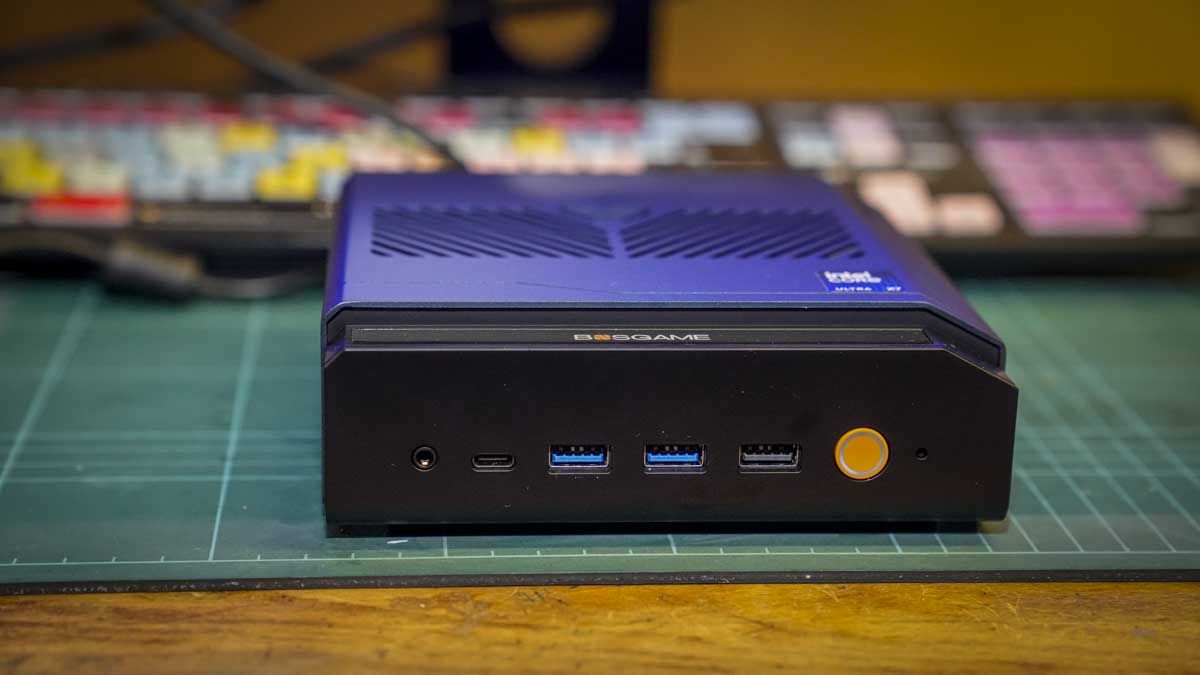
Bosgame VTI-490 review: This mini PC packs in more power than expected and handled network editing like a workstation
TechRadar

Euronews
TechnologyJul 2, 2026 · 1 min
OpenAI offers the US government a 5% ownership stake
Euronews

TechRadar
TechnologyJul 2, 2026 · 1 min
Amazon reveals it used more energy than New Zealand in 2025 as its carbon footprint rises 16%
TechRadar

The New York Times
TechnologyJul 2, 2026 · 1 min
Vatican Excommunicates Breakaway Group, in First Major Crisis for Pope Leo
The New York Times