
Hacker Noon
Virtual Development Teams Made of AI Agents: Hype or Real Shift in Workflows?
\ Hey all. For the past couple of months I've been reading a lot about virtual AI teams and agent orchestration in software development. The idea on GitHub and YouTubes is straightforward: instead of a single universal agent handling a task, multiple specialized roles work on it together. Architect plans, backend writes code, QA reviews the output, and so on. I was pretty skeptical at first. It felt like just another layer on top of Cursor, Codex, or Claude Code (love it). But scrolling through a few threads here I kept seeing people mention tools like BridgeApp or AgentFlow that take a different angle entirely, full workflows with dedicated roles, approval steps, and context passed between stages rather than just one agent doing everything… As far as I can tell, in practice the virtual team lives inside each individual project: an architect agent, a CTO agent, a backend agent, a frontend agent, an analyst, and a QA agent. Any agent with whatever skill set is needed. Each one runs its own model: backend might use Claude Code, frontend might run on Codex, depending on what fits the task best. And any team member, even a non-developer like an AI engineer or a marketing manager, can choose which model their agent runs on. Sounds promising, but has anyone actually built something like this? I'm trying to get a real sense of the effectiveness and practical gains from multi-agent systems or agent orchestration in development. My current take: it looks like over the next year or two, the competition won't be between individual agents anymore, it'll be between entire AI teams and how well they collaborate within a workflow. I see a lot of posts along the lines of AI saved us a ton of money, but they almost never include actual numbers or explain how those numbers were derived. So I decided to break down my approach and be honest about where it gets shaky, because like 10x improvement means nothing without a baseline. A quick disclaimer - it’s a rough unit economics estimate for a single task. The numbers are rounded, the logic is what matters. For task cost, I used an average feature from our backlog: human time × hourly rate + AI expenses. Before AI: planning ~1.5 hours, coding ~4 hours, review and fixes ~2 hours, plus the invisible tax of dragging context between Jira, Slack, and docs ~1 hour. Total: ~8.5 hours. At €60/hour, that comes to about €510. With the AI pipeline: the human shifts from being the executor to being the controller. Agents handle planning → execution → review, and I only step in at the plan-review and code-review checkpoints. My actual time drops to ~1-1.5 hours. Total: ~€70. It’s not hard to calculate how much the cost decreased, right? By the way, when I built this pipeline with roles and checkpoints in BridgeApp, the biggest savings came not from code generation itself, but from eliminating the manual work of moving context around. I have some question for those already working this way: what happens when an agent makes a mistake? Does it get caught at the next checkpoint, or does it surface in production three weeks later? For me, the entire 10x savings depends on errors being caught between stages rather than at the very end, but I’m not sure real life is ever that clean. Pls share your opinion, mates.
View original source — Hacker Noon ↗
Related stories

The Punch
TechnologyJul 2, 2026 · 1 min
Court adjourns Emeka Ike’s N10bn suit against INEC, Wike’s aide
The Punch
TechRadar
TechnologyJul 2, 2026 · 1 min
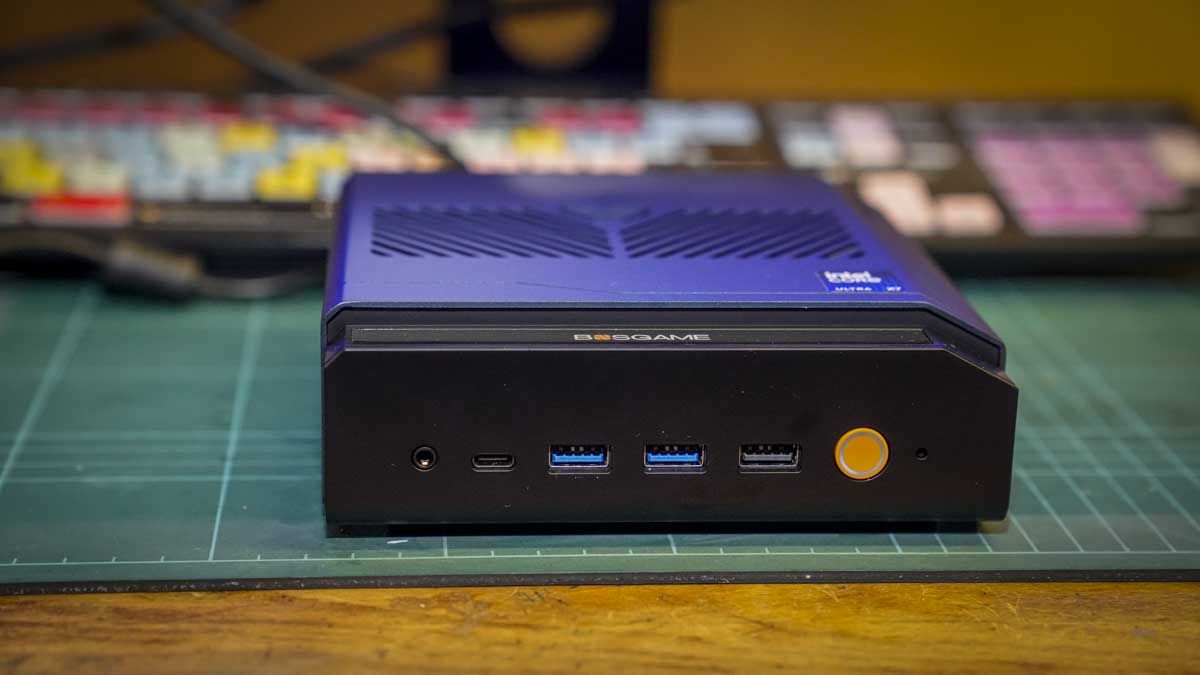
Bosgame VTI-490 review: This mini PC packs in more power than expected and handled network editing like a workstation
TechRadar

Indian Express
TechnologyJul 2, 2026 · 1 min
Why WhatsApp’s usernames feature has sparked a showdown with Indian government
Indian Express

Euronews
TechnologyJul 2, 2026 · 1 min
OpenAI offers the US government a 5% ownership stake
Euronews